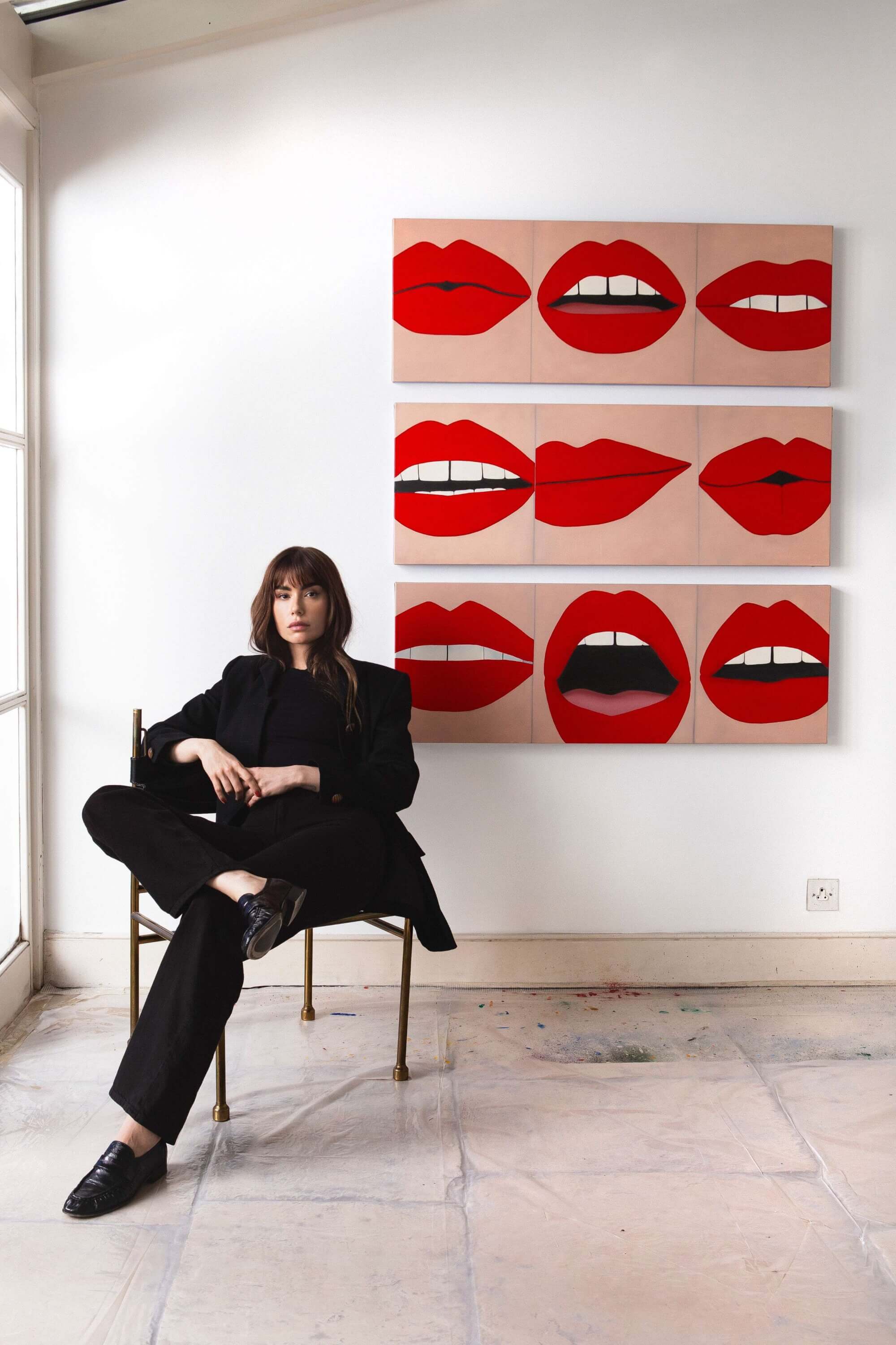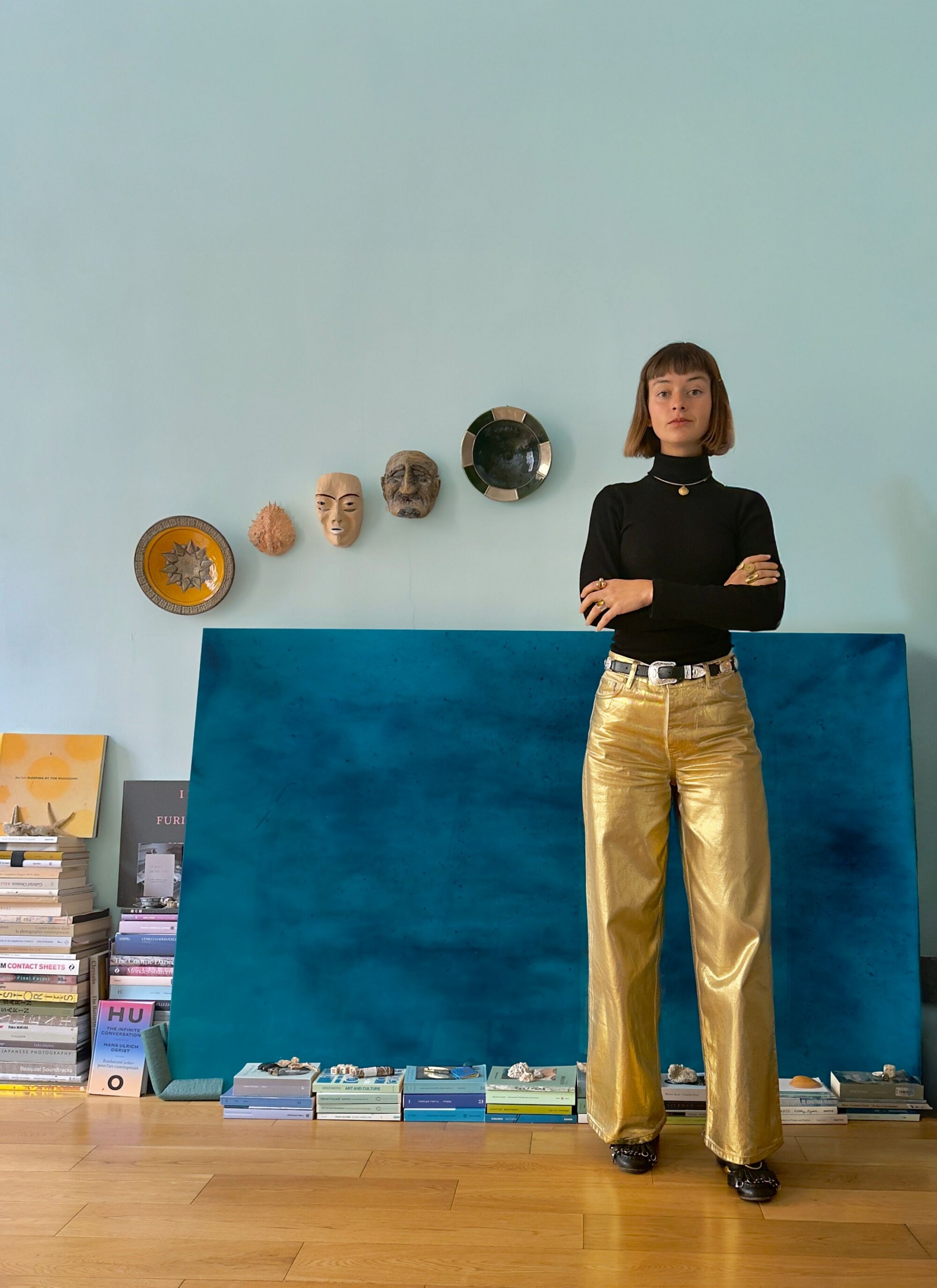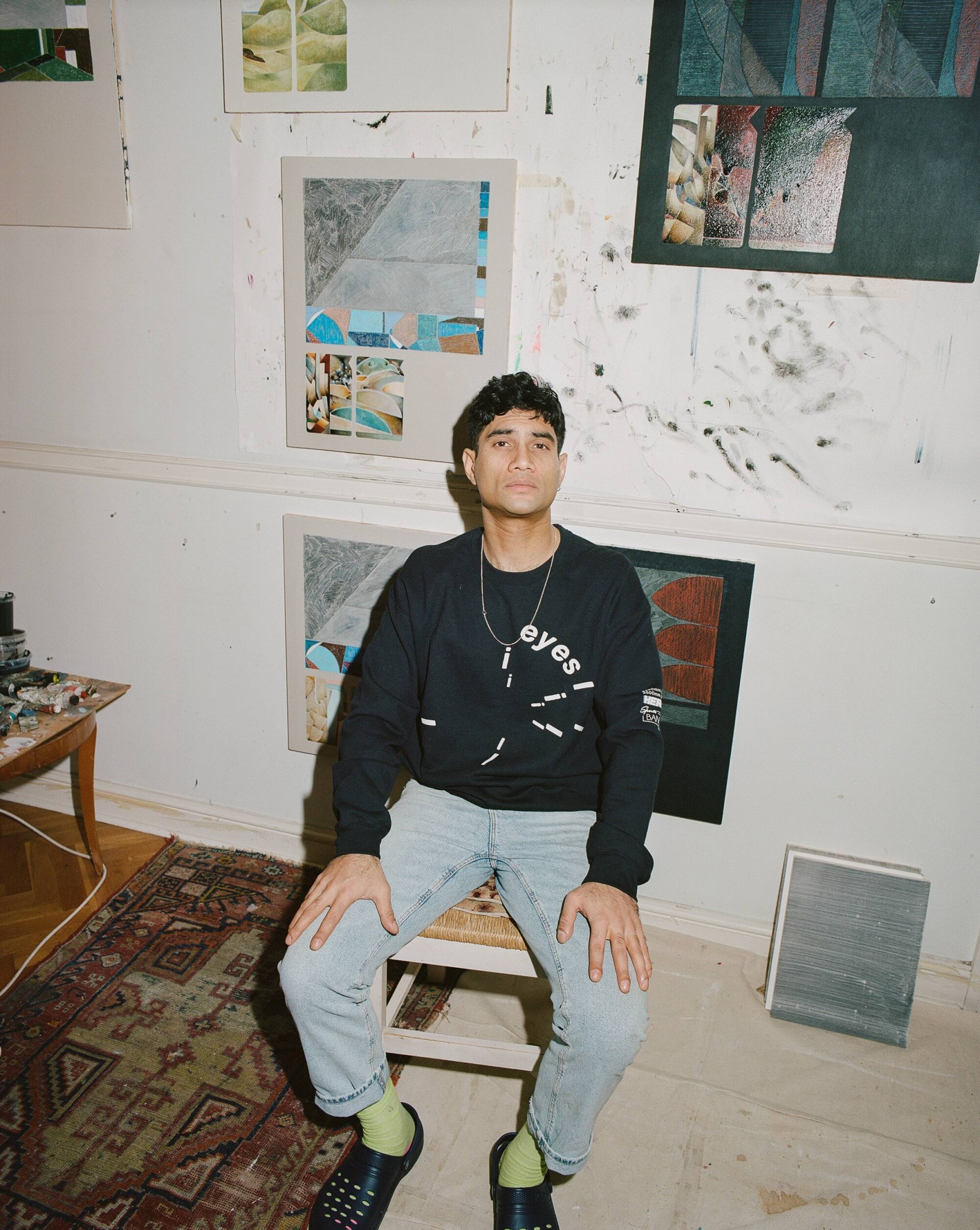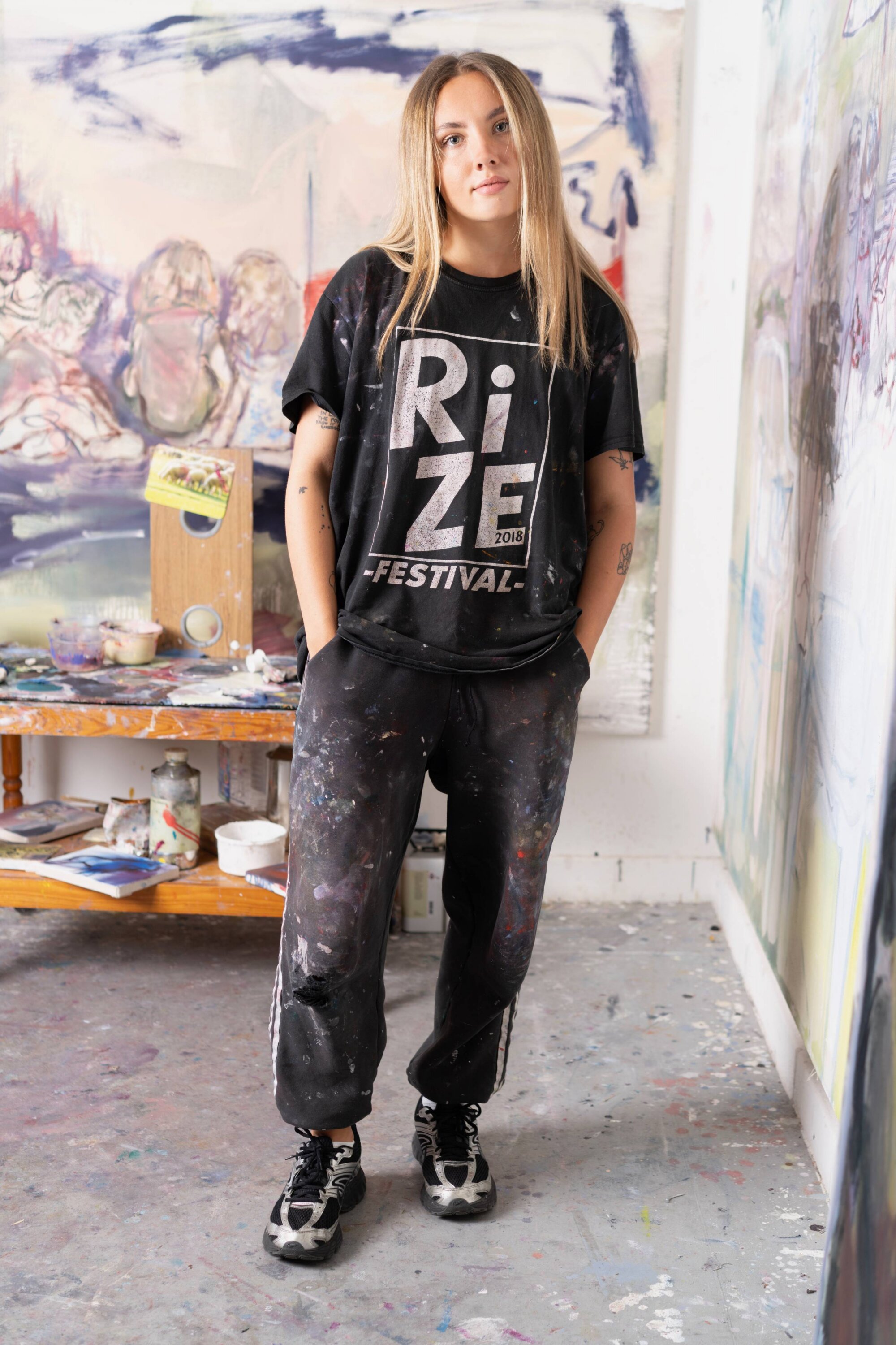
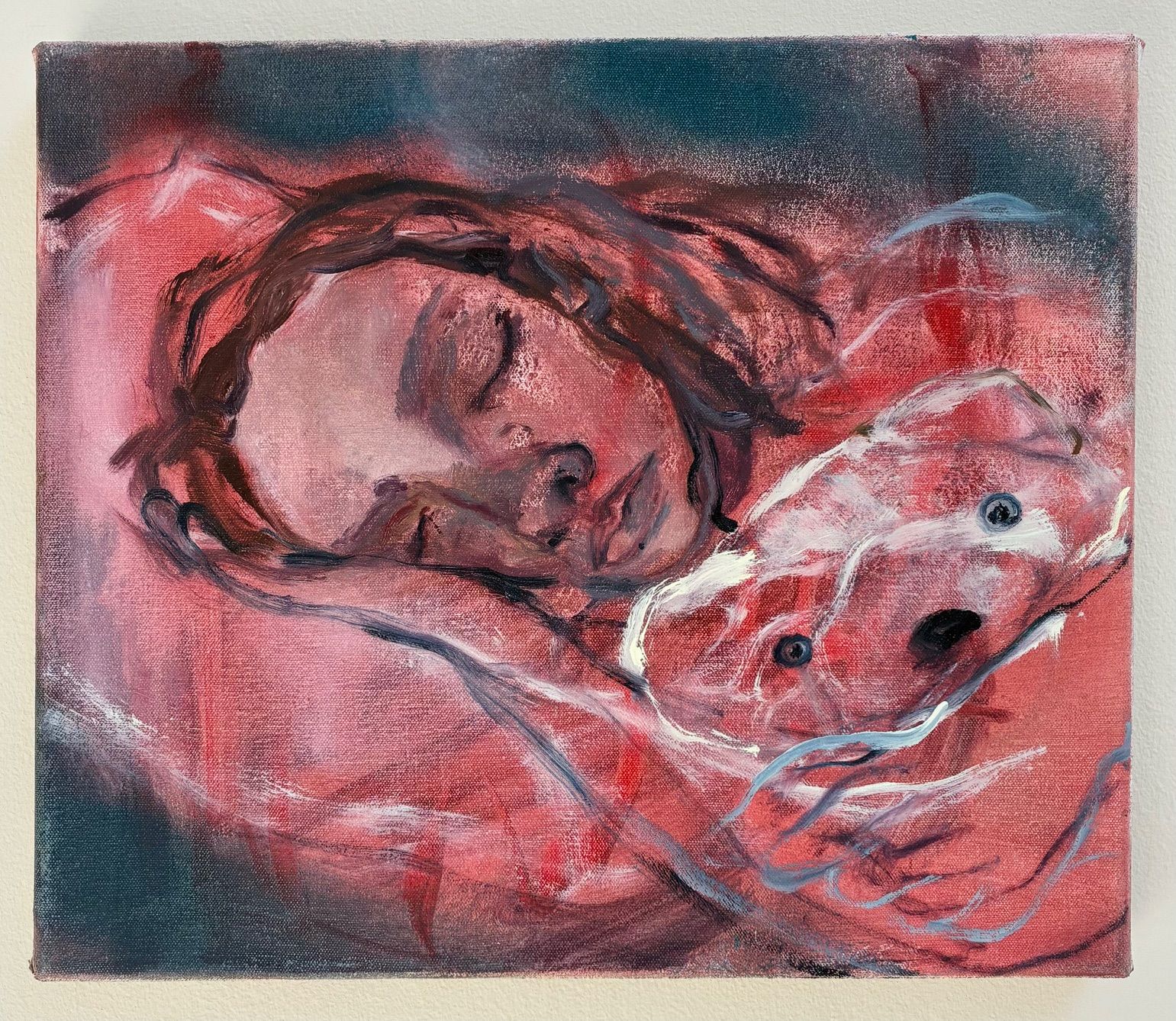
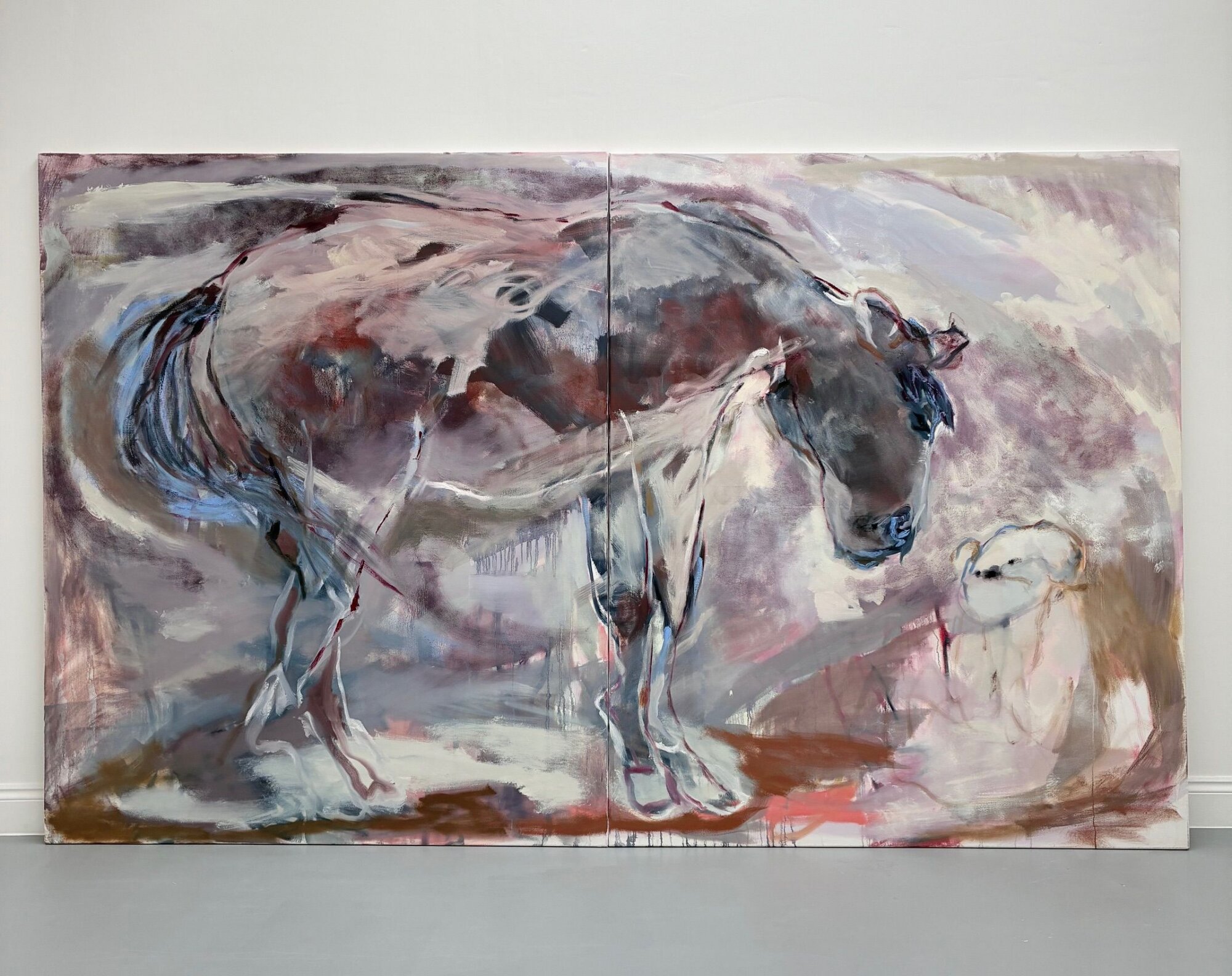
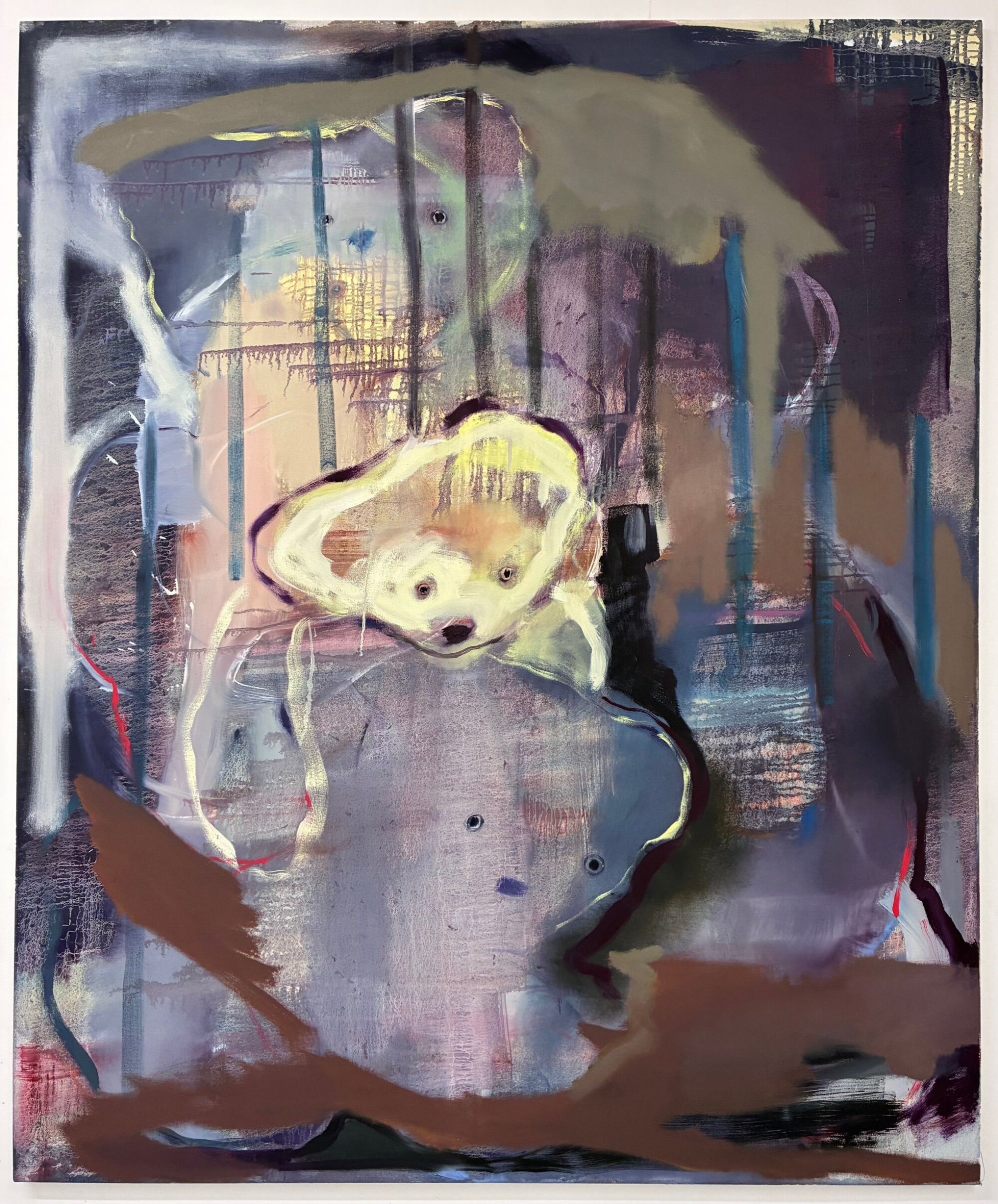
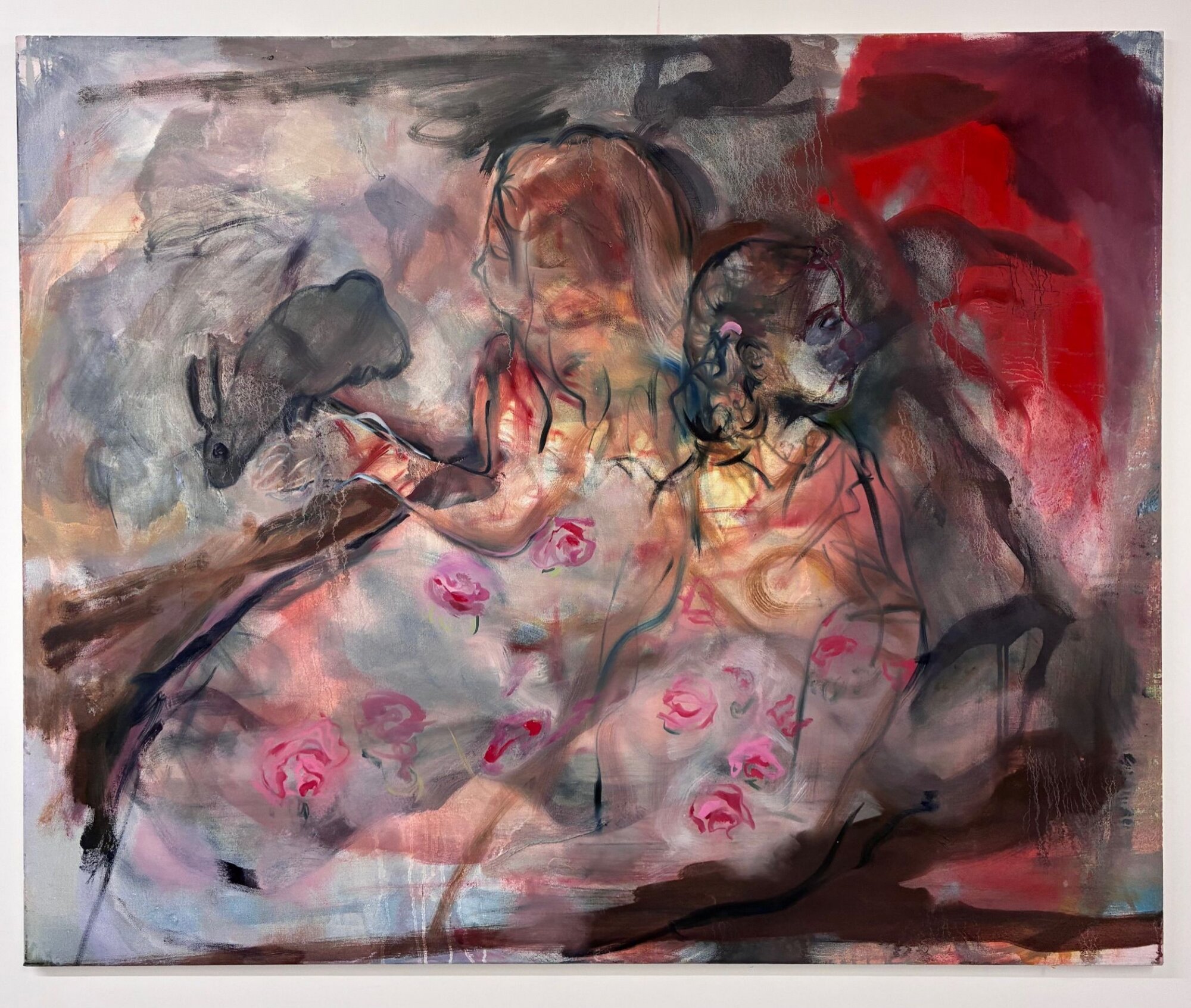
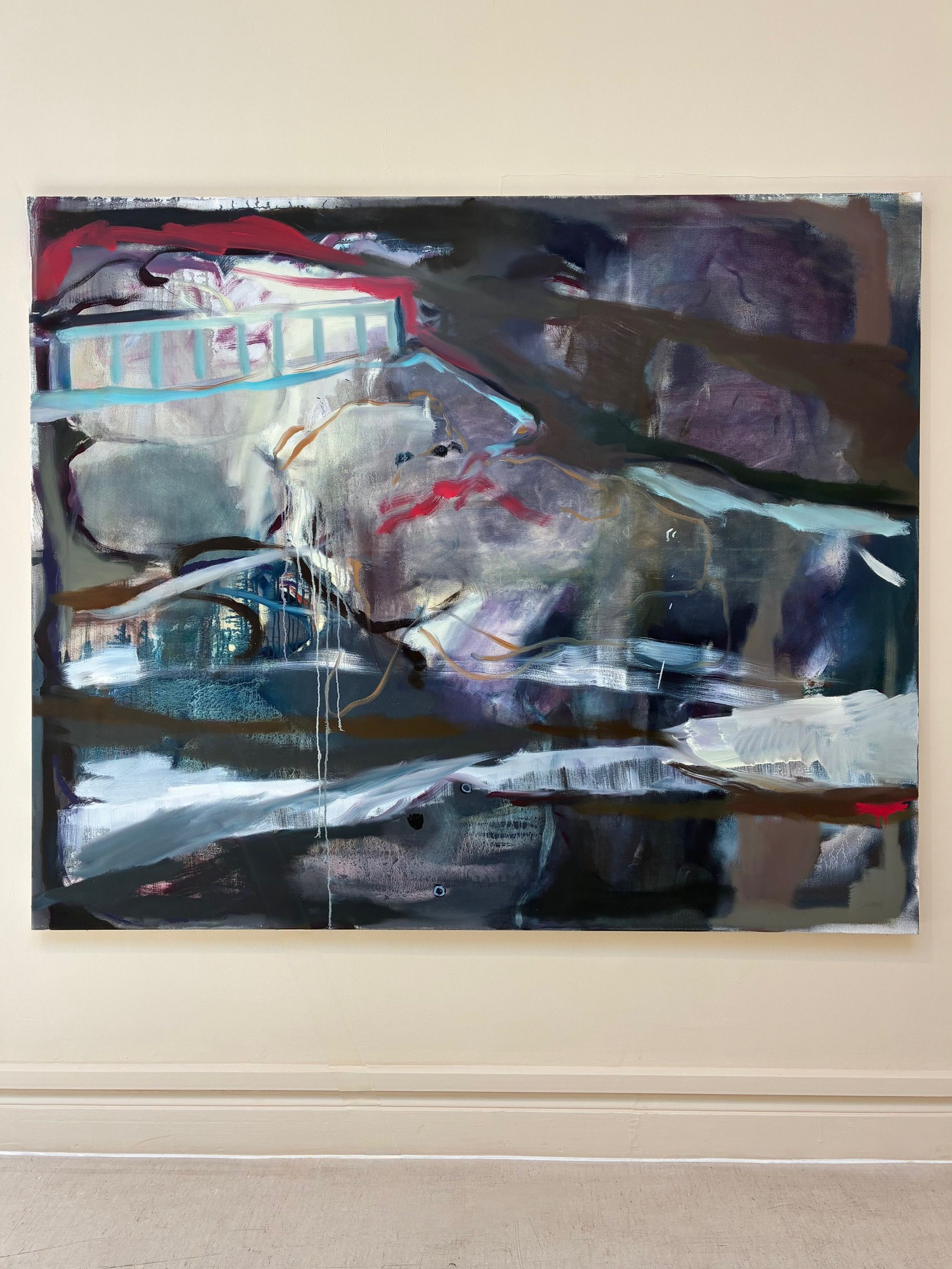
Bartelli’s route into painting was not linear. Her influences, she says, come from her “personal background and cultural roots,” from growing up in Brazil and moving between places, experiences that shaped how she sees and feels “in a very instinctive way.” Colour has always come naturally to her, even as she continues to study colour theory and look towards artists such as Susan Frecon, as well as wider abstract practices. Alice Neel was a major early reference, but Bartelli’s own work is rooted less in direct observation than instinct, lived experience and the unconscious.
What interests the artist is the contradictions we carry, the roles we perform and the systems that subtly shape how we come to see ourselves. Bartelli speaks of “human behaviour, contradictions, and the plurality of identity,” as well as “how gender hierarchies shape the way we see and perform ourselves.” In her paintings, the body is the place where these tensions surface, as a figure may feel seductive, withheld, vulnerable or defiant all at once.
Her champion, Brazilian private collector José Falk, has known Bartelli for more than two decades and has watched the work develop at close range. “I’ve had the joy of knowing Lize Bartelli for over twenty years, and watching her grow into her craft has been one of the real gifts of that friendship,” he tells The Wick. “Born and raised in Rio de Janeiro, Lize didn’t take the conventional path to art. Creative as she always was, she chose to study the discipline seriously in her late twenties.” Falk remembers buying the first piece she ever sold, “part of an evocative series of pregnant women, painted with striking tenderness and intimacy.” For him, a concern with female power has been there from the beginning and even now is prevalent in the artist’s work.
Bartelli’s current practice marks a shift in tone and form. “Her current work marks an interesting evolution: sensual female figures rendered in abstraction, punctuated by small, telling details, a lipstick, a cigarette, a fleeting moment caught and held,” Falk remarks. “There’s a mix of beauty in her work and a feeling of sadness one’s not sure is there, a depth that cuts deep. Confidence and vulnerability in equal measure.”
A sharp description of the atmosphere Bartelli conjures in her work. The paintings are sensual, though their beauty is complicated by a subtle edge, a lingering sadness and vulnerability. Small details take on psychological force, suggesting the residue or afterimage of a private moment or mood.
For Bartelli, achievement is less a fixed milestone than an ongoing process. She describes it as “the process of becoming over time,” and speaks of the importance of staying aligned with her essence and returning to her instincts. There have been moments of uncertainty, but also, she says, “a continuous sense of movement and growth.” This movement finds its way into the work: figures that seem to shift between states, paintings that hold feeling in all its instability.
Bartelli is now researching a new body of work. She had originally planned to present it this year, but chose to postpone in order to give the process “the time it deserves.” The subject, she says, is “more complex and emotionally demanding,” something she has been thinking about for a long time and now feels ready to engage with fully. A choice that clearly reflects the artist’s commitment to making art that is considered and emotionally exacting.
Falk’s final reading of Bartelli’s work is the simplest, and perhaps the most revealing. “Lize pours her whole heart into her art, and it shows.” In a practice so concerned with contradiction, instinct and the layered performance of the self, this fullness of feeling is not incidental, but the beating heart of the work.