Interview “Public Art Belongs to Everyone”: Jo Baxendale on How Art Changes a City
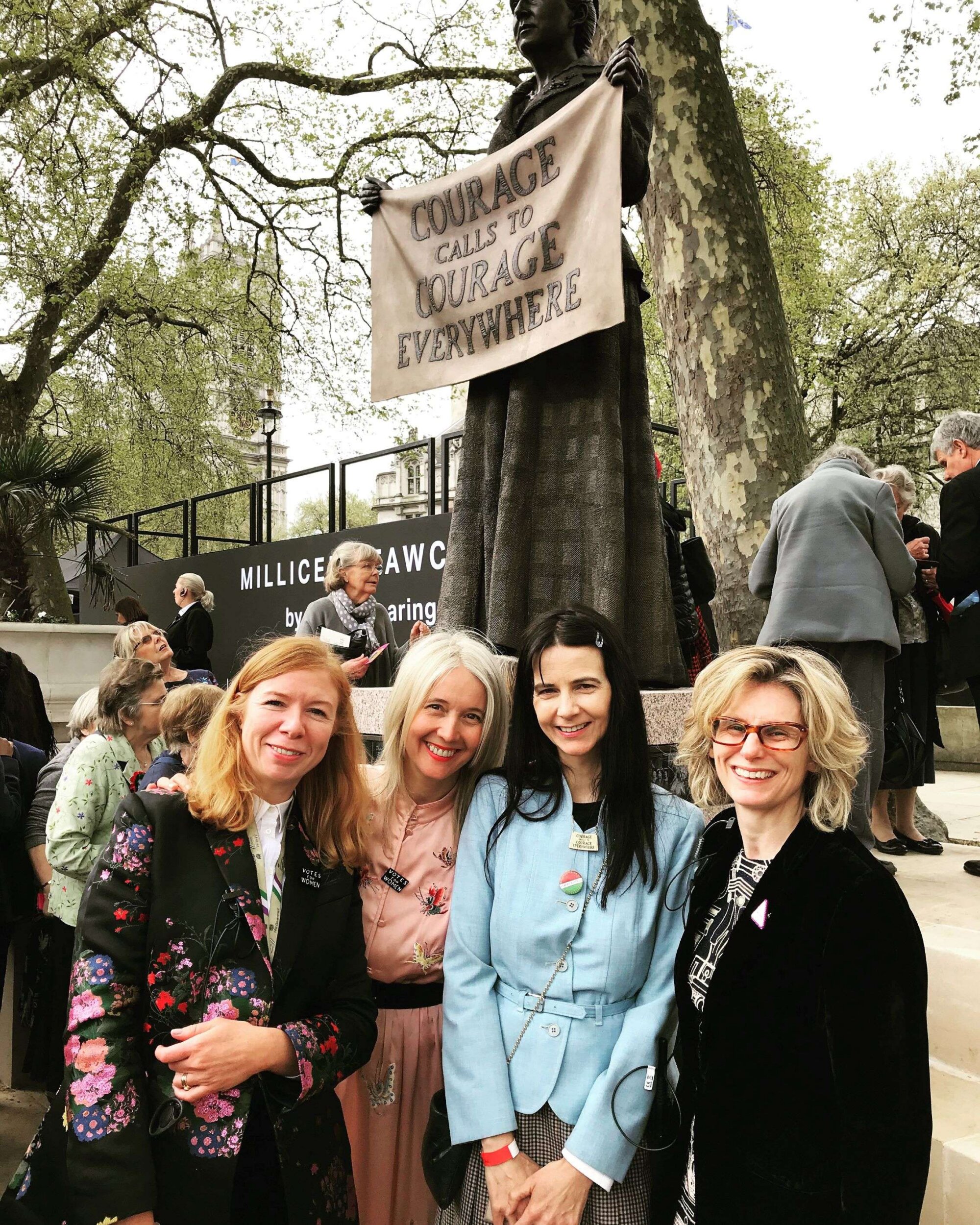
Baxendale has spent her career thinking about what, and who, gets to occupy those spaces. After studying Post War and Contemporary Art, she joined Arts Council England in 2008, working on a national programme of commissions for the London 2012 Olympics, before moving to the Mayor’s Office and taking on the Fourth Plinth. In 2018, she delivered Gillian Wearing’s statue of suffragist Millicent Fawcett, the first statue of a woman, by a woman, in Parliament Square. Today, alongside the Fourth Plinth, her work extends to a new memorial to the victims of transatlantic slavery in London’s Docklands and the Queen Elizabeth II Memorial in St James’s Park.
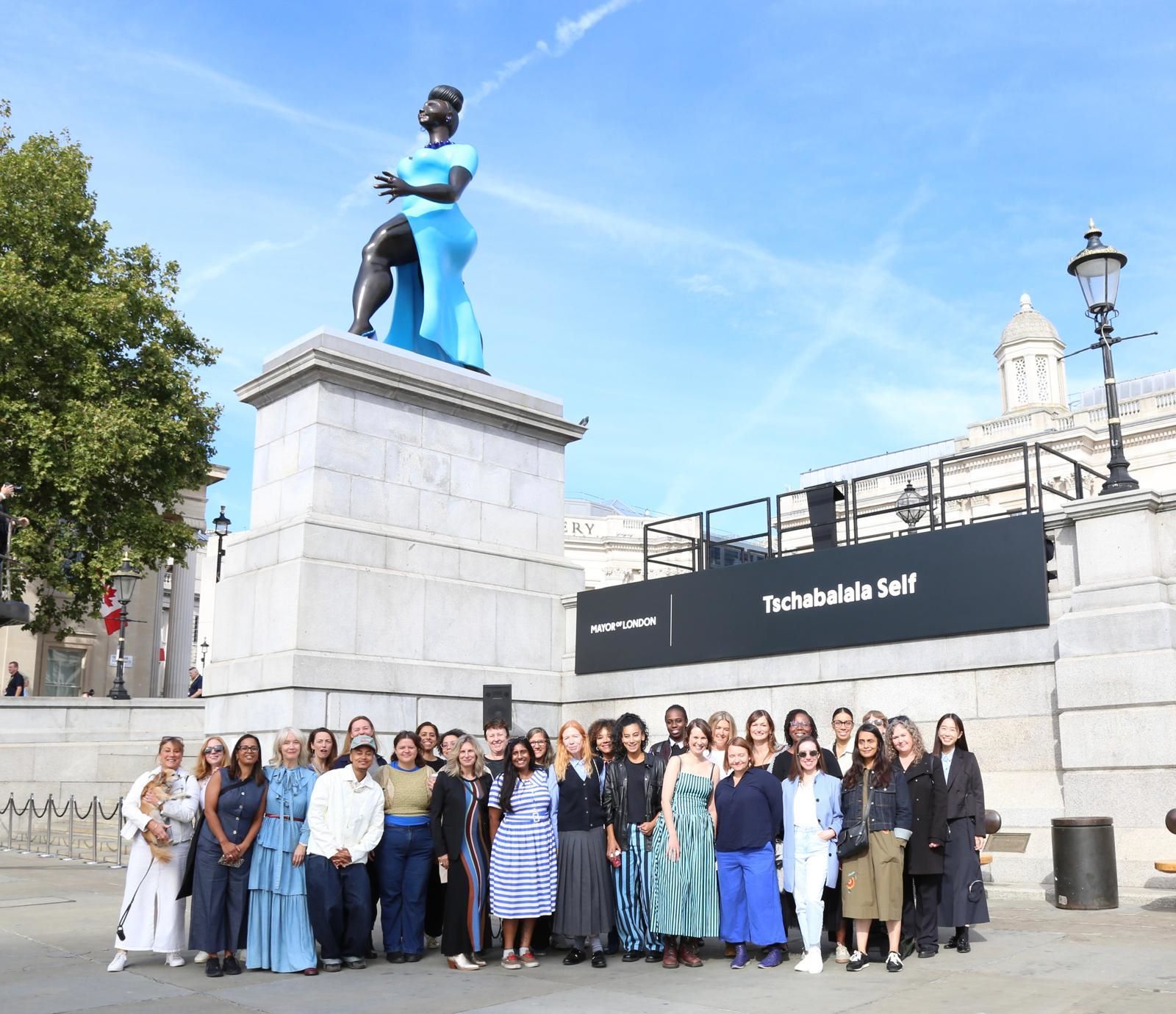
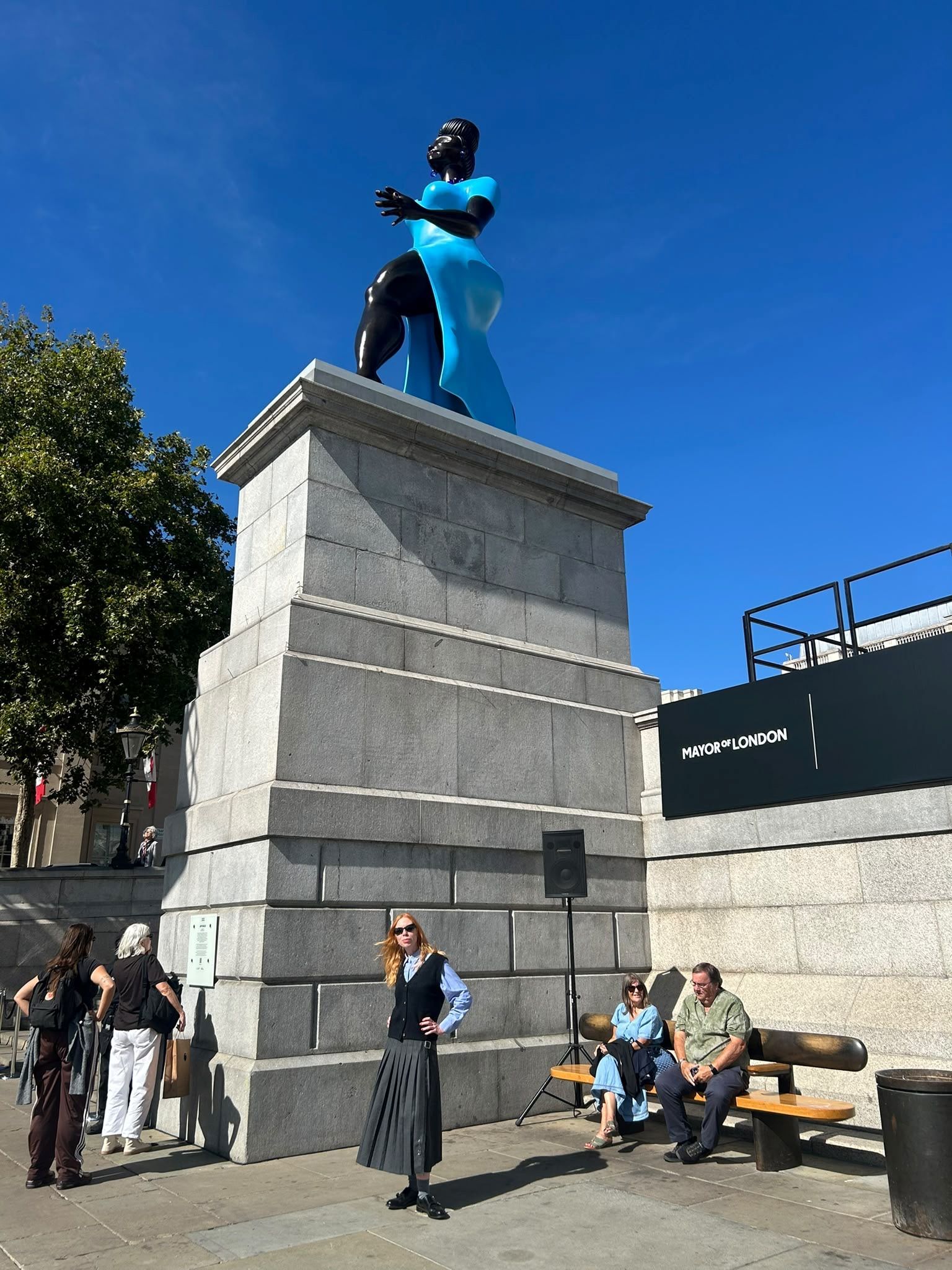
The timing could hardly be more fitting. London Sculpture Week begins on 19 September, bringing public art into the spotlight across the capital just days after Self’s new figure took her place above Trafalgar Square. Amidst the bustle of London’s September cultural calendar, The Wick caught up with Baxendale to talk about the democratic possibilities of art beyond gallery walls, what London must do to hold onto its cultural edge and the projects that have changed how the city represents itself. And after an intense few weeks bringing ‘Lady in Blue’ into being, perhaps it is no surprise that Tschabalala Self is also Baxendale’s ultimate Monday Muse.
THE WICK:
What does a typical Monday look like for you?
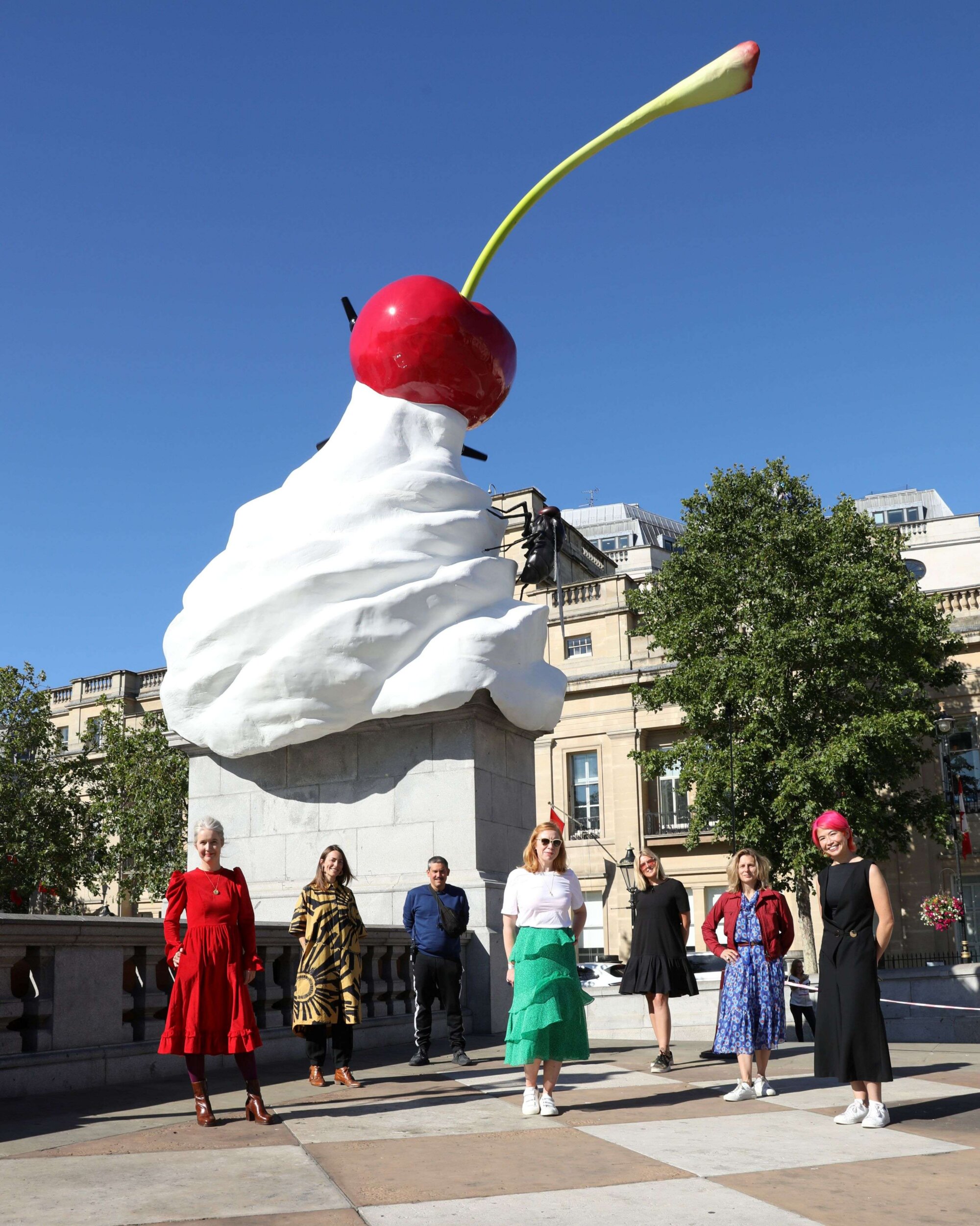
Jo Baxendale: There’s no such thing as a truly typical Monday, which is one of the reasons I love my work. Last week we unveiled the new Fourth Plinth sculpture Lady in Blue by Tschabalala Self, so it has been an intense few weeks building up to that moment. It takes a village to get a 5m-tall sculpture on a plinth in the heart of a bustling city; choreographing that has taken up most of my time. It’s exciting, but I’m looking forward to having more time for the other projects and to getting out into the city as much as possible. Whether it’s heading to the office to catch up with Culture Team colleagues, responding to emails, visiting a site or meeting artists and partners, the best ideas come from being out in London and with like-minded people, rather than behind a desk.
TW:
You’ve spent much of your career championing art and creativity in the public realm. What was the journey to where you are now?
JB: I’ve always been fascinated by the way culture shapes our experience of cities. Throughout my career I’ve worked across cultural policy, placemaking and public art, supporting artists and organisations to create work beyond the gallery walls. What drew me to the public realm is its democratic nature. Public art belongs to everyone. It can surprise people on their way to work, spark conversation between strangers or make someone see a familiar place differently. That’s still what motivates me today.
“Public art is for everyone … great cultural cities don’t stand still; they evolve, take risks and continually make space for new voices.”
Jo Baxendale