Interview Aoife Leach
This is familiar territory for Leach, who stepped into her role last year and now leads the festival into its 12th edition. Her perspective has been shaped across the cultural landscape, from leadership roles at The Modern House and Inigo to the Hayward Gallery and more than a decade in the international auction world. Yet her connection to craft also runs much closer to home. Raised in a creative household, she grew up playing in the treadles of her mother’s floor loom and watching her father build a wooden sailing boat in the family kitchen.
As London Craft Week returns with a programme spanning more than 150 venues, Leach is making the case for craft as one of the most vital cultural conversations of the moment. Far from nostalgia or hobby, she frames it as a way of thinking about creativity, responsibility, place and the human hand in an era increasingly shaped by AI. The Wick caught up with Leach amid the buzz of festival preparation to talk making in the age of AI, the “creative iceberg” of makers sometimes hidden from view, artists to watch and why London remains one of the world’s most exciting cities for the handmade.
THE WICK: What does a typical Monday look like for you?
Aoife Leach:
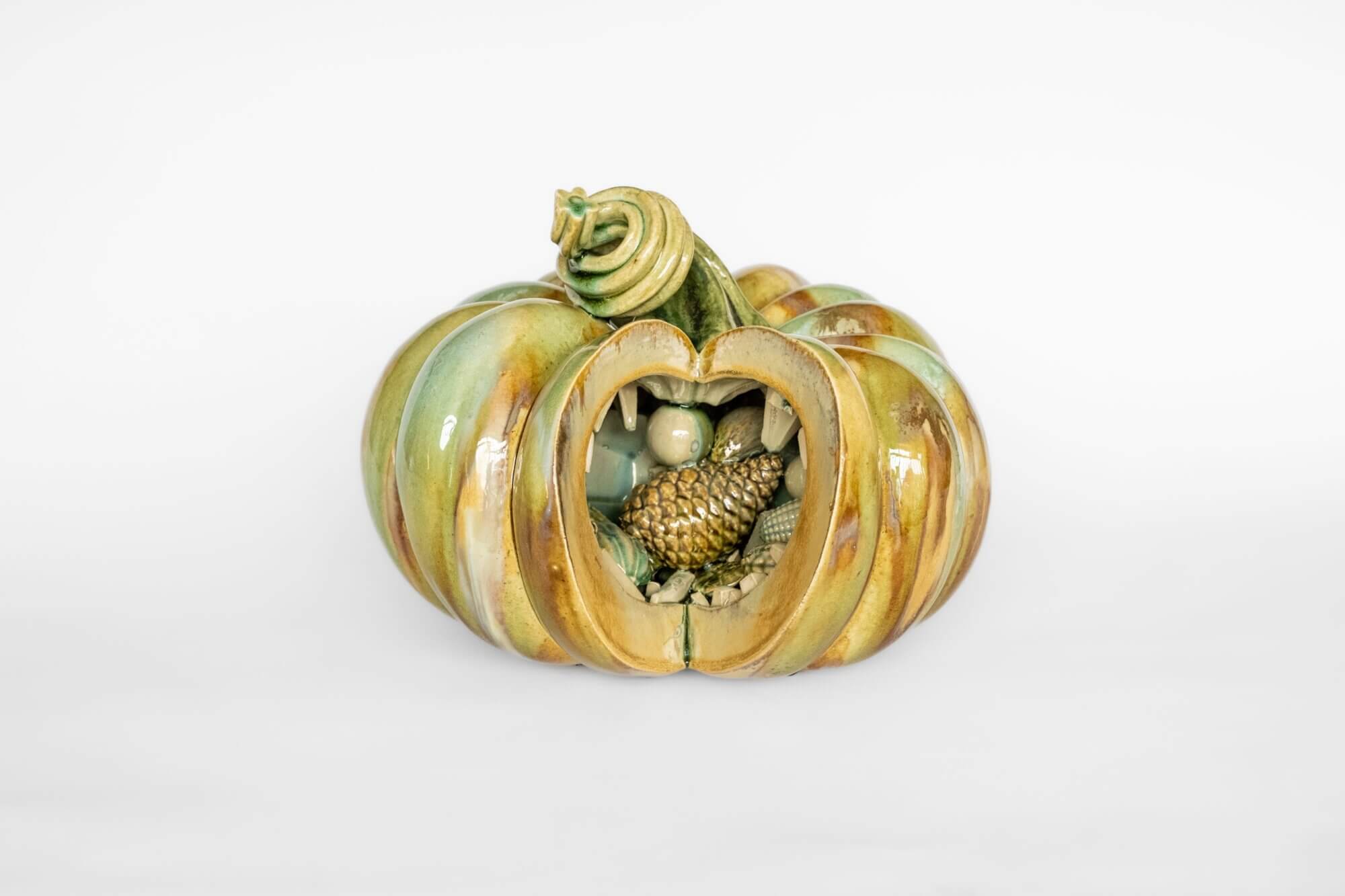
For me, Mondays are a day for kicking things off and setting the agenda for the week, and next Monday (11 May) is the ultimate version of that – it’s the launch of London Craft Week 2026! Hosted this year by our sponsors Sotheby’s, we will be unveiling our annual Secret Ceramics exhibition in collaboration with Kate Malone’s charity FiredUp4, as part of a major programme of exhibitions and events across their New Bond Street galleries.
After the launch, I’ll be checking in with other Mayfair-based partners before heading over to Bloomsbury to Cockpit artist studios for their London Craft Week launch, which coincides with their 40th birthday.
Throughout the day, I’ll be checking in with our sponsors and partners as well as with my brilliant team to ensure everything runs smoothly, before heading to The Royal Society of Sculptors for Crafts on Peel x Hong Kong Trade Office’s opening ceremony Cross Pollination: The Future of Crafts. And then back to Sotheby’s for the House & Garden Craft Prize.
Then, at the end of the day, I’ll review plans for Tuesday, which will be equally busy and fun!
TW: London Craft Week takes over London this May. Over the last decade, interest in craft, making and sensibility has grown. What do you think it is about craft that is generating so much interest today?
AL:
Craft and making provide solutions for so many of the challenges we face in the world today, from mental health benefits to connecting with others, to sustainable practices and spending responsibly. It feels to me that this rising interest in craft is defining a time that will be historically viewed as playing a crucial role in culture. London Craft Week’s role in this feels more relevant than ever – we are the cultural moment dedicated to championing craft, making and human creativity.
If we think about the second half of the 19th century and the response to industrialisation, which included, among many other things, the birth of the V&A Museum, the Royal College of Art (which I recently learned was originally the Government School of Design – set up to ensure innovation in British design as industrialisation advanced rapidly), and the Arts and Crafts movement, it was a time of rapid technological advancement but also a time of exceptional creativity in the arts. We have recently crossed the threshold into the time when AI is defining many aspects of our day-to-day lives (sometimes without us knowing it), and we need proactive cultural responses to this. At the London Craft Week 2026 Symposium Making Matters on 13 May, we’ll be exploring the transformative power of craft with leading experts including V&A East Director Gus Casely-Hayford, who will be in conversation with Collect Director TF Chan, and two panel discussions: Crafting Impact: Visionary Initiatives Reshaping the Value of Craft and Crafting Places: Cultural Expression in the Built Environment.
TW: You stepped into the role of Managing Director of London Craft Week last year. In this role, what do you see as your biggest challenge to conquer?
AL:
Given the scale of our festival, with hundreds of events across 14 London boroughs, it might be surprising to some that London Craft Week is a small independent not-for-profit organisation, and that comes with opportunities and challenges. The best problem we have is that there are an incredible number of exceptionally talented craftspeople we want to showcase; our founder calls this the “creative iceberg”, as so many of these makers are normally hidden from view, partly because they are working in studios or spaces that are not generally accessible to the public, and also because “craft” is a term that is often associated more with hobbyists than professionals. That’s why our festival is all about getting up close to the making, meeting makers, and discovering the stories behind the objects. This is central to our purpose, because there is no substitute for seeing skill and creativity first-hand.
Like many organisations and businesses, we also face the challenge of rising costs, and our revenue is entirely self-generated – we don’t receive any public or core funding. This year, for the first time, we’re asking visitors to donate as little as the cost of a coffee to help ensure that we can continue our mission to showcase the world’s best craft, and offer subsidised places in our festival for makers and charities.
TW: This year’s festival brings together makers, galleries, brands and institutions across more than 150 venues in the capital. What should be on our radar that feels particularly distinctive this year?
AL:
The festival’s scale is a deliberate choice to show the sheer diversity of talent out there. With 35 nationalities represented and 71 different types of craft showcased, it’s a celebratory festival that brings people together through the universal language of human creativity.
London Craft Week has always championed craft in all of its forms, from the crafted object to fashion, jewellery, interiors and more. This year, we’re excited to have a larger programme of events dedicated to craft in architecture and the built environment; from iconic London landmarks like the Palace of Westminster and St Paul’s Cathedral, to a fireside conversation with the artisans of new development The Capston, and from Morris+Company’s exhibition exploring the craft of keeping in retrofit to The Society for the Protection of Ancient Buildings’ talk on wooden sash windows.
We love new voices and stories at London Craft Week and I’m excited to see the newly formed Slow Ways Studio’s exhibition of heritage crafts and contemporary design, which presents work from makers the founders Freddie Armstrong and Joe De Ferranti met on their 1,300-mile walk across Britain.
“Craft and making provide solutions for so many of the challenges we face in the world today, from mental health benefits to connecting with others, to sustainable practices and spending responsibly.”