The Wick Culture - Interview “The Architect I Would Most Love to Work With Is Nature”: Lonneke Gordijn on Dandelions, Drones and DRIFT The Wick Culture - Interview “The Architect I Would Most Love to Work With Is Nature”: Lonneke Gordijn on Dandelions, Drones and DRIFT
Monday Muse

Interview “The Architect I Would Most Love to Work With Is Nature”: Lonneke Gordijn on Dandelions, Drones and DRIFT

Interview
Lonneke Gordijn
23 November 2026
Interview
Lonneke Gordijn
23 November 2026
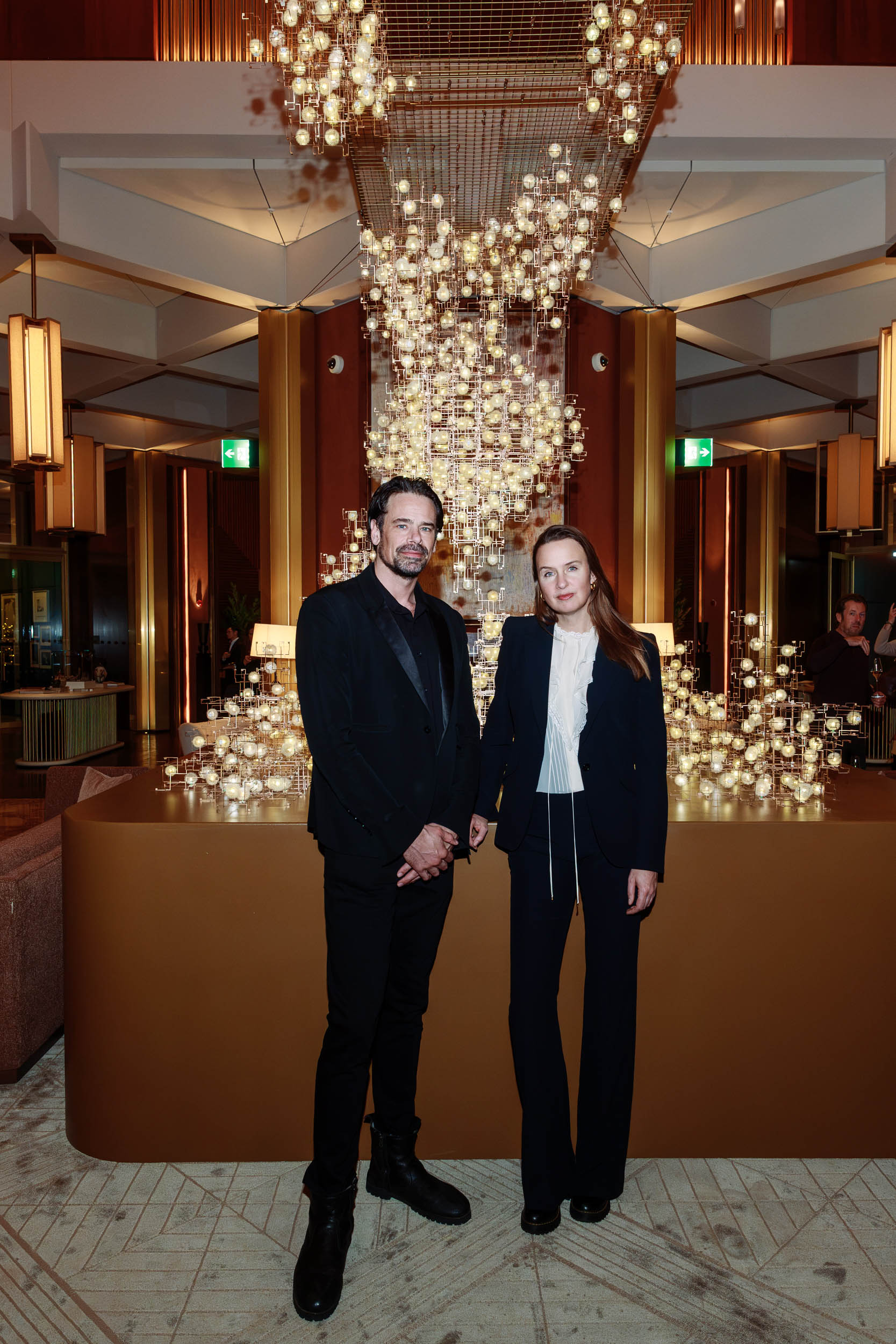
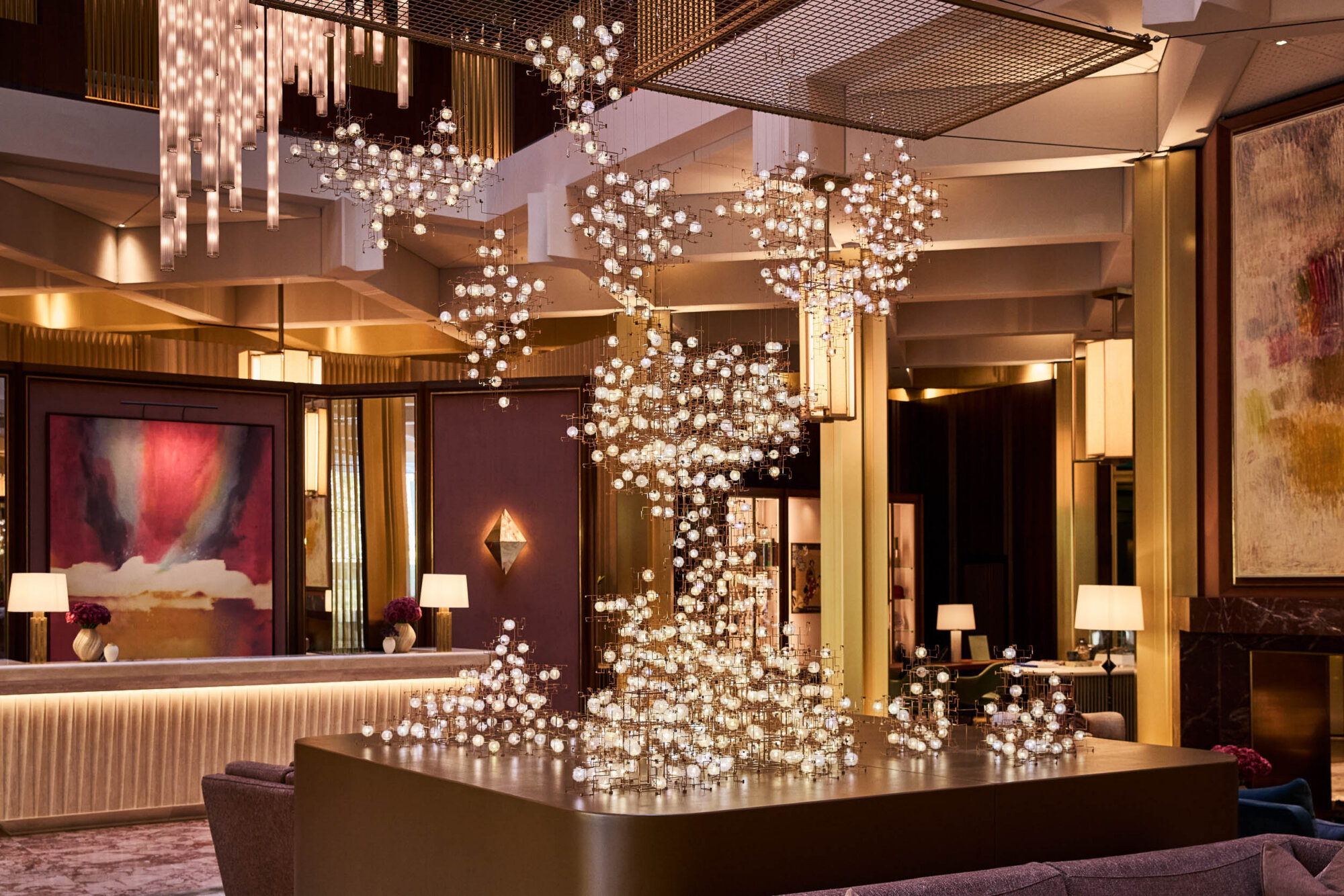
It began, as the best ideas often do, with something entirely ordinary. In 2005, Dutch artist Lonneke Gordijn was pulling apart a dandelion for her graduation project at Design Academy Eindhoven when she noticed that its stem was precisely the width of an LED. She began gluing the seeds to the lights, one by one, and an idea that would occupy her for the next two decades quietly took root. The result, ‘Fragile Future’, is an illuminated sculpture of real dandelion seeds linked through a delicate lattice of bronze circuitry. This festive season it has taken up residence in the lobby of The Chancery Rosewood in Mayfair, housed in Eero Saarinen’s former US Embassy on Grosvenor Square.

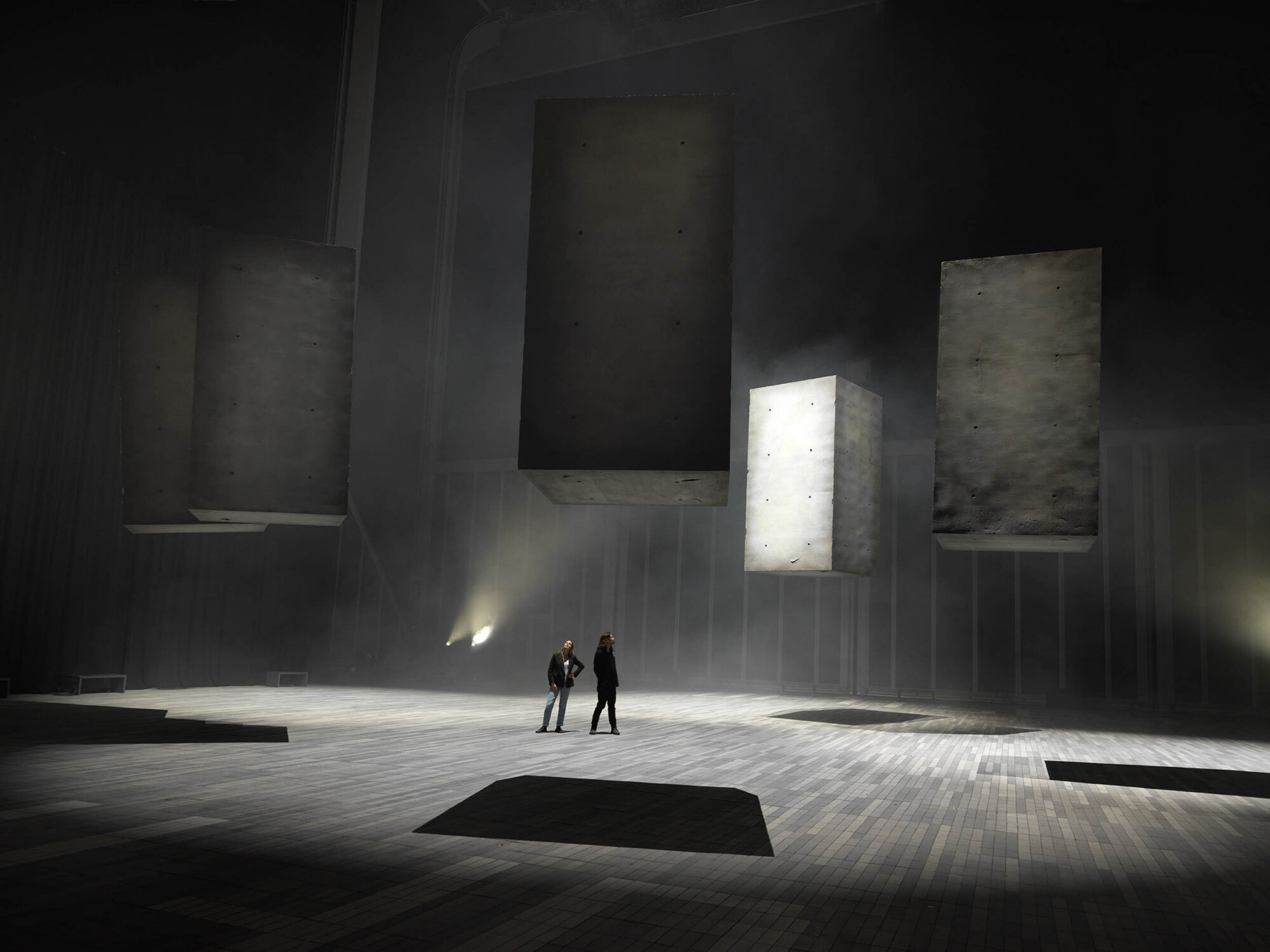
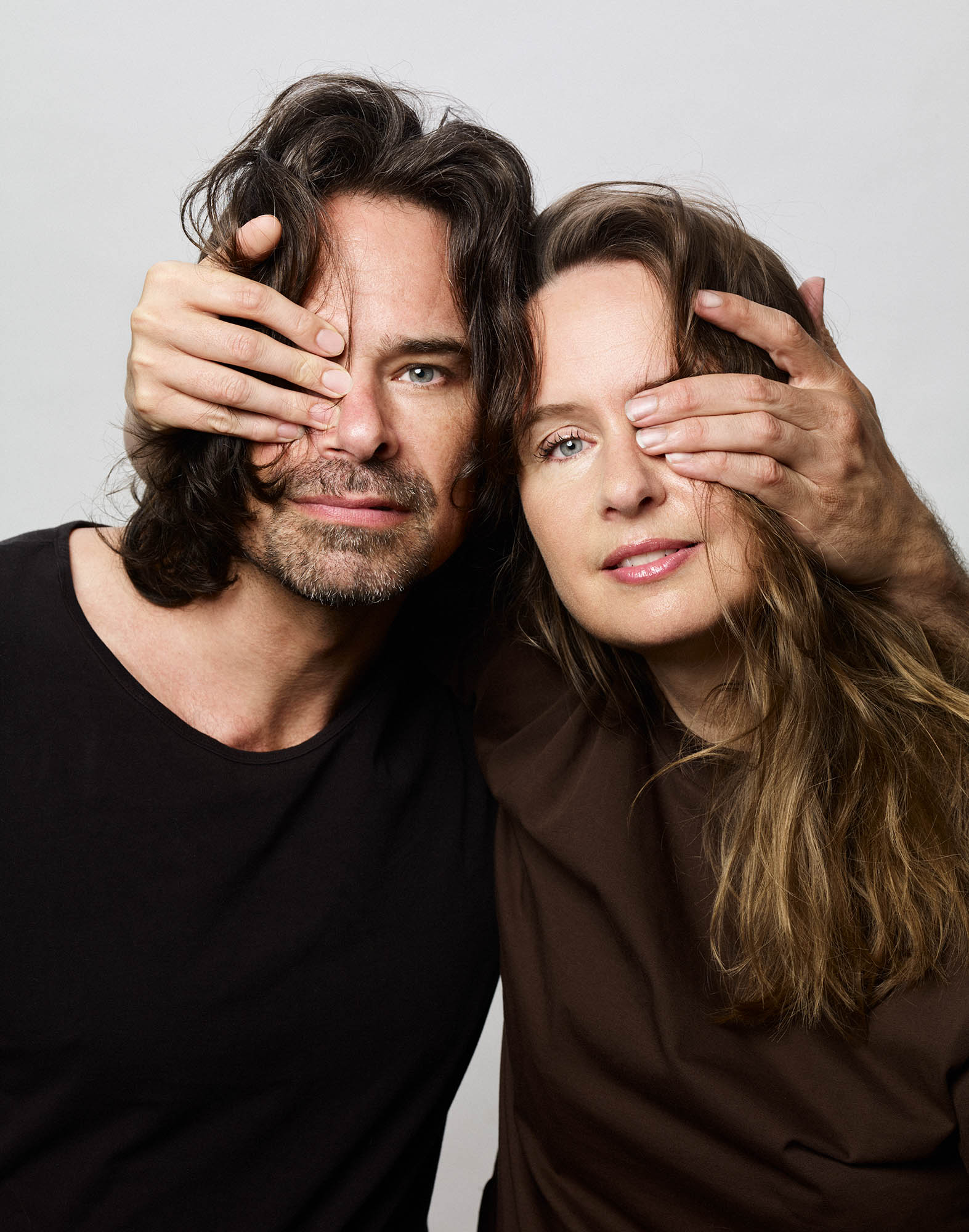
She did not pursue the idea alone. Gordijn met Ralph Nauta at Eindhoven and ‘Fragile Future’ became their first collaboration. In 2007 the pair founded DRIFT, pairing her instinct for the poetry of nature with his love of science fiction and his engineer’s tenacity. From the outset, the studio has occupied a rare space where technology, nature and human experience meet. Its work uses code, robotics, and light to reconnect us with the rhythms of the living world.

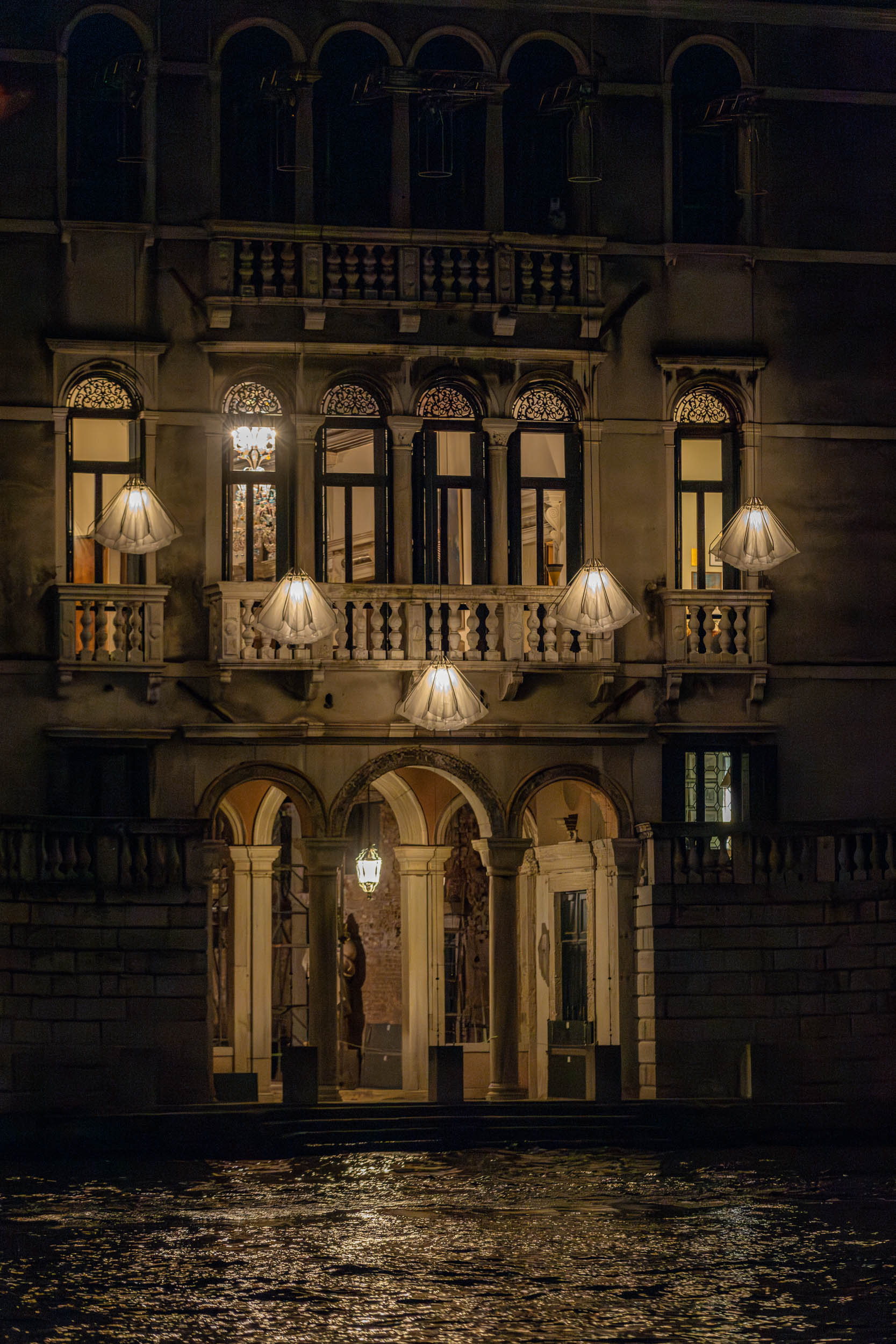
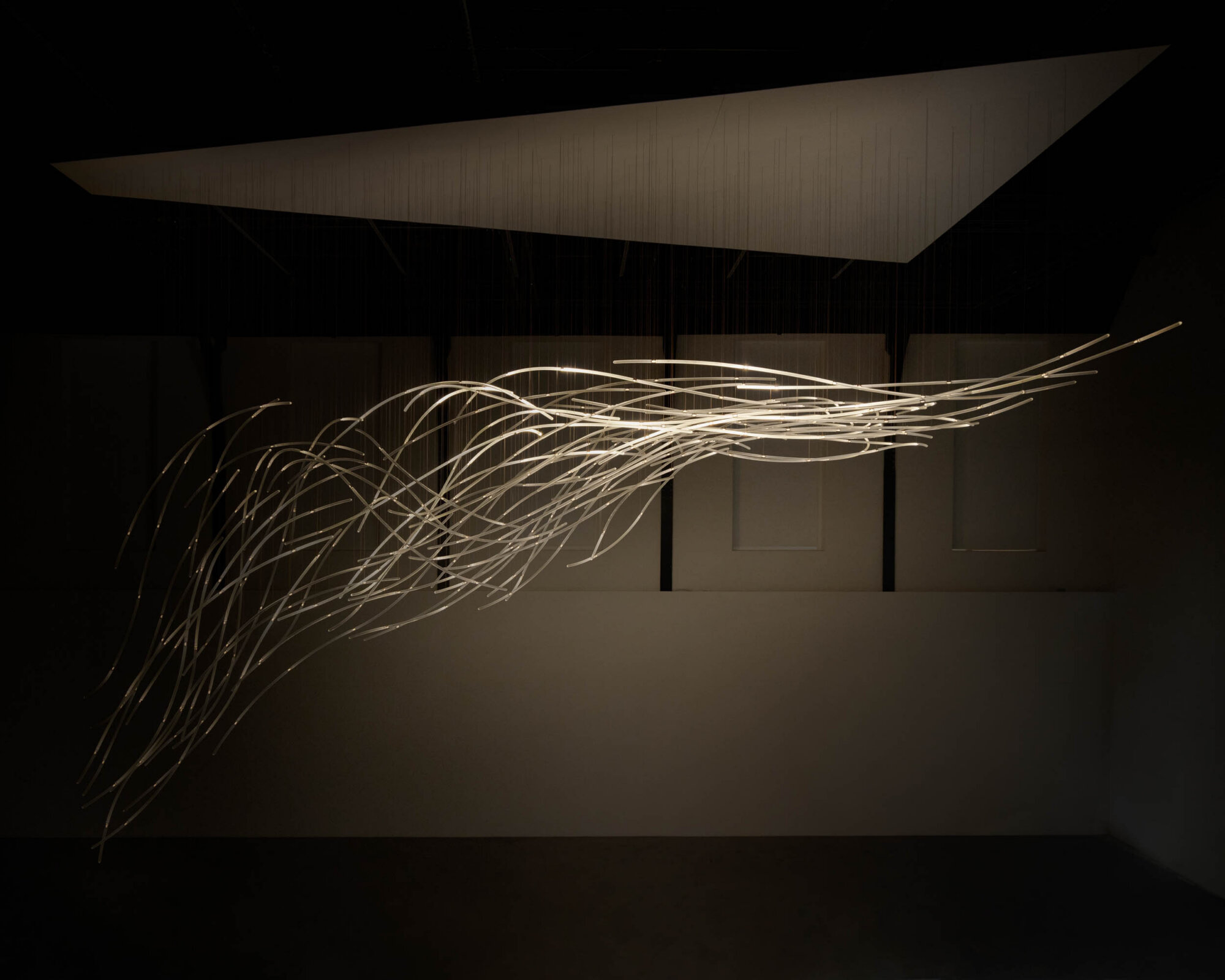
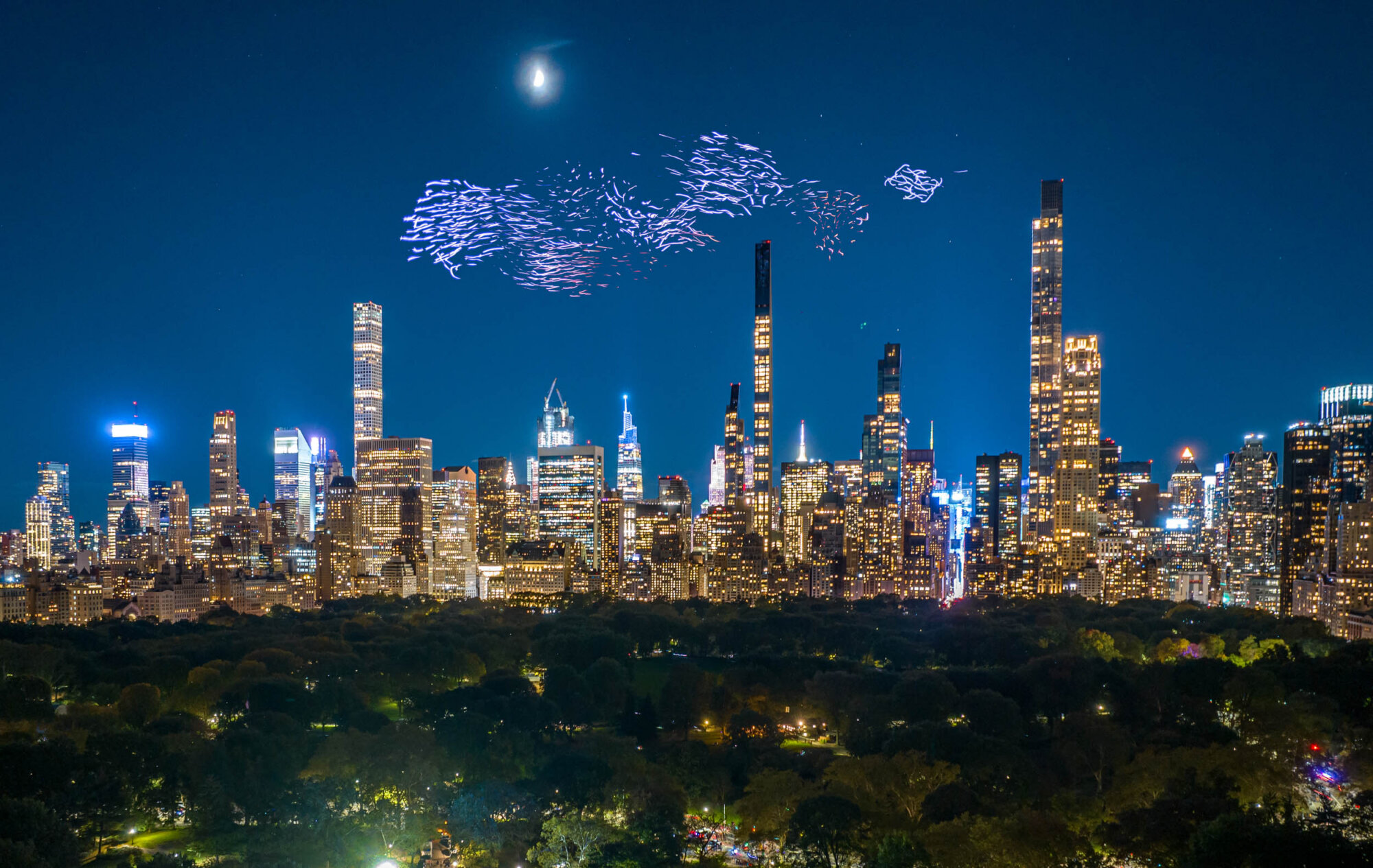
Two decades on, the results are among the most recognisable in contemporary art. ‘Franchise Freedom’, a murmuration of light-studded drones choreographed like starlings, has flown over Art Basel Miami Beach, Burning Man and Central Park, and recently marked the opening of LACMA’s David Geffen Galleries. Shylight’s silk flowers bloom and fold above the Rijksmuseum’s grand stair. DRIFT’s work sits in the permanent collections of the V&A, the Stedelijk, SFMOMA and LACMA. The studio is represented by Carpenters Workshop Gallery and Pace, and a museum devoted entirely to its work is set to open in Amsterdam in 2027.

Beneath the technical bravura lies a simple conviction: that the natural world is far more intelligent than we give it credit for, and that human ingenuity has a great deal to learn from it. Gordijn hopes her work will stop people in their tracks, especially those who might never set foot in a gallery, and draw their eye to what they would otherwise overlook. The Wick sat down with Gordijn to discuss the intelligence of plants, her hopes for a more sustainable future, and why, given the pick of any architect, she would rather collaborate with nature itself.

THE WICK:   What does a typical Monday look like for you both, in the studio or out of it?

LONNEKE Gordijn:   A typical Monday for me starts around 6, then cuddling in bed with my little boy until about 7. I get dressed, get breakfast on the table, and at 8:30 our babysitter arrives and I leave for the studio.

On Mondays, we have all our general meetings with the team, where we decide what the focus will be. That goes on until 6, so not very exciting.

When I get home, my husband has cooked and dinner is on the table. I play with my son, put him to bed, and then spend some time with my husband. That’s my boring Monday.

TW:   ‘Fragile Future’ joins real dandelion seeds with LEDs and bronze circuitry. Where did the idea first take root?

LG:   ‘Fragile Future’ came from an idea I had in 2005, when I was graduating from art school. I was brainstorming for my graduation project and looking at the structure of a dandelion, admiring it. While I was pulling all the seeds and their little parachutes off the stem, I realised the stem was the same size as an LED light. I thought, what would happen if I just glued all the seeds onto an LED? So I just started doing that.

Then a magical moment happened. I didn’t know what it was, but I knew it was special. I saw a flawless marriage between nature and technology, and until then I had always seen those as opposites. I thought it was an interesting idea: what if we could merge nature and technology in a way that feels natural, so they help each other instead of fighting each other? So I continued with that process. It was the very first moment the idea revealed itself to me, and it came in a playful moment.

TW:   The dandelion is important in your work. What significance does it hold?

LG:   For our artwork, I became dependent on the dandelion. I had to collect it, and I had to tap into its language, and I learned so much. The dandelion opened up the natural world to me in a way I had never experienced before. Every year I learn more about it, and on a deeper level. I realise that if this one dandelion has so many strategies, and so much communication going on that I can tap into, then the natural world, with all its species, must be incredibly intelligent and hold so much knowledge for us.

To me it feels like a portal, a realisation of the massive knowledge bank that plants, nature and the little things around us hold. Especially the plants we see every day. It doesn’t have to be the most beautiful tropical or exotic plant. It’s what is all around us that holds all this incredible information, and that fills me with wonder.

TW:   ‘Fragile Future’ is in the lobby at The Chancery Rosewood this festive season, where many people will come across it by chance. Why was this collaboration an important one for you and how does it change the way the work is experienced?

LG:   The Chancery Rosewood is an incredible hotel with an eye for detail, where art holds an important position. What I like is that the lobby has space for this artwork, and it can and will be experienced by everyone, because everyone comes in through the lobby.

It’s a dandelion. It’s not something luxurious. It’s something that every country and every culture knows. Because the dandelions light up, they shine a different light on the things that are important. It’s a beautiful, complementary message for the holiday season: to be thankful and grateful for the things around us that hold beauty in themselves.

I hope people stand still for a moment and see it, especially people who don’t go to museums and galleries but come across art this way. I hope this work brings a bit of meaning and awe to people, and hopefully sparks some conversation.

TW:   ‘Fragile Future’ is about fragility and resilience. What feels fragile to you right now, and what gives you hope?

LG:   To me, what feels fragile at the moment is the situation in the world: how fast things are changing, how unclear things are, and the future with AI. It feels like people are trying to get things done before AI really impacts us massively. The power play between countries, the way power is divided and shifting, and a technology that is about to become very, very important all feel fragile, because we don’t yet know how to navigate them or deal with them.

What is hopeful, though, is that I think people, the majority of people, always gravitate towards the good things and want the good things. Young people, and children especially, are the future. One day they will have to make the decisions. There is a lot to win. With our work, we want to contribute to an environment where people are connected to themselves, not distracted and not carried away by all the information out there, where it no longer seems to matter what is true.

I believe in people, and in a sustainable future, even if it’s fragile, which it always is. Something to remember is that we are all responsible. We are all part of how decisions are made, and that is a good thing.

“I believe in people, and in a sustainable future, even if it’s fragile, which it always is.”

Lonneke Gordijn
TW:   Your work often starts with something observed in nature, from starling murmurations to flowers opening. What has caught your eye lately?

LG:   I’m always fascinated by things that move in nature. We recently discovered that everything that moves is part of a chapter. There are maybe three or four chapters, maybe five. The fifth one we haven’t discovered yet. I love seeing something and realising it’s the same as something else. For example, a murmuration works the same way as the cells in our bodies communicate, and the same way a river flows. It’s all individuals who make the choice to join a movement and find the easiest way through an environment full of obstacles, where everything is constantly changing. I love to categorise the world in that way.

Something that has caught my eye recently is innovation and sickness: people getting stuck. Everything that doesn’t move gets sick, and everything that tries to stay out of the movement is avoidant and can’t solve problems. Sometimes people get to a place where they get stuck, and I think making them move again is a challenge. So I look at things through the lens of the importance of movement. I find it extremely interesting, and I constantly apply it to situations.

TW:   You’ve choreographed drones and built kinetic sculptures. Which technology are you most curious to work with next?

LG:   Working with a lot of technology is actually a very time-consuming and collaborative process, because we need to align many different technologies with nature, basically: with movements that communicate to us, and with situations that resonate with people. That always comes down to handwork. The technology I’m most interested in at the moment is just quietness, calm and focus. Something very, very basic, because in the end everything needs this. I always see results when I stop looking at the technology and look at the meaning of things.

TW:   The Chancery is set in Eero Saarinen’s former US Embassy. Which architect, living or dead, would you most like to collaborate with, and on what?

LG:   It’s a good question. I know so many wonderful architects I would love to work with. But the architect I would most love to work with is nature: time, wind, water, sun, light, temperature, basically all the natural elements that shape things. And then, if possible, I would love to speed up time. So okay, the technology I’d love to work with is a time machine, but in relation to learning to understand nature better.

TW:   If you could stage a work anywhere in the world for just one night, where would it be?

LG:   If I could stage our work anywhere for one night, I would place a sequence of artworks in front of every government building, all over the world at the same time. I would let the people in government walk through and experience moments of calm, moments of resonance and moments of connection, and then let them make their decisions. I am convinced this would really lead to solutions and peace.

TW:   Your favourite book to read and pass on?

LG:   The Hidden Life of Trees by Peter Wohlleben is one of the books I love to read, because it reveals the intelligence of the trees around us. It’s so interesting, and it goes so much further than we think. It’s not just about the interconnectedness under the earth. There’s so much more to it.

There are also books by Stefano Mancuso, who writes about the intelligence of nature, plants, and leaves. We always look at animals, but plants have a different type of intelligence. They organise themselves differently, not with a central brain in one place but with a very decentralised system. That’s why it’s so interesting to look at the knowledge of plants and how they organise themselves. It reveals patterns that we can learn from and tap into on a very practical, daily basis. It’s astonishing what nature is capable of. One little example: there are plants that may be able to see, with lens-like cells on their leaves that let them sense their environment. How amazing is that?

TW:   Where is your favourite Culturally Curious spot in Amsterdam when you’re off duty?

LG:   At the moment we’re building the most culturally curious spot in Amsterdam! The DRIFT Museum Amsterdam has been in the making for seven years now. I’m extremely excited and proud that in the next few months, in spring 2027, we’ll be able to share it with a big group of people, hopefully, and let them experience how that interconnectedness and resonance feels: through art, through technology, through environments, through shared experiences and through performances. To be honest, I can’t imagine a better place, and I say that very proudly.

TW:   Who is your ultimate Monday Muse, and why?

LG:   My ultimate Monday Muse is Vivienne Westwood, specifically in relation to my trip to London for The Chancery Rosewood. More than 20 years ago I lived in London, did my internship there and learned so much about London’s cultural world. One of the first nights of my internship was the opening of the Vivienne Westwood exhibition at the V&A. She was already older then, and she looked so stunning, so confident, so herself. She didn’t care about age or anything like that. I always saw her as someone so unconventional, who never adapted herself, and who was still respected. So cool. Her art and her fashion live and breathe that attitude, which I love. I think it’s very important for people to see that, be inspired by it and experience it themselves.


Share story
READ MORE
The Wick Culture - Interview “The Architect I Would Most Love to Work With Is Nature”: Lonneke Gordijn on Dandelions, Drones and DRIFT
Monday Muse

Interview “The Most Powerful Work Often Already Exists”: Sabine Senn on Prix Pictet and the Power of Photography

The Wick Culture - Nicoletta Fiorucci, 2026. Photo by Maxim Dosca Courtesy of My Art Guides, Lightbox (2026)
Monday Muse

Interview “Fall in Love with the Work You Want to Acquire”: Nicoletta Fiorucci on Artists and the Art of Patronage

The Wick Culture - Interview “The Architect I Would Most Love to Work With Is Nature”: Lonneke Gordijn on Dandelions, Drones and DRIFT
Monday Muse

Interview “Art Had to Be a Part of a Well-Lived Life”: Phyllis Kao on Sotheby's, Auctioneering and Asian Art

The Wick Culture - Eva Omaghomi. Photo: Ernest Simons
Monday Muse

Interview “Africa Has Always Produced Luxury”: Eva Omaghomi on Putting African Fashion Front and Centre

The Wick Culture - Photo © Anne Tetzlaff
Monday Muse

Interview “If an Artist Can Imagine It, We Can Try and Make It Happen”: Marie McPartlin on Ten Years of Somerset House Studios

The Wick Culture - Portrait of Sarah Carrington. Photo: Chloe Mallett
Monday Muse

Interview “Sculpture Is Always an Experiment”: Sarah Carrington on Taking Art Outdoors