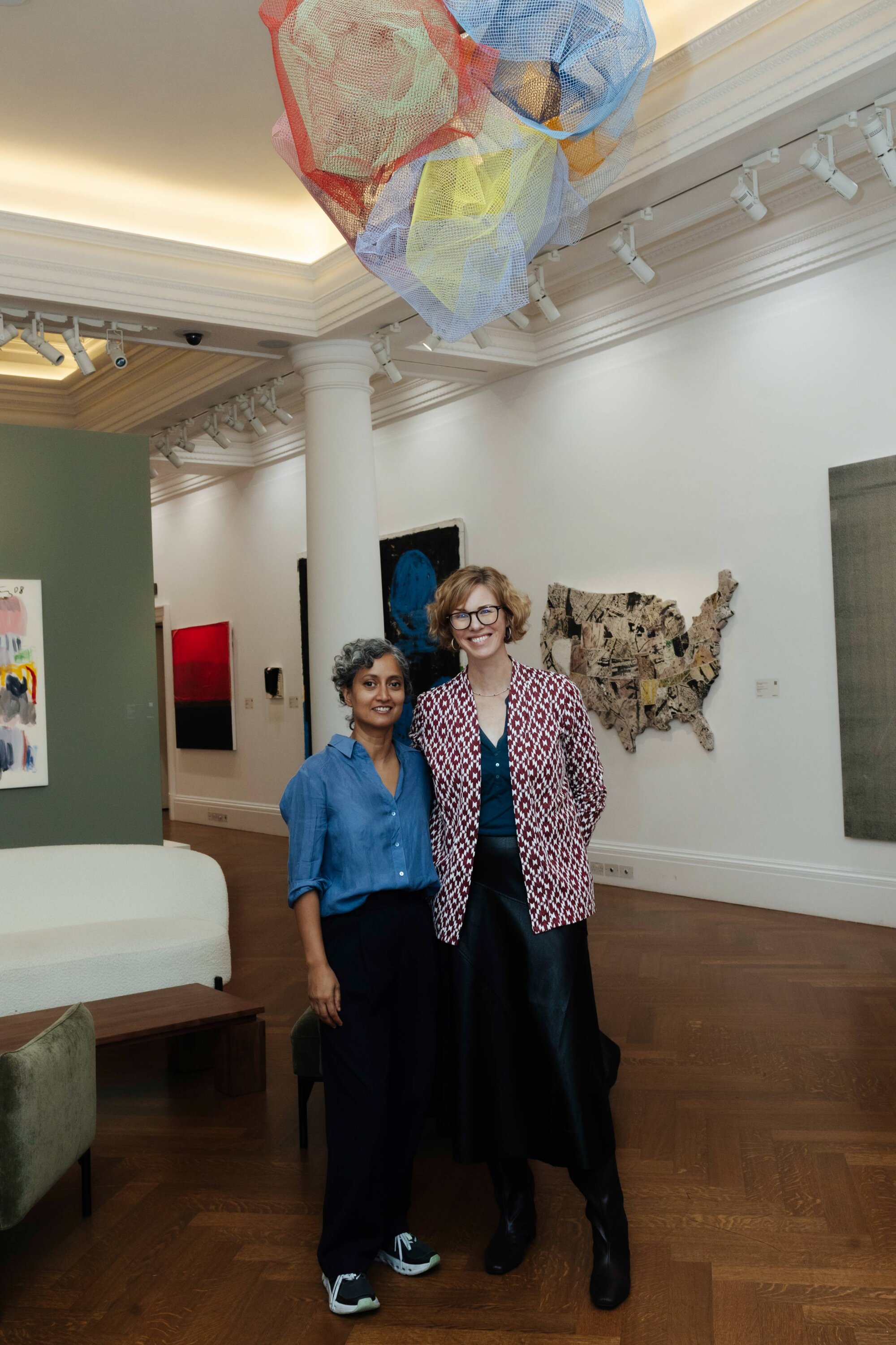
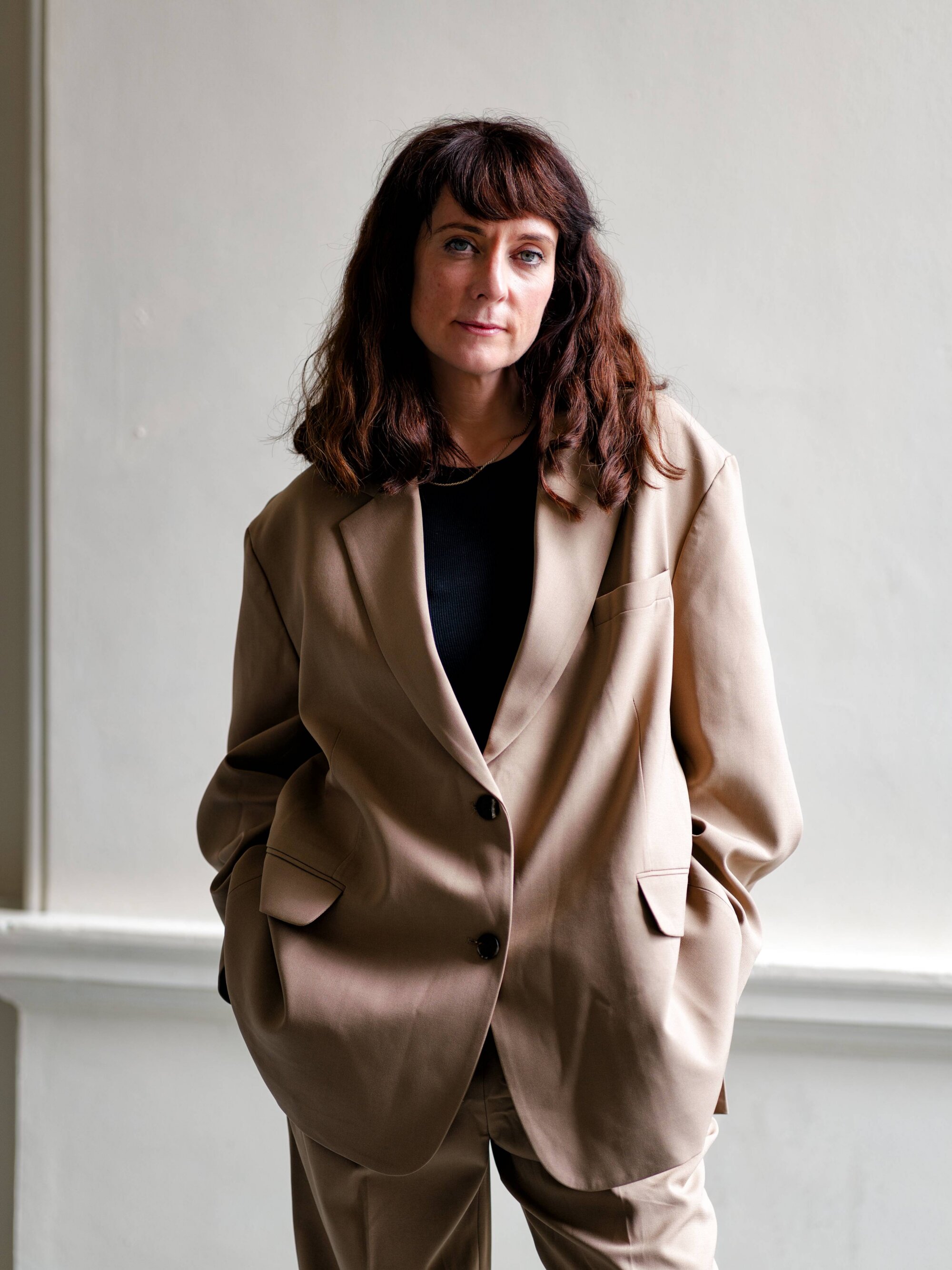
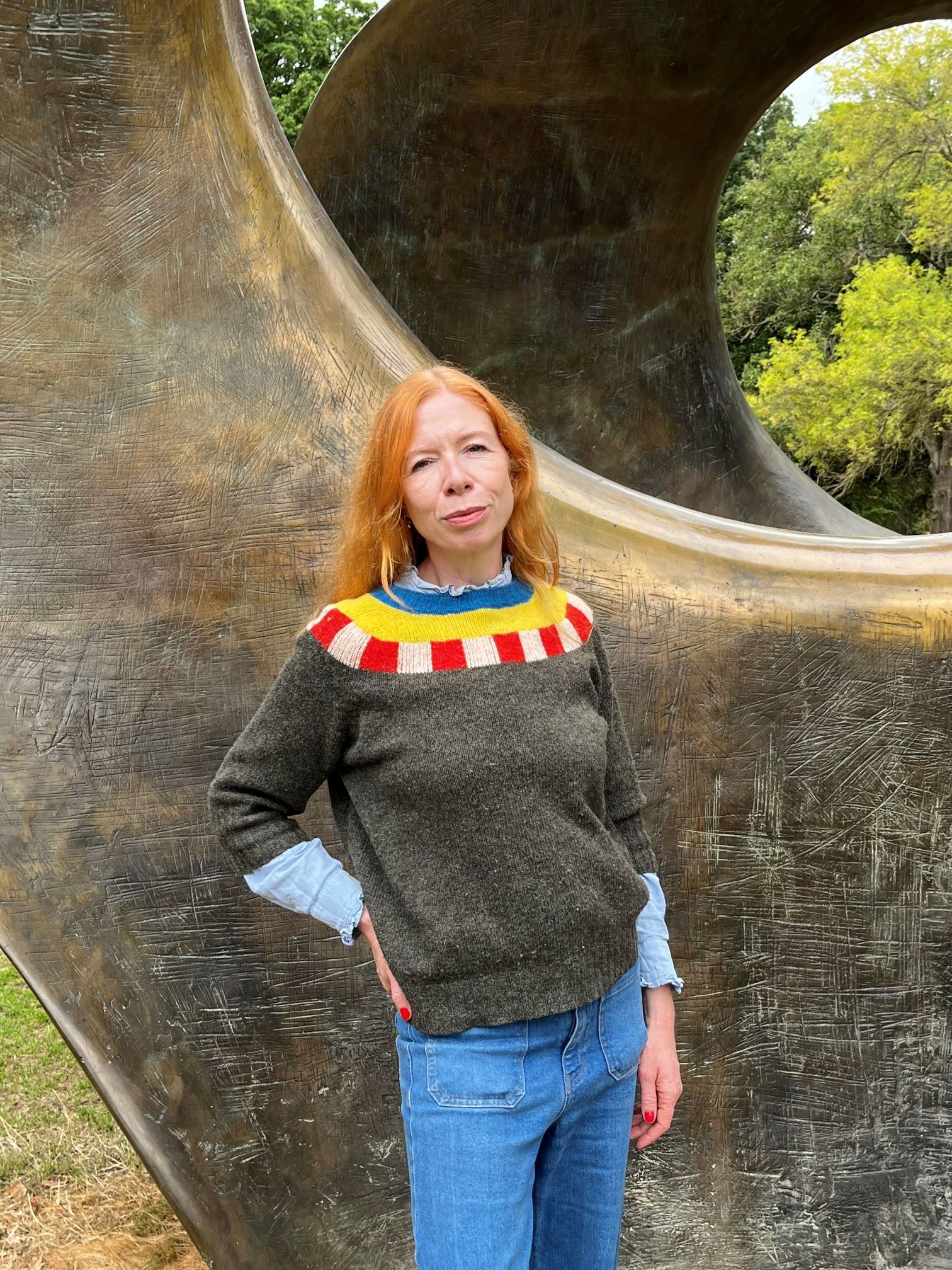
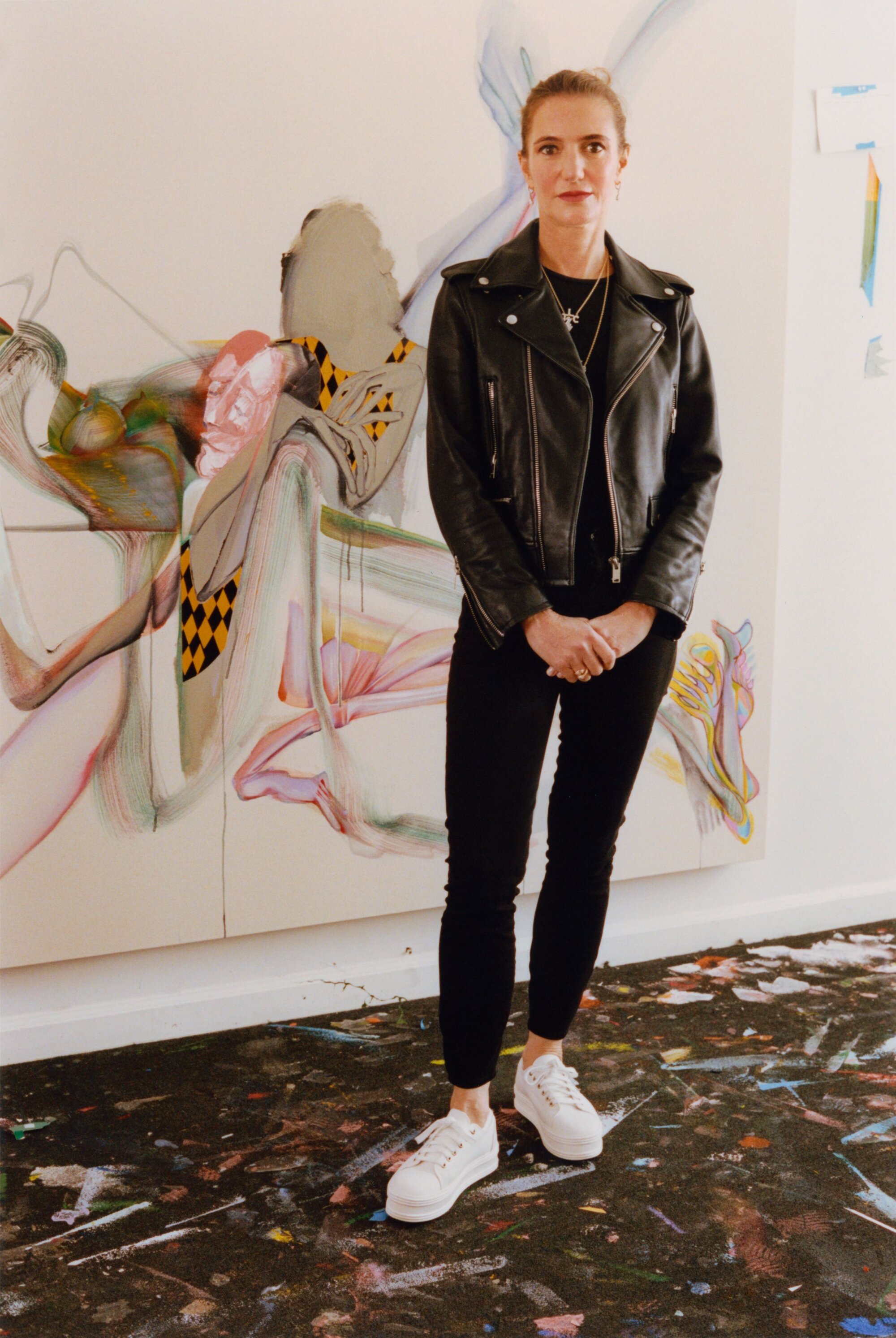
The Wick Culture - Portrait of Sarah Carrington. Photo: Chloe Mallett The Wick Culture - Portrait of Sarah Carrington. Photo: Chloe Mallett
Monday Muse

Interview “Sculpture Is Always an Experiment”: Sarah Carrington on Taking Art Outdoors

Interview
Sarah Carrington
Photography
Chloe Mallett
21 September 2026
Interview
Sarah Carrington
Photography
Chloe Mallett
21 September 2026
Sarah Carrington has made a career of taking art beyond the gallery and into the fabric of the city. Since joining The Line in 2019 and becoming Director in 2025, she has helped shape its commissions, partnerships and engagement programmes, with a particular focus on widening access to art. Her work there has included establishing the Youth Guides and wellbeing programmes, as well as developing new commissions and partnerships.

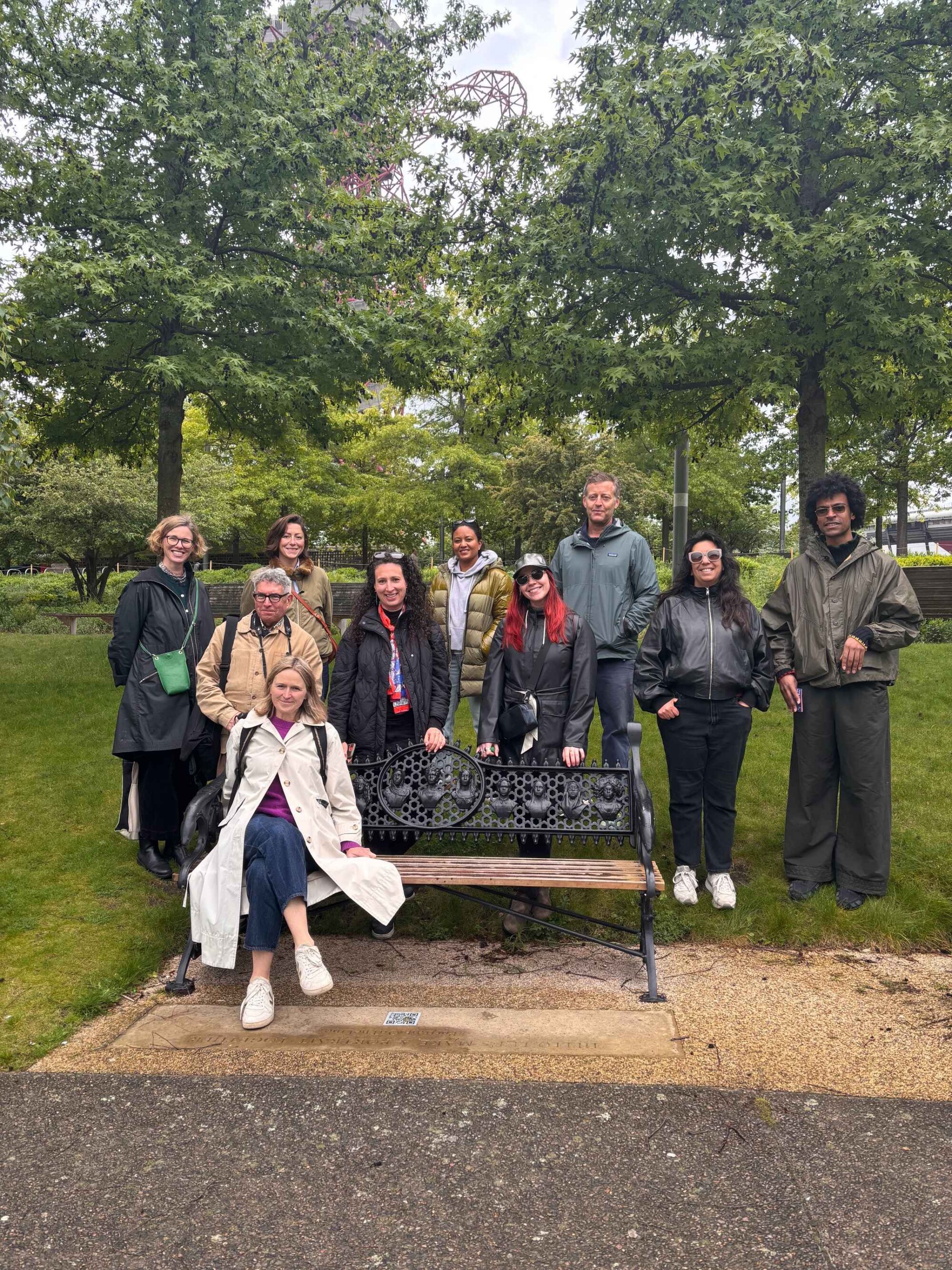
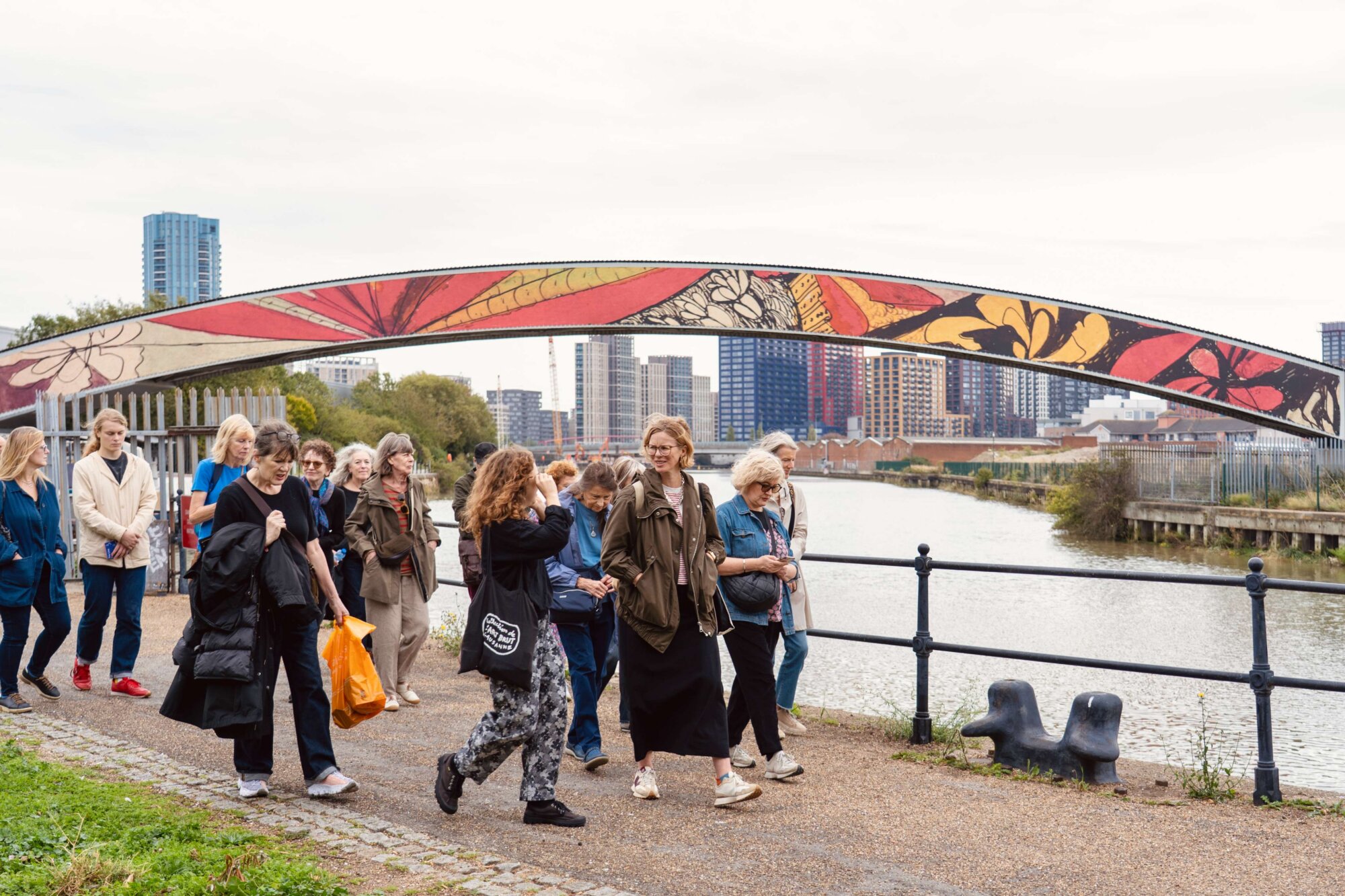
The Line gives this work a physical route through East London. Extending 7.7km from The O2 to Queen Elizabeth Olympic Park, it follows the waterways and Greenwich Meridian, with 24 installations encountered along the way, including works by Antony Gormley and Zineb Sedira. Around the outdoor exhibition sits a wider programme of wellbeing and learning with local communities, while the Youth Guides programme offers paid training and employment to young East Londoners. Carrington’s work also extends to the slower, less visible business of commissioning: months spent between artists, fabricators, partners and landowners before a new work finally enters the landscape.

This week, The Line joins the Fourth Plinth, East Bank, Frieze Sculpture and Sculpture in the City for the fifth edition of London Sculpture Week. The citywide programme encompasses events and encounters with sculpture across London, including a symposium at the Warburg Institute exploring what monumentality might mean today. In the midst of it all, The Wick caught up with Carrington to talk about how public art can reach people beyond the gallery, what it takes to realise ambitious work outdoors, what lies ahead for The Line and the artists she would love to bring to the route.

THE WICK:   What does a typical Monday look like for you?

Sarah Carrington:   Mondays start early so I can get ahead of things before the week gets fully underway.

I have a busy house at home, so I like finding quiet moments before people appear, and then I head into the office at Here East, close to the V&A Storehouse. I use my journey to prepare for meetings and the day ahead. For The Line team, Mondays are a day to spend together in person, and we have a weekly meeting to help us shape and plan the week. I regularly host walks on The Line for prospective artists, partners or patrons – I love seeing the route through fresh eyes, and no one visit is the same, depending on the weather, tides and season. I am very lucky to have walking and talking as a key part of my workday. I might end the day by going to an event. Even if I’m tempted to head home, I know that I always love the opportunity to see work and connect with colleagues old and new, so it’s always worth making the most of opportunities.

TW:   You joined The Line in 2019 and became Director last year. What is The Line and why is it vital?

SC:   The Line is East London’s 7.7km public art trail following the waterways and the Prime Meridian, from the O2 to Queen Elizabeth Olympic Park. It includes 24 art installations, sculptures ranging from totemic forms with immersive audio to illuminated text on a film studio wall, by artists as varied as Antony Gormley, Madge Gill and Zineb Sedira.

Our purpose is to democratise access to art and create opportunities for creativity, learning and wellbeing through connecting with art outdoors for free. The Line is a unique experience in London where people can see and interact with art outdoors by leading artists for free year-round.

This resource is vital, as we enhance wellbeing, increase learning and provide professional opportunities for young people. We know from people we work with and visitors to The Line that our programmes have changed the way they think and feel, not just about art, but about the area and themselves.

“Our purpose is to democratise access to art.”
TW:   What is the most exciting thing to happen to The Line yet?

SC:   Since The Line was founded in 2015, we’ve hit so many milestones – such as celebrating our tenth anniversary last year and reaching an estimated 5.6m people, introducing new works, including works by Thomas J Price in 2015 and 2020 and developing Rana Begum’s commission in 2022, working with over 1,000 school children and 100 teachers last year and expanding our creative health programmes – so it’s hard to name a single thing.

However, I’m always excited to secure new partnerships and bring people on the journey of developing a new work or programme – we work closely with our key partners like Arup Phase 2, fabricators and landowners, discussing and testing for months until the launch.

We have recently started working with a primary school in Newham and Aston Martin on a new commission for next year – I can’t share much more for now, but we are delighted to have support from generous donors including the Bukhman Foundation to help us realise one of our most ambitious pieces yet.

I’m equally inspired by the many young people who had their first job with us on the Youth Guides programme. These are local young people aged 18-22 who receive paid training and employment to build confidence through learning how to talk to the public and lead tours on The Line. Their enthusiasm for the work and the unique way they look at art inspire me and help me to see these familiar pieces in a fresh way. Now these young people – many of whom have grown with us over the past five years – have helped to shape aspects of the programme itself.

TW:   For someone visiting The Line for the first time, what is the key East London hotspot which is unmissable?

SC:   A few of my favourites are Cody Dock, an extraordinary ecological charity on the banks of the River Lea which raises awareness of local heritage and ecology. It shouldn’t be missed. It’s unforgettable to visit and a key point on The Line, on the route between Star Lane and Stratford.

We always like to find an excuse to get to Polentina, a very special restaurant tucked away in a working textile factory in Bow, close to Three Mills Island on the route of The Line, that serves incredible Italian food. Once you’re in Queen Elizabeth Olympic Park, UCL East, University College London’s award-winning Stratford campus, has fantastic public artwork within the lobby, including Trēow of Time by Larry Achiampong and David Blandy, while V&A East and V&A East Storehouse, which is redefining the traditional museum, are a great way to round off your cultural journey on The Line.

TW:   Increasing access to art has been central to your work at The Line. Beyond making the route free, what have you implemented to include more people?

SC:   Inclusivity and accessibility are at the heart of everything we do at The Line, and we saw during Covid how local people connected with The Line in a new way. When all museums were closed, they found free art along towpaths with access to a wealth of wildlife in one of the most densely populated areas in London.

We built a wellbeing programme in response and since 2021 have offered free weekly wellbeing walks that local people can be referred to by their local GP.

Our creative health programme now encompasses a dementia initiative as well as walks and workshops for new mums. The Line also provides an outdoor classroom for local schools, and our youth employment programme has been running for five years, providing a first role for young people from East London to work as guides, talking to the public about art, heritage and nature and leading tours. The programme builds confidence, develops skills and provides progression routes.

TW:   Which artist would you most like to see there and why?

SC:   I am lucky enough to already be working with some incredible artists, including Saad Qureshi, Albert Potrony and Ryan Gander. The artists I would most like to see on the route are artists who have already developed proposals which I am determined to see brought to life, as well as works on loan that we are in conversation about, which I hope to be able to reveal before too long! A dream artist to work with on The Line would be Kimsooja. I worked with her in the US after my MA, and I would love to see how she would respond to the water and landscape on the route. I have also had a long-standing dream of working with Katie Paterson – putting it out here to manifest!

TW:   The Line is located through the heart of East London, arguably one of the most fashion-forward parts of the capital. What is your go-to piece of clothing / fashion item for big openings?

SC:   I fear I’m often a ‘grab what you can find’ person when it comes to getting dressed, but I do love combining vintage pieces or high street classics with brands like APC, Sezane and Soeur. I’ve also inherited a few things that my mum made in the 70s, including a jacket made using William Morris’s fabric, which is a favourite. I have a few treasured blazers which are my go-to, and I’m always complimented on my mac, which was a supermarket collaboration with Roksanda.

TW:   London Sculpture Week returns for its fifth edition this September, bringing The Line together with the Fourth Plinth, East Bank, Frieze Sculpture and Sculpture in the City. What are you most looking forward to?

SC:   Seeing Lady in Blue by Tschabalala Self launch on the Fourth Plinth in Trafalgar Square was a major highlight and a great way to kick-start the programme. We have lots of ways to encounter sculpture this year, including artist tours by Andrew Sabin and Abigail Fallis as part of Sculpture Switch, and new audio content on the app. This year we have also refreshed our family activity pack that will be available for free from the IFS Cloud cable car terminals at Greenwich and the Royal Docks, and the London Sculpture Week digital guide on Bloomberg Connects offers prompts for family activities in response to works across the city. The LSW symposium takes place on Friday 25 September at the Warburg Institute. This year the theme is reframing monumentality, and we are delighted to have Jo Baring bringing perspectives to the origins and impetus for sculpting forms outdoors. I believe that we are now sold out, but the LSW digital guide will feature audio recordings of the discussions so you can enjoy them from there after the event too.

TW:   You have spent more than twenty years working as a curator and cultural strategist, across galleries and the public realm. What drives you and gives you resilience in your work?

SC:   I feel incredibly lucky to be able to work with artists on new sculptures in connection with specific landscapes, contexts and histories. It is never a linear, straightforward journey. Sculpture is always an experiment and there is rarely a one-size-fits-all approach that can be taken. It therefore requires you to support the artist, partners and stakeholders to take a leap of faith and to be part of a journey of discovery to bring a new encounter with art outdoors into being. That specific alchemy, requiring trust, collaboration and goodwill, builds surprise and magic that is hard to beat and so often will surpass expectations when it works!

I’m driven to find the right ingredients needed to bring something that hasn’t existed into being and working with local people to find meaningful connections to build ownership and bring joy.

TW:   What podcast are you listening to and what book are you reading that give you inspiration?

SC:   I am a huge fan of This Cultural Life on Radio 4 – I love hearing people’s earliest influences and journeys. I’ve just read London Falling by Patrick Radden Keefe, which was a fascinating reflection on the relationship of London’s wealthy elites and the city’s criminal underbelly. My son recently gave me a book by Bruno Munari from a trip to Milan, and I’ve loved rediscovering his playful perspective on design and the world.

TW:   If money and space were no object and you could acquire any sculpture for your own collection, what would it be?

SC:   There’s a long wish list, but I would be thrilled to live with a work by Magdalene Odundo, an Eva Hesse or a ceramic by Leilah Babirye. I also love the idea of being able to play in my very own Fujiko Nakaya fog sculpture.

TW:   Who is your Monday Muse and why?

SC:   I think you’ve already featured many of mine already! I would suggest artist Alberta Whittle because she’s such a brilliant artist and a wonderful person. If you’ve already featured her, then Belinda Holden, the visionary Director of the Yinka Shonibare Foundation.


Share story
READ MORE
The Wick Culture - Photo © Anne Tetzlaff
Monday Muse

Interview “If an Artist Can Imagine It, We Can Try and Make It Happen”: Marie McPartlin on Ten Years of Somerset House Studios

The Wick Culture - Interview “Sculpture Is Always an Experiment”: Sarah Carrington on Taking Art Outdoors
Monday Muse

Interview “Public Art Belongs to Everyone”: Jo Baxendale on How Art Changes a City

The Wick Culture - Portrait of Pilar Corrias. Photo: Meg Young
Monday Muse

Interview “The Artists Are What Keep the Gallery Running”: Pilar Corrias on Building a Gallery Her Way

The Wick Culture - Photo: Matthew Cole
Monday Muse

Interview “I Fell Into My Career by Accident”: Amrita Jhaveri on Building a Life in Art

The Wick Culture - Natasha Shafi photographed by Hannah Dace, 2026
Monday Muse

Interview Inside Natasha Shafi’s World of Artful Travel

The Wick Culture - © Cleo Leather
Monday Muse

Interview Vanessa Branson