Spotlight
Spotlight Azadeh Ghotbi’s Paintings Invite You To Look Again
Championed by Julia Campbell Carter
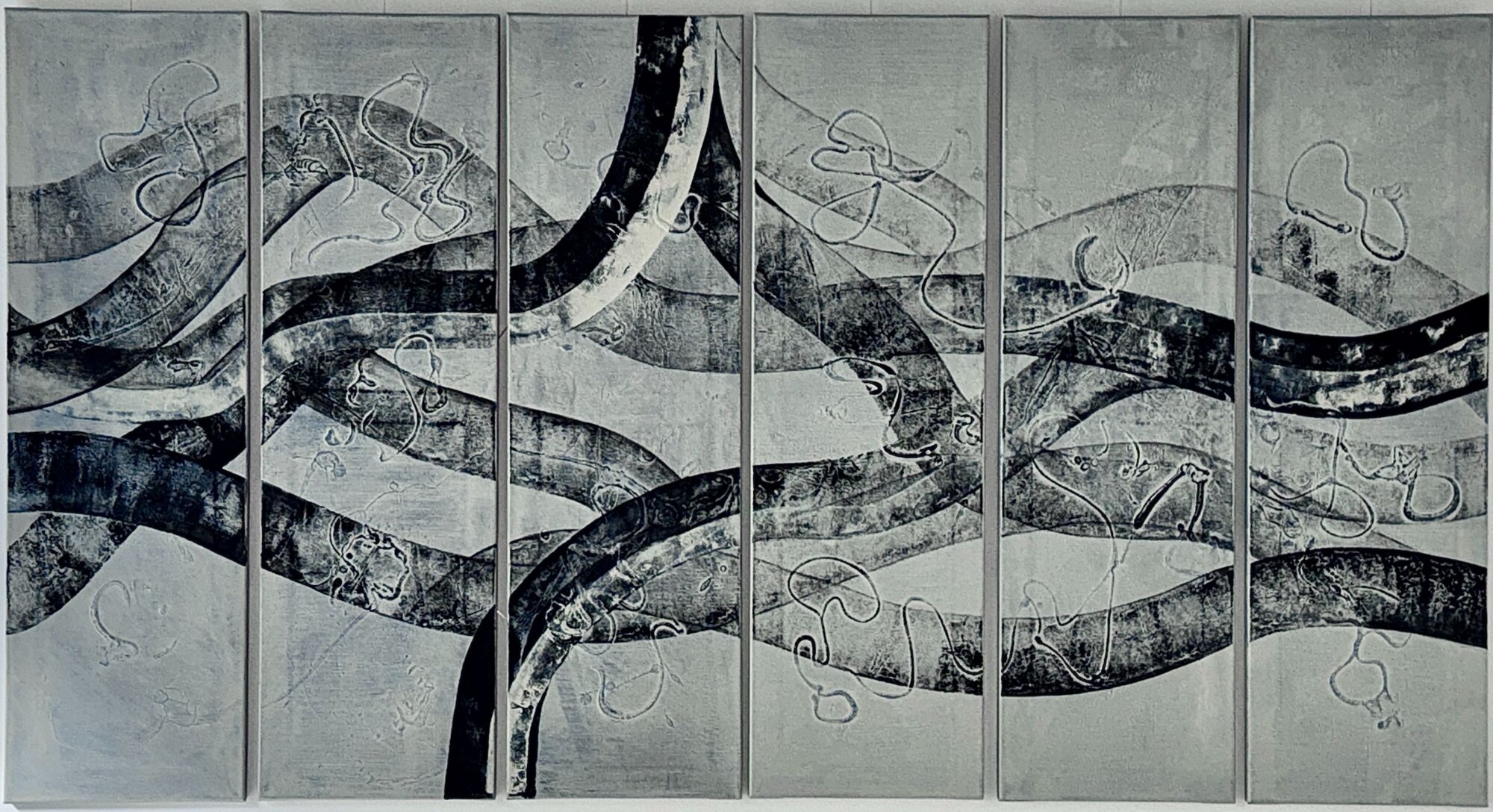
Above Azadeh Ghotbi, Crossroad 42, 2026. Courtesy of the artist
ONES TO
WATCH
WATCH
ONES TO
WATCH
WATCH
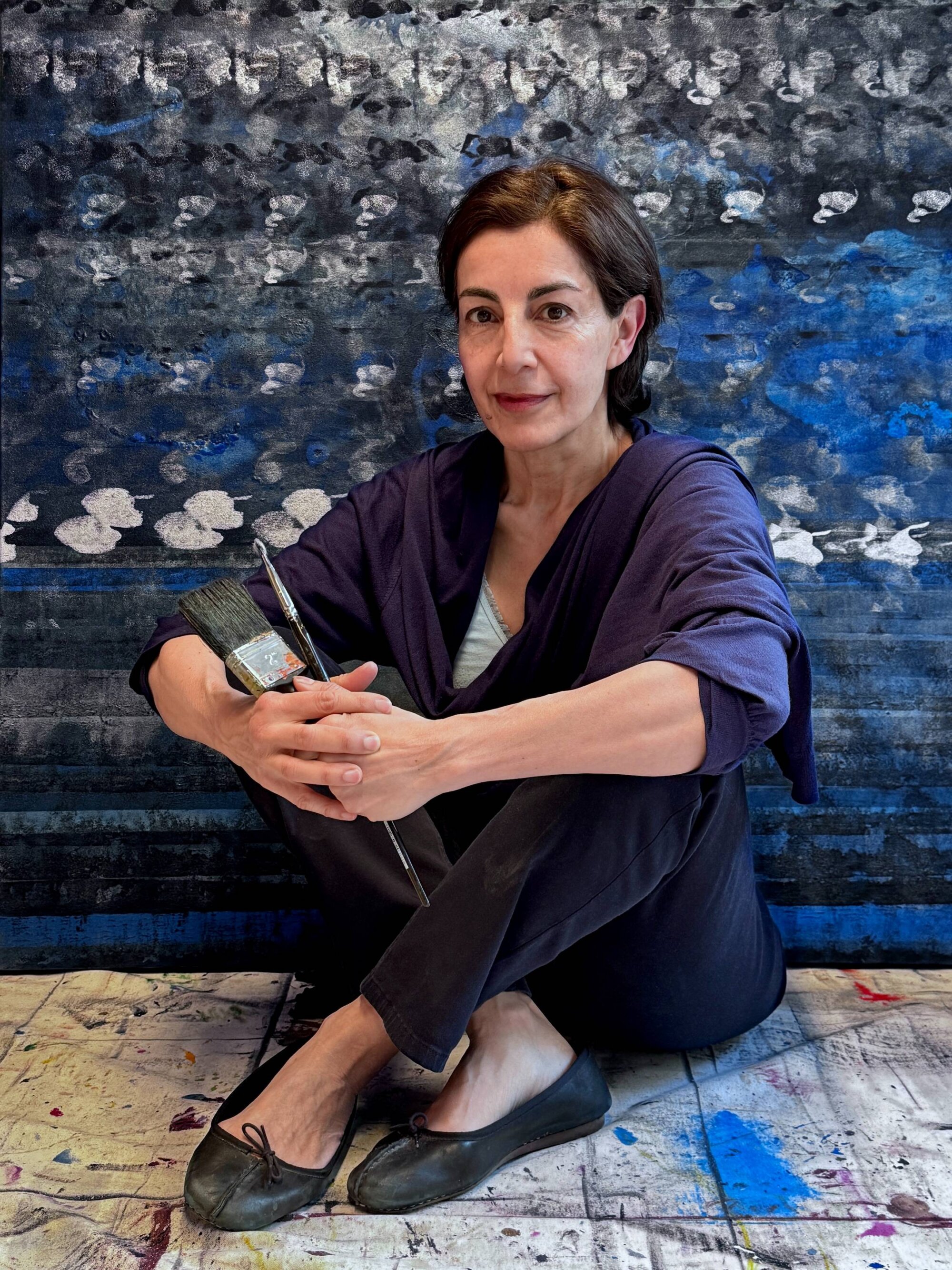
Above Azadeh Ghotbi Portrait
Interview
Azadeh Ghotbi
Interview
Azadeh Ghotbi
Azadeh Ghotbi’s paintings begin by withholding. Based in London, the Iranian-American artist works in abstraction, creating compositions that appear sparse and composed at first glance, yet hold far more than they immediately give away. Her work asks for patience: the longer you stay with it, the more you see.
This instinct is closely tied to biography. Ghotbi describes her work as shaped by “an early childhood marked by uprooting and exile” and by “a lifetime observing patterns of human behaviour while rebuilding a life across continents.” Those experiences continue to inform the questions that sit inside her work. Her paintings are less concerned with delivering a fixed image than with testing perception itself, leaving room for uncertainty, layered memory and different ways of seeing to exist at once.
Even where the work appears most restrained, it is never empty. As Ghotbi puts it, the paintings invite viewers “to look more actively, to question what lies beneath their complex layered surfaces, and to engage in a more mindful and empathetic way.” That is central to the experience of encountering them. These are not works that rush to explain themselves. They hold back, and in doing so ask more of the viewer.
Her process reflects that same refusal of a single viewpoint. Ghotbi works with the canvas lying flat on the floor, circling it as she paints and approaching it from different sides. This produces a way of making that is both physical and visual. Layers build gradually through subtle adjustments in texture and transparency, while her muted palette keeps the work poised rather than declarative. Nothing is overstated – these works ask for sustained attention rather than instant recognition.
This attention to looking also extends beyond painting. Ghotbi’s recent exploration of photography suggests the same underlying preoccupation with perception and framing, as well as what can remain hidden in plain sight. Across both mediums, she returns to the question of how we read surfaces, and how often first impressions fail to tell the whole story.
Her champion is Julia Campbell Carter, the London-based art advisor who has followed Ghotbi’s practice for the past seven years. Campbell Carter describes her as “a deeply intellectual and sensitive artist” whose work is “profoundly shaped by her multi-cultural experience living in Iran, Paris, the US, Frankfurt and now London.” She also points to Ghotbi’s “remarkable sensitivity to a multitude of perspectives and layered meanings”, alongside the “diligent work ethic and meticulous nature” she has come to know and respect.
For Campbell Carter, that sensitivity is visible in both mood and method. She notes that Ghotbi’s work may be “abstract” but that “there is intentionality and subtle messaging behind her use of colour and movement.” She points to “the flowing lines” of the Crossroads series, “the layered colours” in Innerscapes and “energetic brushwork” in Puzzling Stories, adding that “each body of work speaks to the need to look beyond the surface.” A sharp reading of an artist whose paintings do not offer the whole story at once.
Even where the work appears most restrained, it is never empty. As Ghotbi puts it, the paintings invite viewers “to look more actively, to question what lies beneath their complex layered surfaces, and to engage in a more mindful and empathetic way.” That is central to the experience of encountering them. These are not works that rush to explain themselves. They hold back, and in doing so ask more of the viewer.
Her process reflects that same refusal of a single viewpoint. Ghotbi works with the canvas lying flat on the floor, circling it as she paints and approaching it from different sides. This produces a way of making that is both physical and visual. Layers build gradually through subtle adjustments in texture and transparency, while her muted palette keeps the work poised rather than declarative. Nothing is overstated – these works ask for sustained attention rather than instant recognition.
This attention to looking also extends beyond painting. Ghotbi’s recent exploration of photography suggests the same underlying preoccupation with perception and framing, as well as what can remain hidden in plain sight. Across both mediums, she returns to the question of how we read surfaces, and how often first impressions fail to tell the whole story.
Her champion is Julia Campbell Carter, the London-based art advisor who has followed Ghotbi’s practice for the past seven years. Campbell Carter describes her as “a deeply intellectual and sensitive artist” whose work is “profoundly shaped by her multi-cultural experience living in Iran, Paris, the US, Frankfurt and now London.” She also points to Ghotbi’s “remarkable sensitivity to a multitude of perspectives and layered meanings”, alongside the “diligent work ethic and meticulous nature” she has come to know and respect.
For Campbell Carter, that sensitivity is visible in both mood and method. She notes that Ghotbi’s work may be “abstract” but that “there is intentionality and subtle messaging behind her use of colour and movement.” She points to “the flowing lines” of the Crossroads series, “the layered colours” in Innerscapes and “energetic brushwork” in Puzzling Stories, adding that “each body of work speaks to the need to look beyond the surface.” A sharp reading of an artist whose paintings do not offer the whole story at once.
“Each body of work speaks to the need to look beyond the surface.”
Ghotbi’s work is currently on view in Rhythm in the Blues, on display until 20 May at 14 Percy Street in London. Part of her Ensō series is also on display at The Roof Gardens Kensington, until September. Alongside these presentations, she is developing a new body of work that brings painting and photography into closer dialogue.
Asked about her greatest achievement so far, Ghotbi does not point to a particular exhibition or accolade. Instead, she answers with something more unexpected yet telling: “Keeping the magic of creation alive, no matter what life throws at you.” It is an answer entirely consistent with the work itself, which is so invested in endurance, in subtle transformation and the inner life of things not immediately seen.
What lingers in Ghotbi’s paintings is their openness. They do not insist on a single meaning. Instead, they make space for complexity and contradiction. In a culture so often geared towards snap judgements, Azadeh Ghotbi’s work reminds us that looking properly is not just an aesthetic act; it is also an ethical one.
Asked about her greatest achievement so far, Ghotbi does not point to a particular exhibition or accolade. Instead, she answers with something more unexpected yet telling: “Keeping the magic of creation alive, no matter what life throws at you.” It is an answer entirely consistent with the work itself, which is so invested in endurance, in subtle transformation and the inner life of things not immediately seen.
What lingers in Ghotbi’s paintings is their openness. They do not insist on a single meaning. Instead, they make space for complexity and contradiction. In a culture so often geared towards snap judgements, Azadeh Ghotbi’s work reminds us that looking properly is not just an aesthetic act; it is also an ethical one.
About the champion
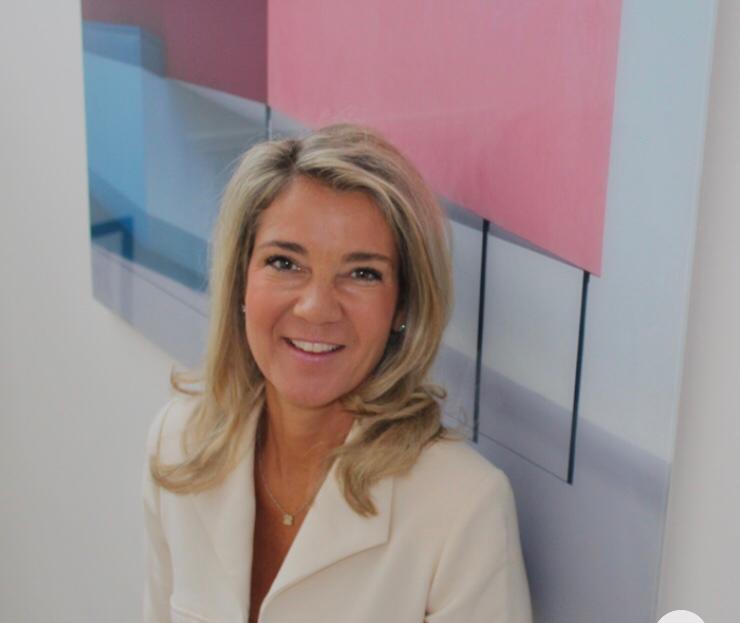
Julia Campbell Carter is an experienced and discrete art advisor based in central London. Raised in Germany and Spain, she speaks fluent English, German and Spanish. Her primary focus is modern and contemporary art with a focus on art as an Investment . Working with private, corporate and institutional clients, Julia helps to build collections, sell specific pieces and provide a deeper understanding of the market, using her expertise to locate, negotiate and purchase art that meets each clients taste, image and budget.
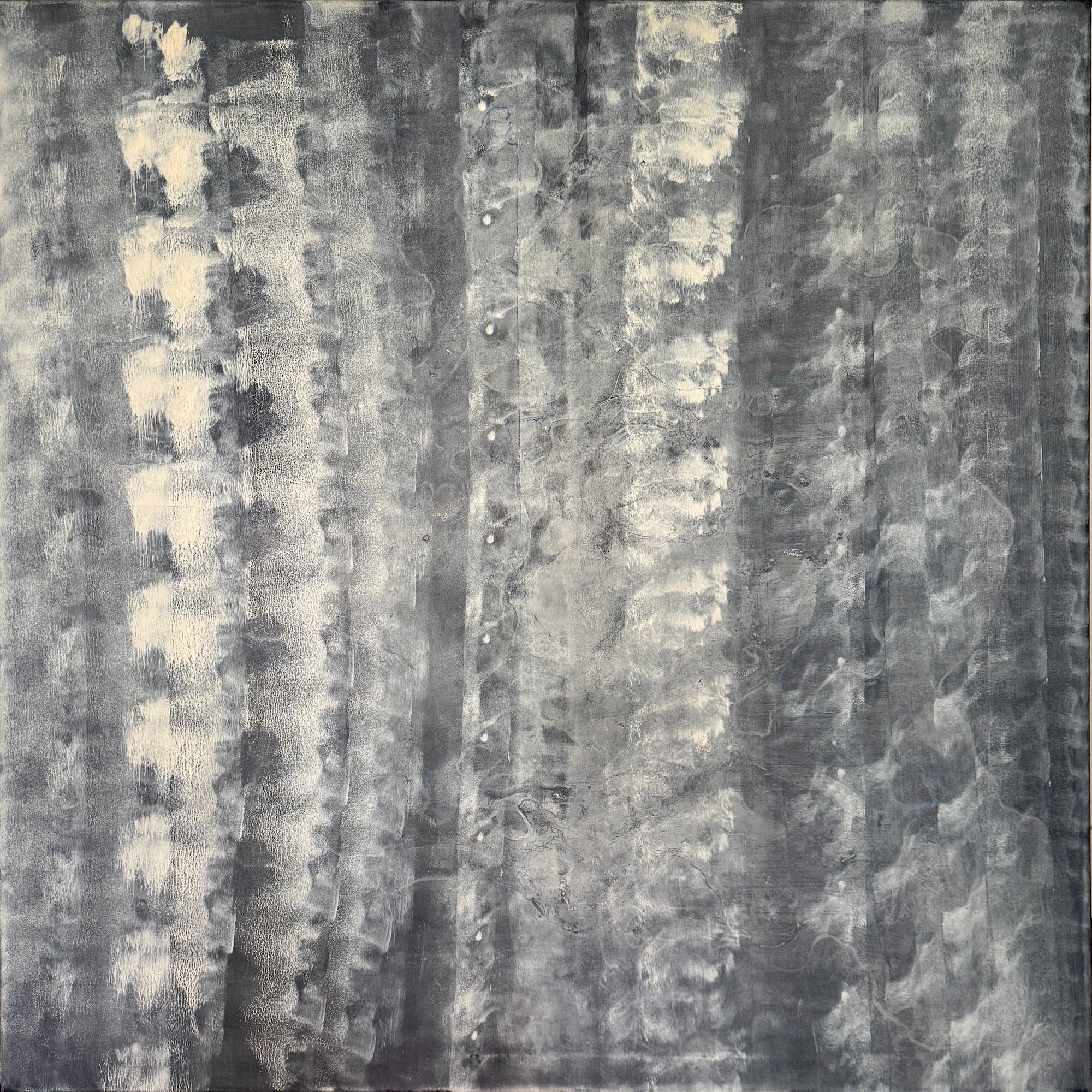
Above Azadeh Ghotbi, Untitled, 2026. Courtesy of the artist
Above Azadeh Ghotbi, Crossroad 42, 2026. Courtesy of the artist
Above Azadeh Ghotbi, Untitled, 2026. Courtesy of the artist
Above Azadeh Ghotbi, Crossroad 42, 2026. Courtesy of the artist