Spotlight
Spotlight Ndidi Emefiele Paints Women on Their Own Terms
Championed by Péjú Oshin
Above
ONES TO
WATCH
WATCH
ONES TO
WATCH
WATCH

Above
Interview
Ndidi Emefiele
Interview
Ndidi Emefiele
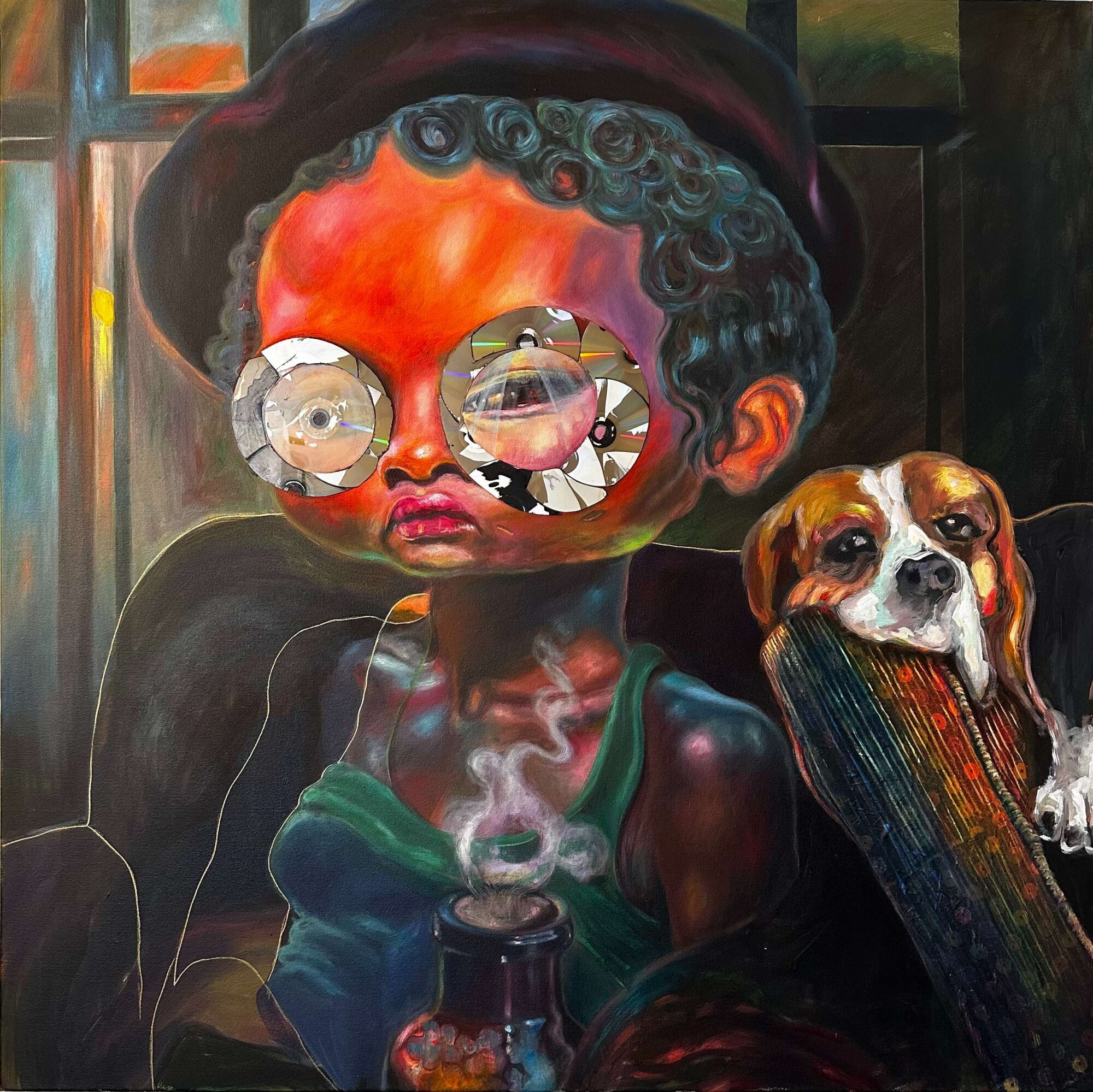
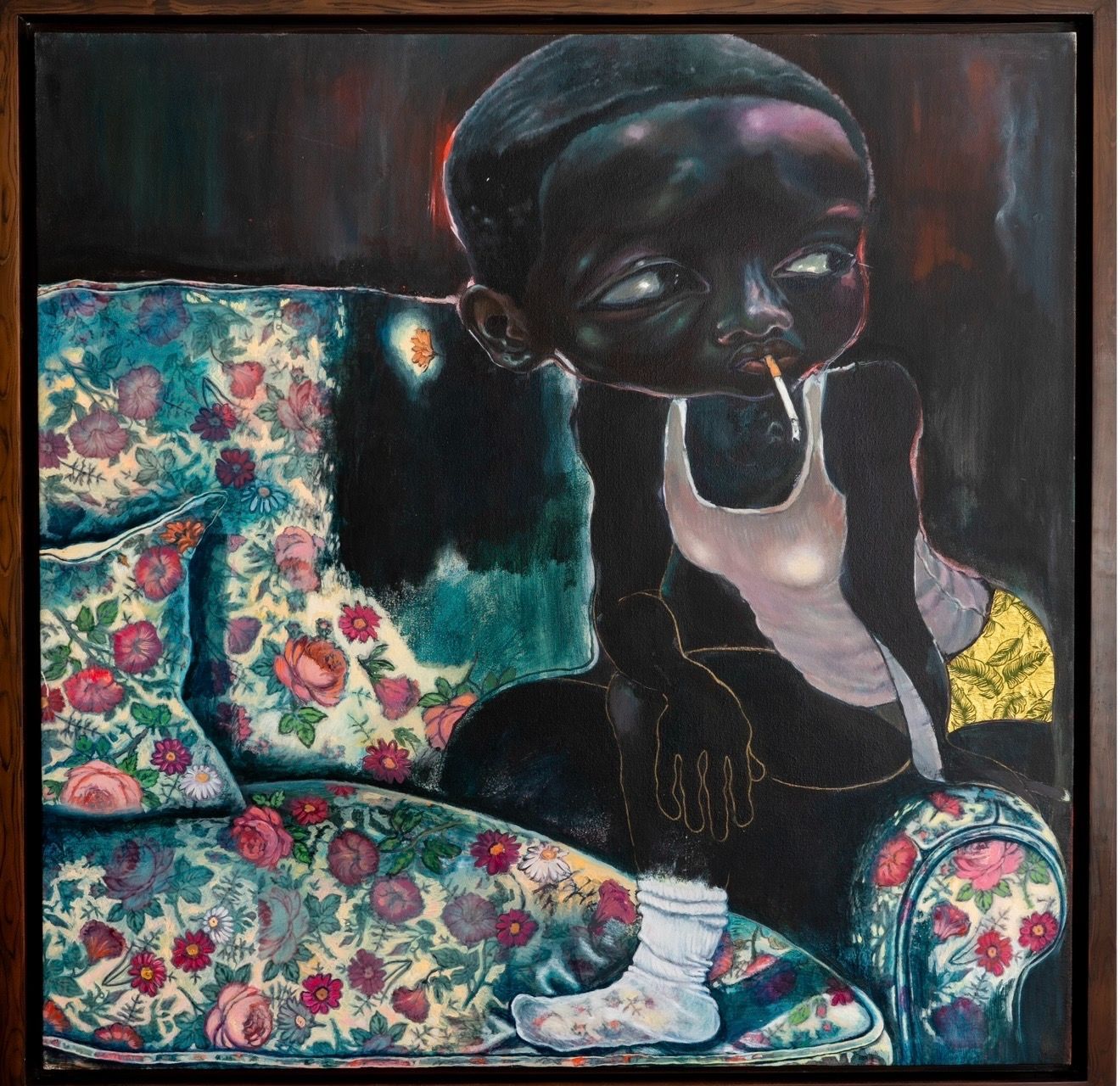
Home is a complicated starting point for contemporary painter Ndidi Emefiele. Born in Abuja, Nigeria, the Nigeria and UK-based artist grew up as one of five daughters in a conservative environment where expectations around women’s behaviour were clearly drawn. Those early experiences became central to a practice in which the female body is repeatedly reclaimed from the social structures attempting to define it.
The artist studied for a BA at Delta State University in Nigeria before completing an MA at the Slade School of Fine Art, UCL, in London, where she received the Olive Prize. Her work is currently presented in Behind the Glass at Frieze’s No.9 Cork Street gallery.
Emefiele’s earliest paintings grew out of what she saw around her. In the part of northern Nigeria where she was raised, she recalls Gbagyi women carrying wood for family needs while Hausa women in neighbouring communities were rarely seen because of local tradition. The women who appeared in her first works were often shown through labour and domestic responsibility. Painting became a way for Emefiele to question the limited roles she had watched women occupy.
“My work is pretty much shaped by home which includes the internal structure, experiences and the broader outside space,” she tells The Wick. “Growing up in a conservative space with strict doctrines and expectations of the female led me to use the female body as a metaphor for rejecting these norms and structures that tend to govern identity, value and freedom while policing the female body. I use the body as a canvas of radical autonomy.”
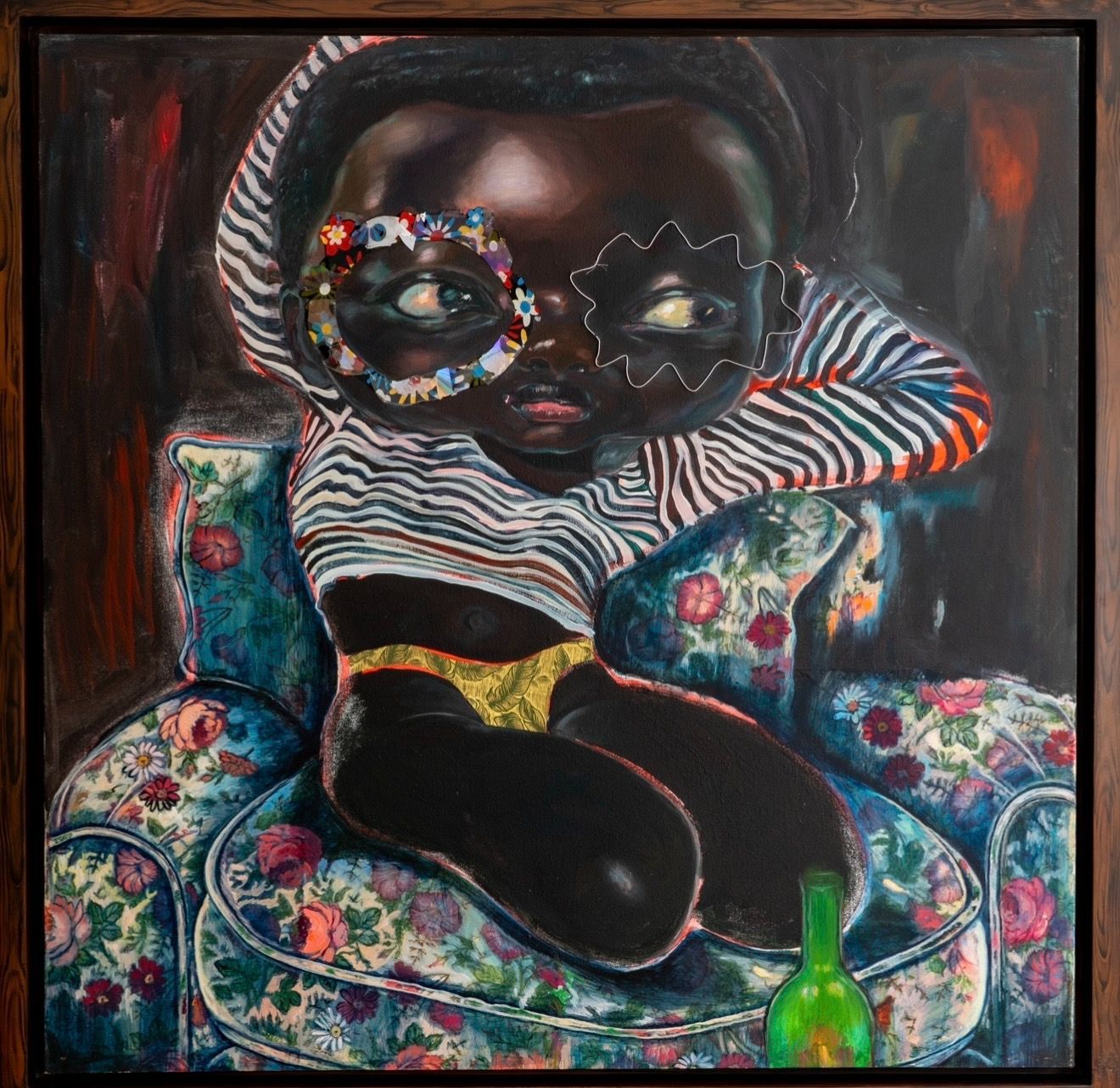
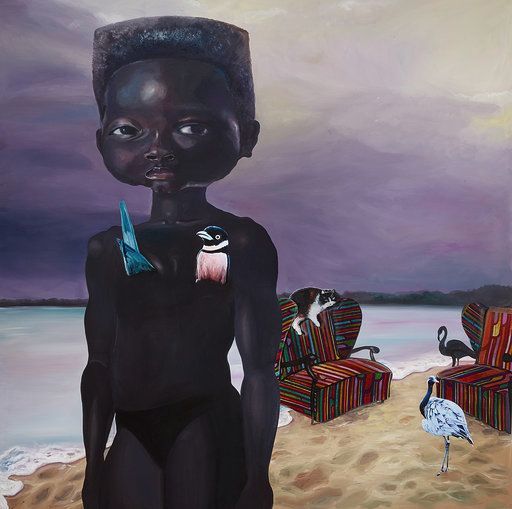
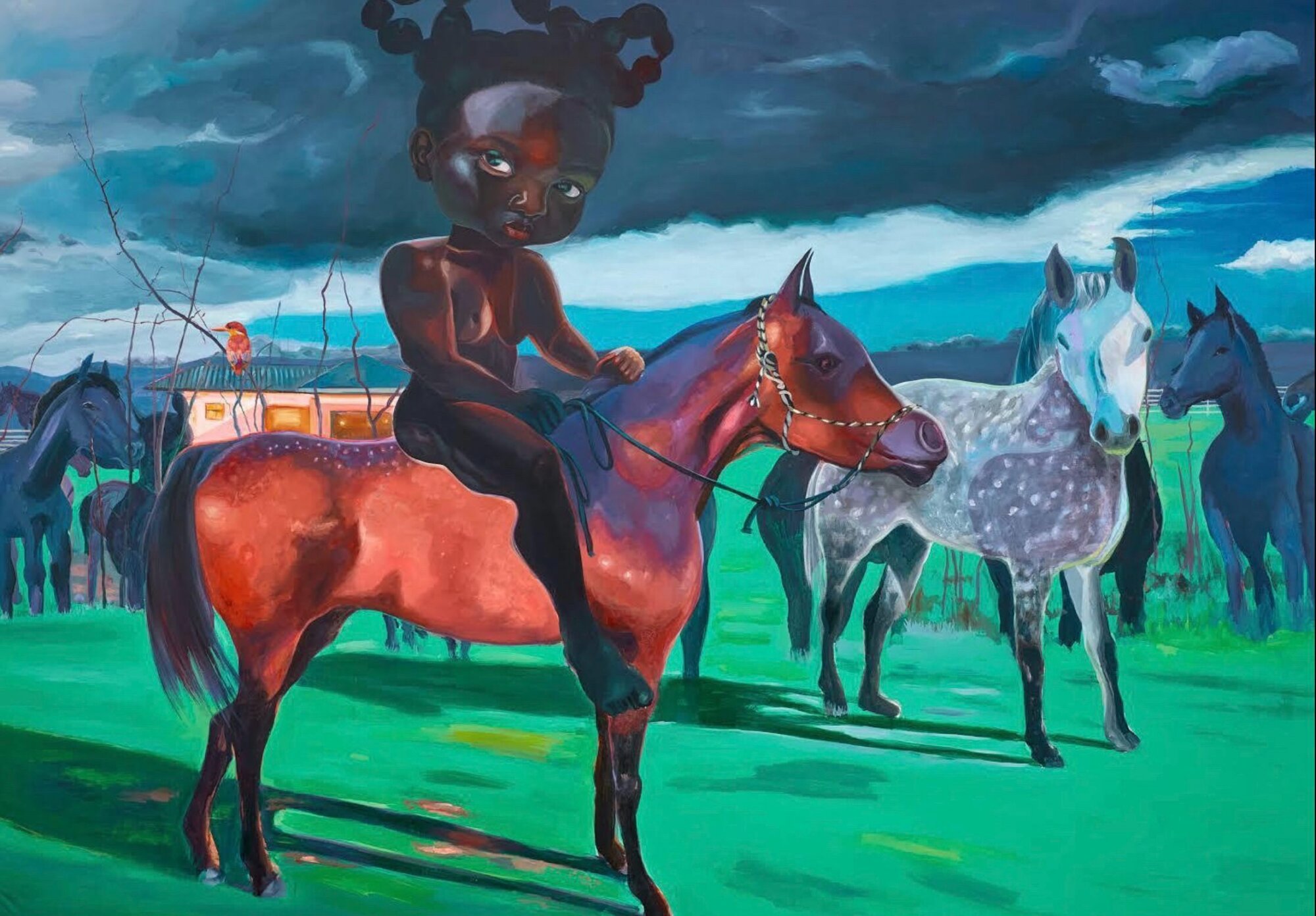
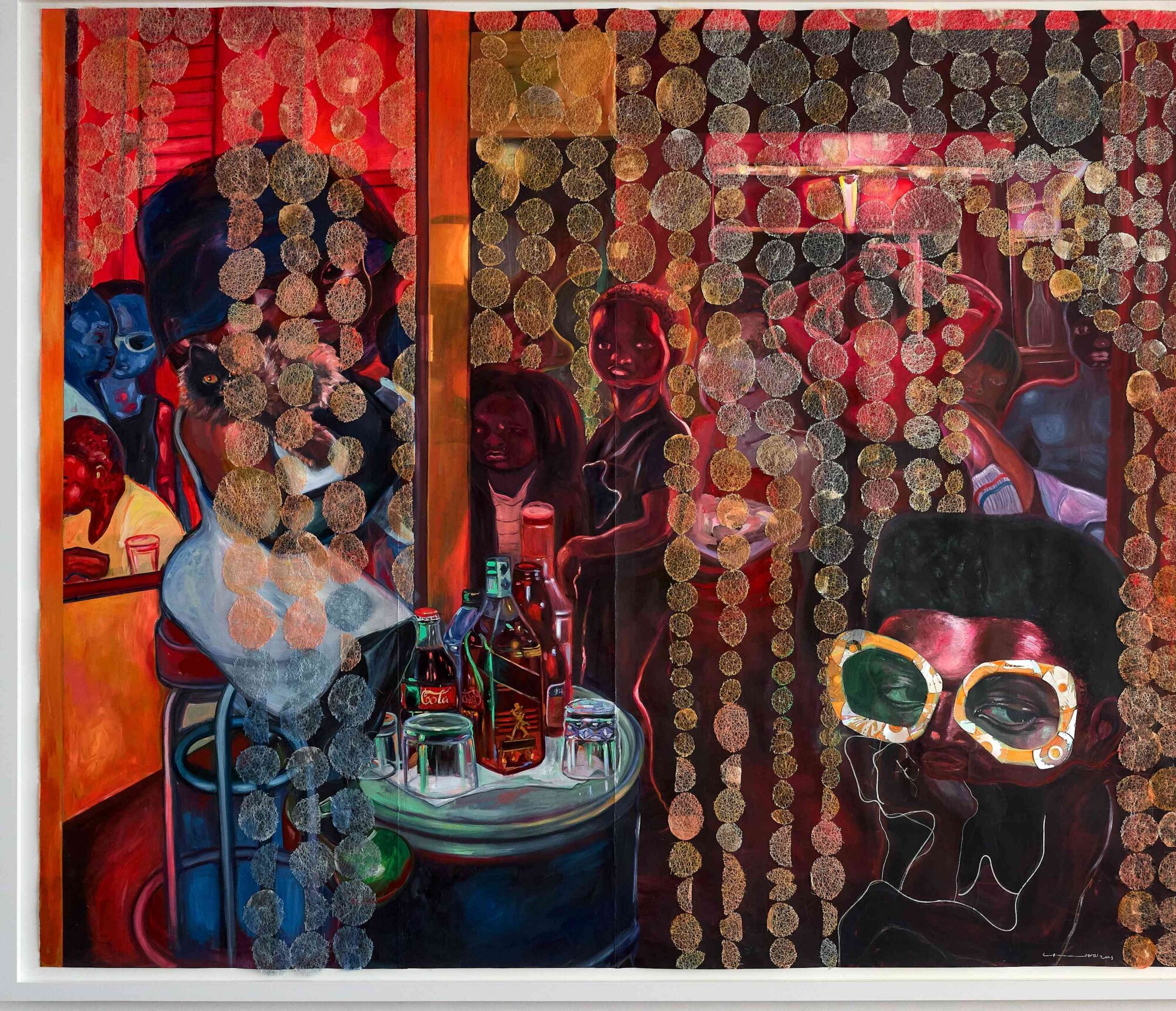
What began with paintings that presented women in their full visual splendour has developed into a broader investigation of the pressures placed upon them. Emefiele remembers growing up with continual instructions about how a woman should conduct herself in order to be accepted. Her female figures increasingly push against the restrictive roles that shaped her earliest observations, allowing the artist to question inherited expectations around identity and freedom, and placing women at the centre of their own image rather than reducing them to what they provide for others.
This evolution is rooted in an intensely personal history. Emefiele remembers growing up with continual instructions about how a woman should conduct herself in order to be accepted. Her paintings push against these inherited codes, placing women at the centre of their own image rather than reducing them to what they provide for others.
Emefiele’s champion, British-Nigerian curator, writer and cultural strategist Péjú Oshin, recalls one of her first memorable encounters with the artist’s work at the home of collector Valeria Napoleone during an AWITA event focused on the importance of collecting women artists.
“One of my first memorable encounters with Ndidi’s work was at the home of collector Valeria Napoleone during an AWITA event focused on the importance of collecting women artists. It left a lasting impression and since then, I have followed Ndidi’s work. What I have come to enjoy most about her practice is her use of materials and how it adds both emotional texture to what we as the viewers get to experience.”
For Oshin, Emefiele’s representations of women carry particular weight within the present moment.
“Ndidi’s impetus to protect women and depict them as worthy of protection even when non-chalant or appearing to be strong highlights the multifacetedness of women particularly in a time where treatment of women and girls globally is being called into question. She is an important artist of our time and it has been a privilege to curate these two most recent presentations of her work at Frieze’s No.9 Cork Street gallery and Gallery Rosenfeld’s South Molton Street Space.”
Emefiele’s earliest paintings grew out of what she saw around her. In the part of northern Nigeria where she was raised, she recalls Gbagyi women carrying wood for family needs while Hausa women in neighbouring communities were rarely seen because of local tradition. The women who appeared in her first works were often shown through labour and domestic responsibility. Painting became a way for Emefiele to question the limited roles she had watched women occupy.
“My work is pretty much shaped by home which includes the internal structure, experiences and the broader outside space,” she tells The Wick. “Growing up in a conservative space with strict doctrines and expectations of the female led me to use the female body as a metaphor for rejecting these norms and structures that tend to govern identity, value and freedom while policing the female body. I use the body as a canvas of radical autonomy.”
What began with paintings that presented women in their full visual splendour has developed into a broader investigation of the pressures placed upon them. Emefiele remembers growing up with continual instructions about how a woman should conduct herself in order to be accepted. Her female figures increasingly push against the restrictive roles that shaped her earliest observations, allowing the artist to question inherited expectations around identity and freedom, and placing women at the centre of their own image rather than reducing them to what they provide for others.
This evolution is rooted in an intensely personal history. Emefiele remembers growing up with continual instructions about how a woman should conduct herself in order to be accepted. Her paintings push against these inherited codes, placing women at the centre of their own image rather than reducing them to what they provide for others.
Emefiele’s champion, British-Nigerian curator, writer and cultural strategist Péjú Oshin, recalls one of her first memorable encounters with the artist’s work at the home of collector Valeria Napoleone during an AWITA event focused on the importance of collecting women artists.
“One of my first memorable encounters with Ndidi’s work was at the home of collector Valeria Napoleone during an AWITA event focused on the importance of collecting women artists. It left a lasting impression and since then, I have followed Ndidi’s work. What I have come to enjoy most about her practice is her use of materials and how it adds both emotional texture to what we as the viewers get to experience.”
For Oshin, Emefiele’s representations of women carry particular weight within the present moment.
“Ndidi’s impetus to protect women and depict them as worthy of protection even when non-chalant or appearing to be strong highlights the multifacetedness of women particularly in a time where treatment of women and girls globally is being called into question. She is an important artist of our time and it has been a privilege to curate these two most recent presentations of her work at Frieze’s No.9 Cork Street gallery and Gallery Rosenfeld’s South Molton Street Space.”
“Ndidi’s impetus to protect women and depict them as worthy of protection even when nonchalant or appearing to be strong highlights the multifacetedness of women.”
Péjú Oshin
Above
Above
Above
Above
Above
Above