Spotlight
Spotlight Sussy Cazalet
Championed by Tristan Hoare
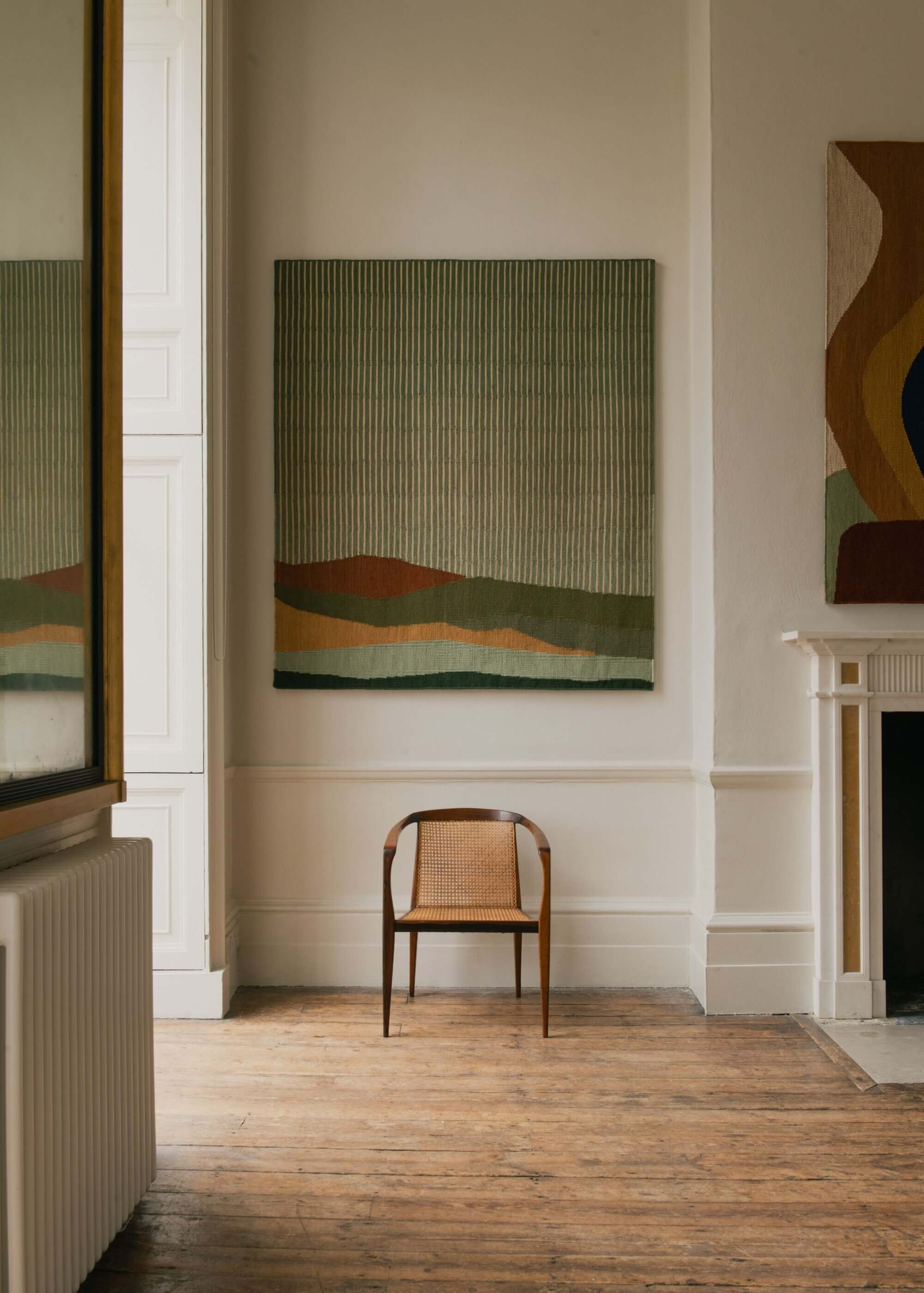
Above Courtesy of the artist
ONES TO
WATCH
WATCH
ONES TO
WATCH
WATCH
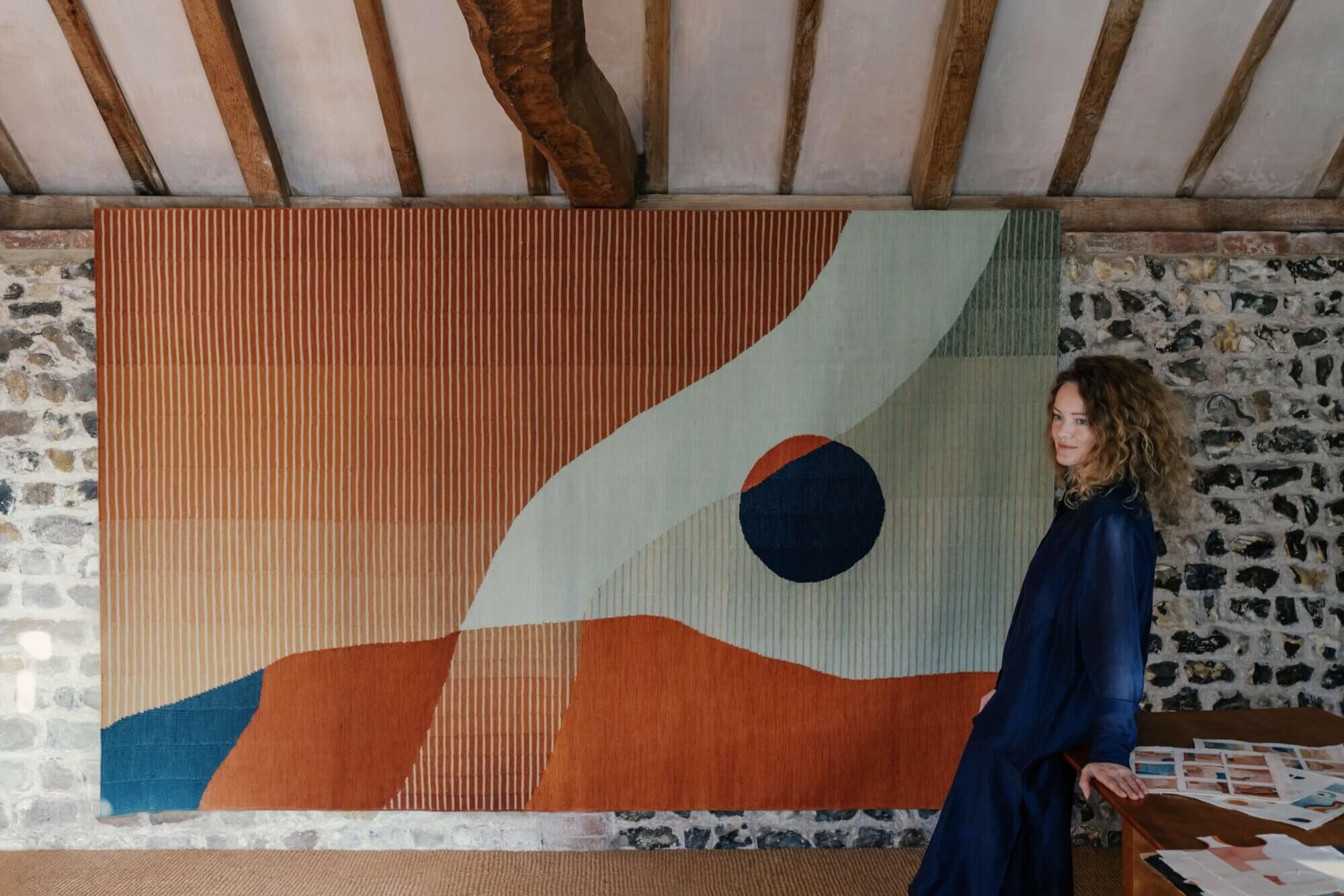
Above Photo: Julia Boikova
Interview
Sussy Cazalet
Photography
Julia Boikova
Interview
Sussy Cazalet
Photography
Julia Boikova
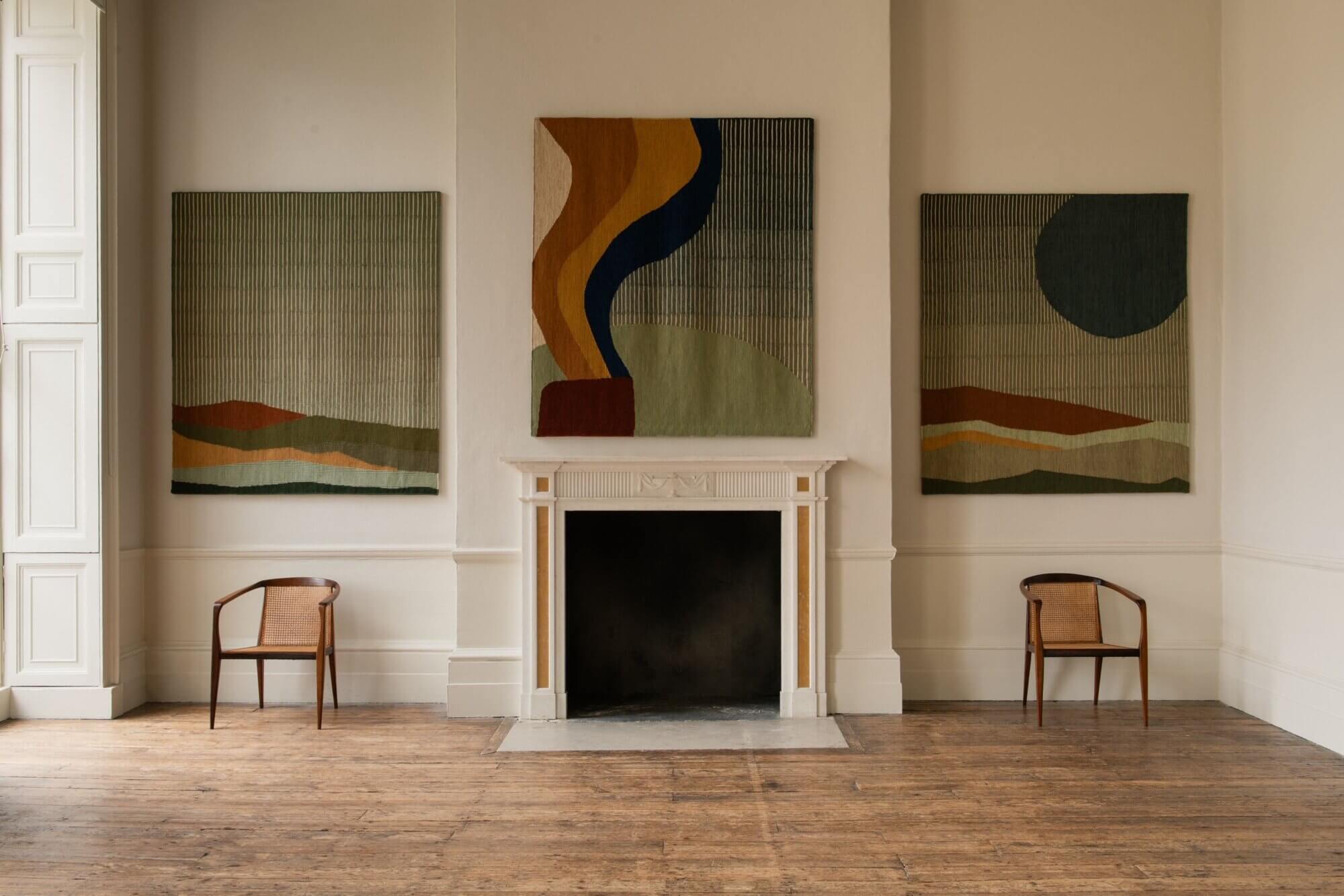
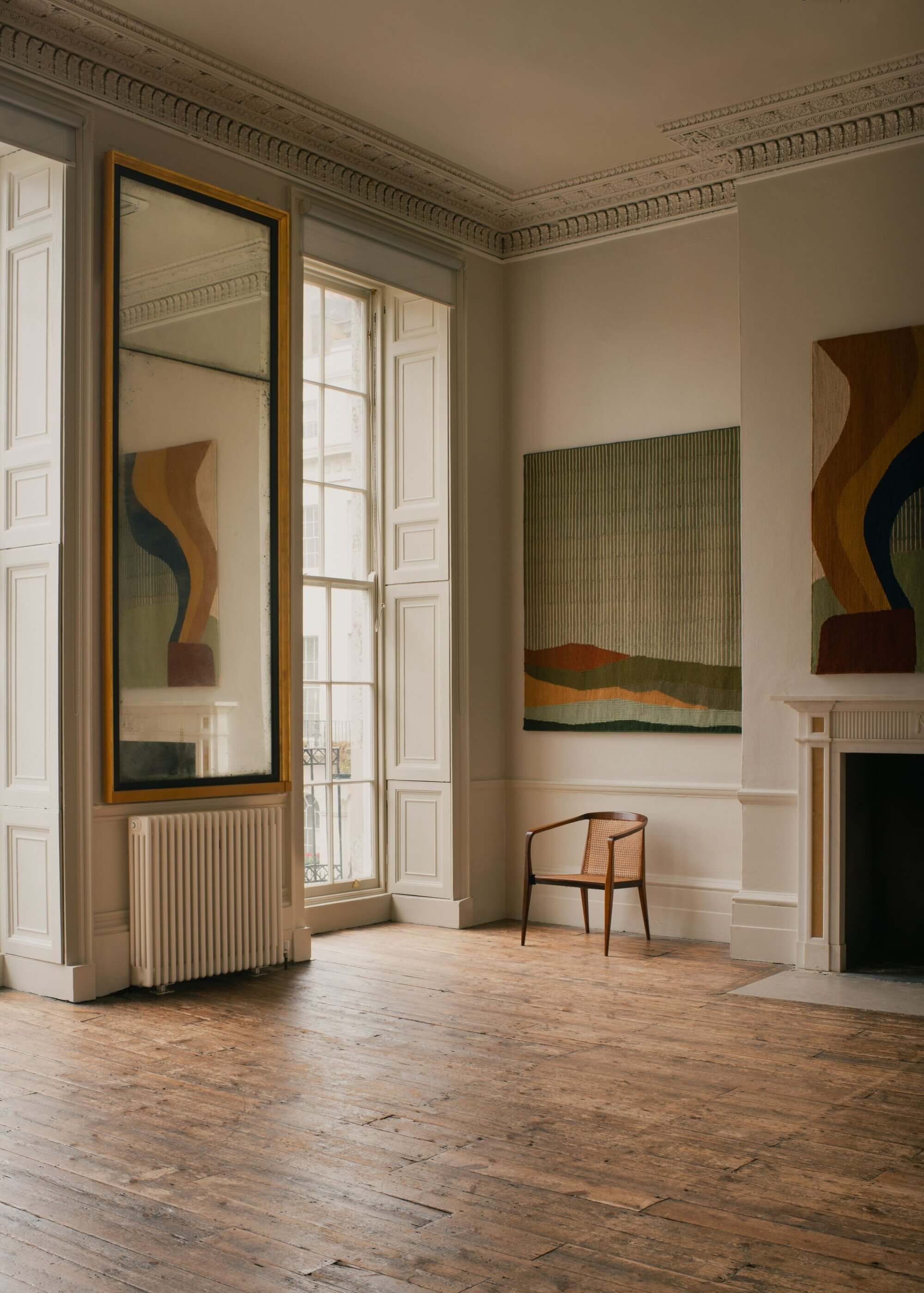
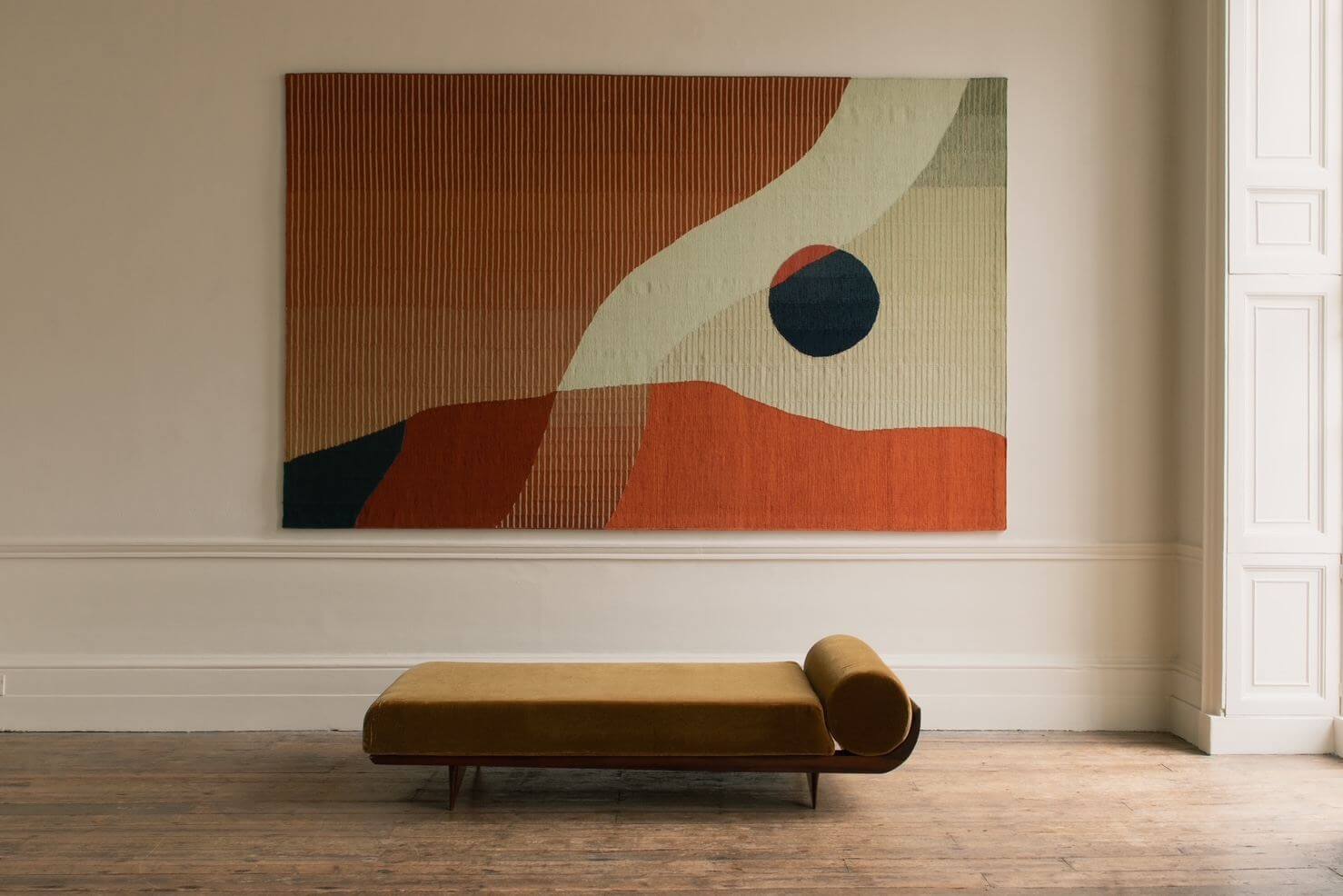
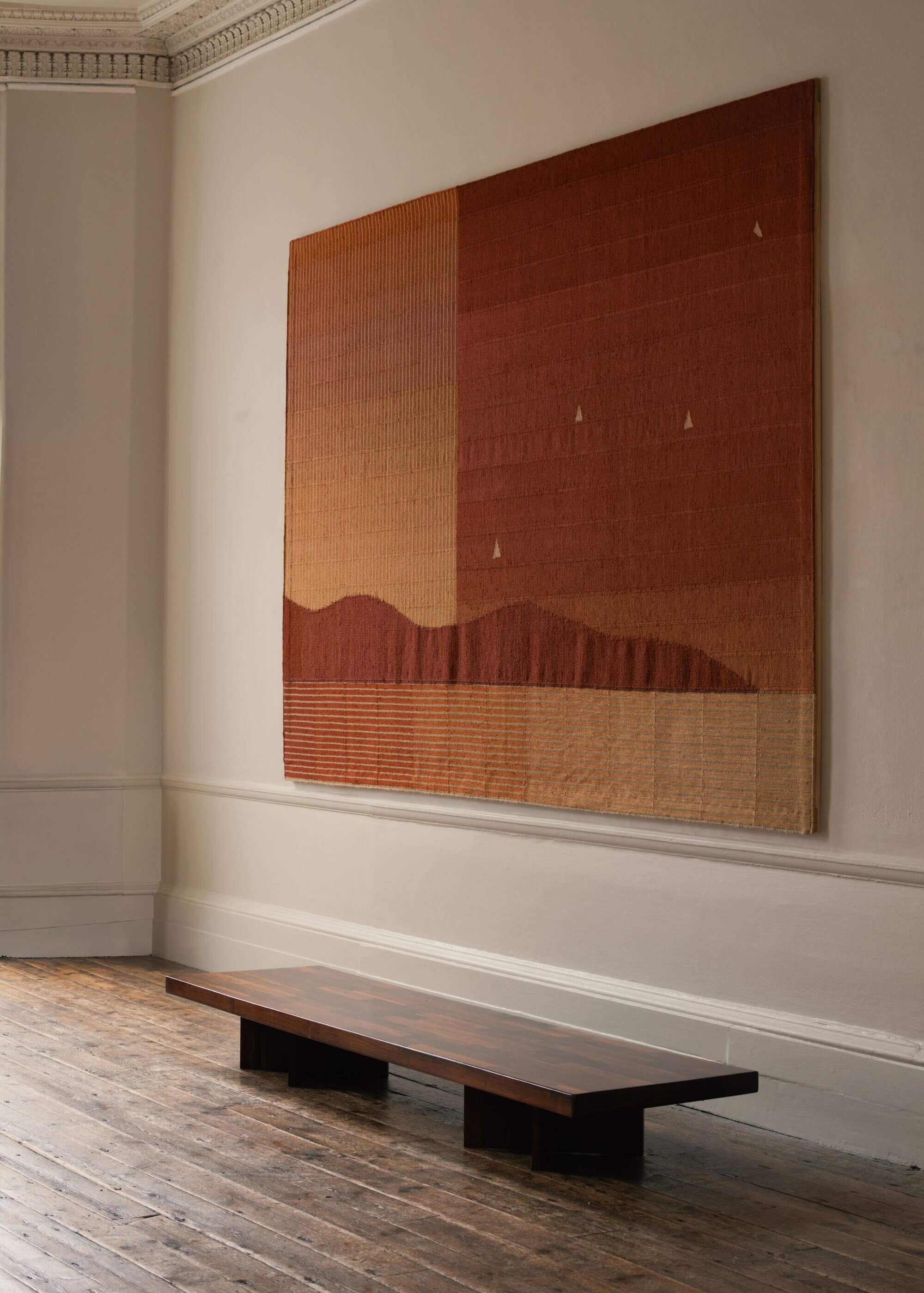
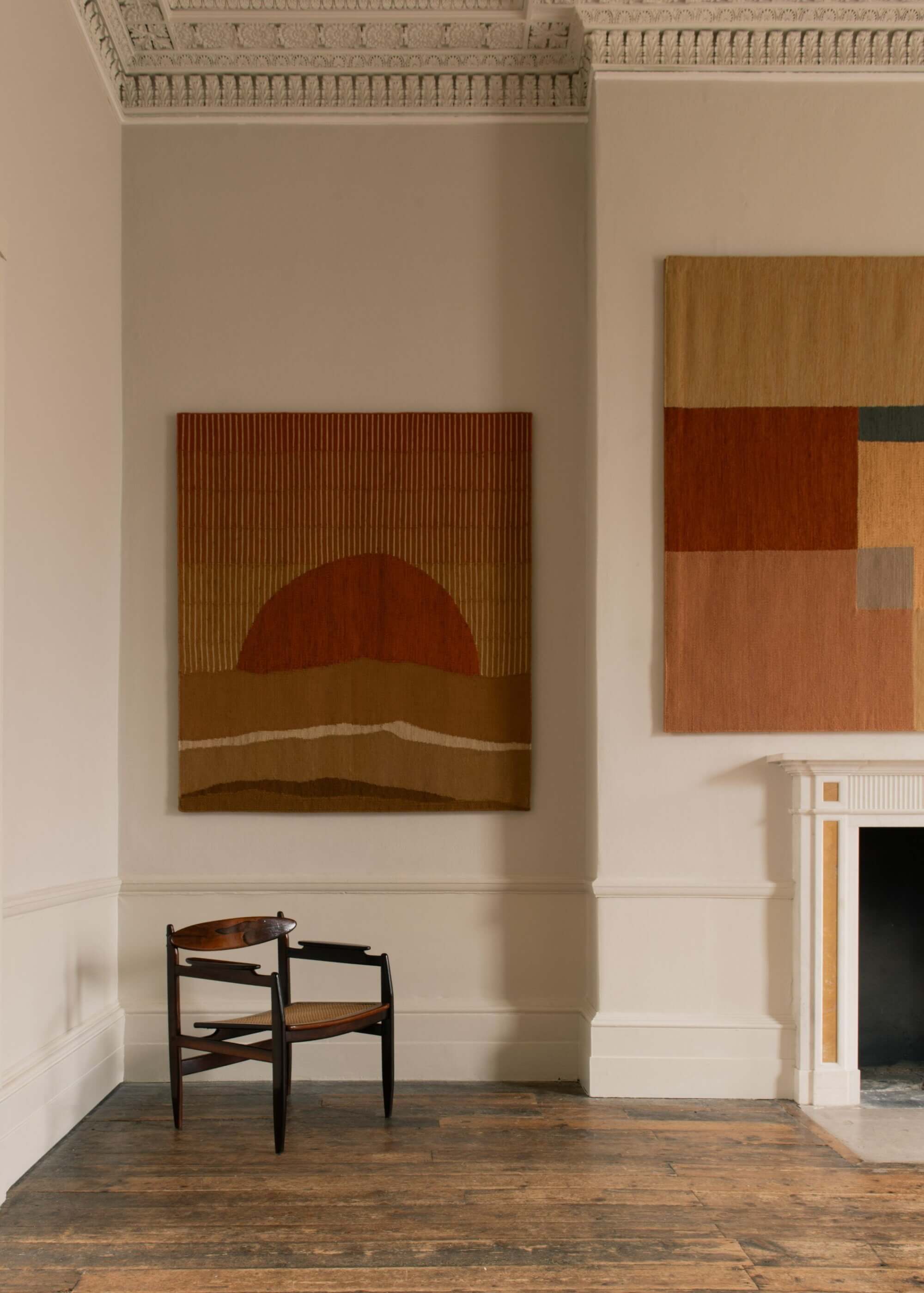
Sussy Cazalet’s tapestries know how to hold a room. Based between Norfolk and London, she came to weaving by way of theatre, interiors and furniture design, and this breadth is relayed strongly in her work. Her art carries both a painterly sensibility and the spatial intelligence of design, translating colour, composition and atmosphere into tactile woven form.
Cazalet’s practice has been shaped by a wide visual world. The artist speaks of early time spent in California looking at mid-century modernist designers and American abstract painters, then of later journeys to Brazil and Japan, where stone gardens and modernist interiors sharpened her eye further. Above all, however, nature is the force that returns most insistently. “A vast majority of my inspiration is attributed to the omnipresent power of nature, the sun, the moon, the stars, the trees,” she says. “These are my constant guiding force, working in tandem with my inner dialogue.”
Over the past four years, Cazalet’s deepening commitment to weaving has taken her across India, Africa and the Middle East, seeking out master weavers able to translate her painterly language into fibre. Working closely with them, she has developed hand-mixed dyes and a bespoke technique that preserves the delicacy of her studies while giving the finished works a unique added weight.
Her champion is Tristan Hoare, founder of the eponymous London gallery. Hoare has had a close view of the artist’s evolution. “Sussy Cazalet is a remarkable creative talent,” he tells The Wick. What he finds especially compelling is the way her tapestries turn feeling into form. In Ascendance, her recent exhibition at his gallery, he sees “a distinctive and fresh voice to contemporary textile”, shaped by a process that is “both structured and intuitive, balancing control with a quiet sense of freedom.” He also points to the sense of landscape within Cazalet’s work, “internal and atmospheric rather than literal”.
Over the past four years, Cazalet’s deepening commitment to weaving has taken her across India, Africa and the Middle East, seeking out master weavers able to translate her painterly language into fibre. Working closely with them, she has developed hand-mixed dyes and a bespoke technique that preserves the delicacy of her studies while giving the finished works a unique added weight.
Her champion is Tristan Hoare, founder of the eponymous London gallery. Hoare has had a close view of the artist’s evolution. “Sussy Cazalet is a remarkable creative talent,” he tells The Wick. What he finds especially compelling is the way her tapestries turn feeling into form. In Ascendance, her recent exhibition at his gallery, he sees “a distinctive and fresh voice to contemporary textile”, shaped by a process that is “both structured and intuitive, balancing control with a quiet sense of freedom.” He also points to the sense of landscape within Cazalet’s work, “internal and atmospheric rather than literal”.
“What I find particularly compelling is the sense of landscape within her tapestries – internal and atmospheric rather than literal.”
Before turning fully towards weaving, Cazalet worked in theatre design and art direction, later creating a furniture collection – worlds that still linger in the work’s sense of staging and scale. In 2023, Cazalet’s first solo exhibition at Tristan Hoare Gallery, Kyoto Sun, brought together nine woven silk and wool tapestries and announced a language already distinctly her own. Her second solo exhibition there, Ascendance, opened in February 2026, presenting fourteen tapestries alongside watercolour studies. In recent years, her tapestries have entered strikingly different settings, from Ehlers Vineyard in Napa Valley to Houghton Hall in Norfolk, Gorhambury House in St Albans and The Chancery Rosewood in London.
Asked about her greatest achievement to date, Cazalet does not reach first for a commission or exhibition. Instead, she speaks candidly about breaking into the art world while navigating motherhood and postnatal PTSD, and about the quieter achievement of not compromising on her vision even through moments of doubt. “To say at this moment I earn a living and provide for my family doing what I love, is a great privilege & something I am very proud of,” she tells The Wick. It is a telling answer – hers are works shaped by resilience.
This summer, the artist launches a collaboration with ISHKAR on a series of rugs woven by women in Afghanistan, a project centred on women’s empowerment through weaving. She also has upcoming presentations with Tristan Hoare in the Hamptons and Paris. Looking further ahead, she is preparing medieval-inspired rugs and hangings with Heraldian Gallery for 2027, alongside a new series of large tapestries with Hoare for PAD London.
Beauty matters in Cazalet’s work, but it is not the only thing that lingers. As Tristan Hoare puts it, she has developed “a visual language that feels deeply personal”, one that “translate[s] feeling into form through colour, rhythm, and texture.” Cazalet’s tapestries do not ask to be decoded. Instead, they ask to be lived with.
Asked about her greatest achievement to date, Cazalet does not reach first for a commission or exhibition. Instead, she speaks candidly about breaking into the art world while navigating motherhood and postnatal PTSD, and about the quieter achievement of not compromising on her vision even through moments of doubt. “To say at this moment I earn a living and provide for my family doing what I love, is a great privilege & something I am very proud of,” she tells The Wick. It is a telling answer – hers are works shaped by resilience.
This summer, the artist launches a collaboration with ISHKAR on a series of rugs woven by women in Afghanistan, a project centred on women’s empowerment through weaving. She also has upcoming presentations with Tristan Hoare in the Hamptons and Paris. Looking further ahead, she is preparing medieval-inspired rugs and hangings with Heraldian Gallery for 2027, alongside a new series of large tapestries with Hoare for PAD London.
Beauty matters in Cazalet’s work, but it is not the only thing that lingers. As Tristan Hoare puts it, she has developed “a visual language that feels deeply personal”, one that “translate[s] feeling into form through colour, rhythm, and texture.” Cazalet’s tapestries do not ask to be decoded. Instead, they ask to be lived with.
About the champion
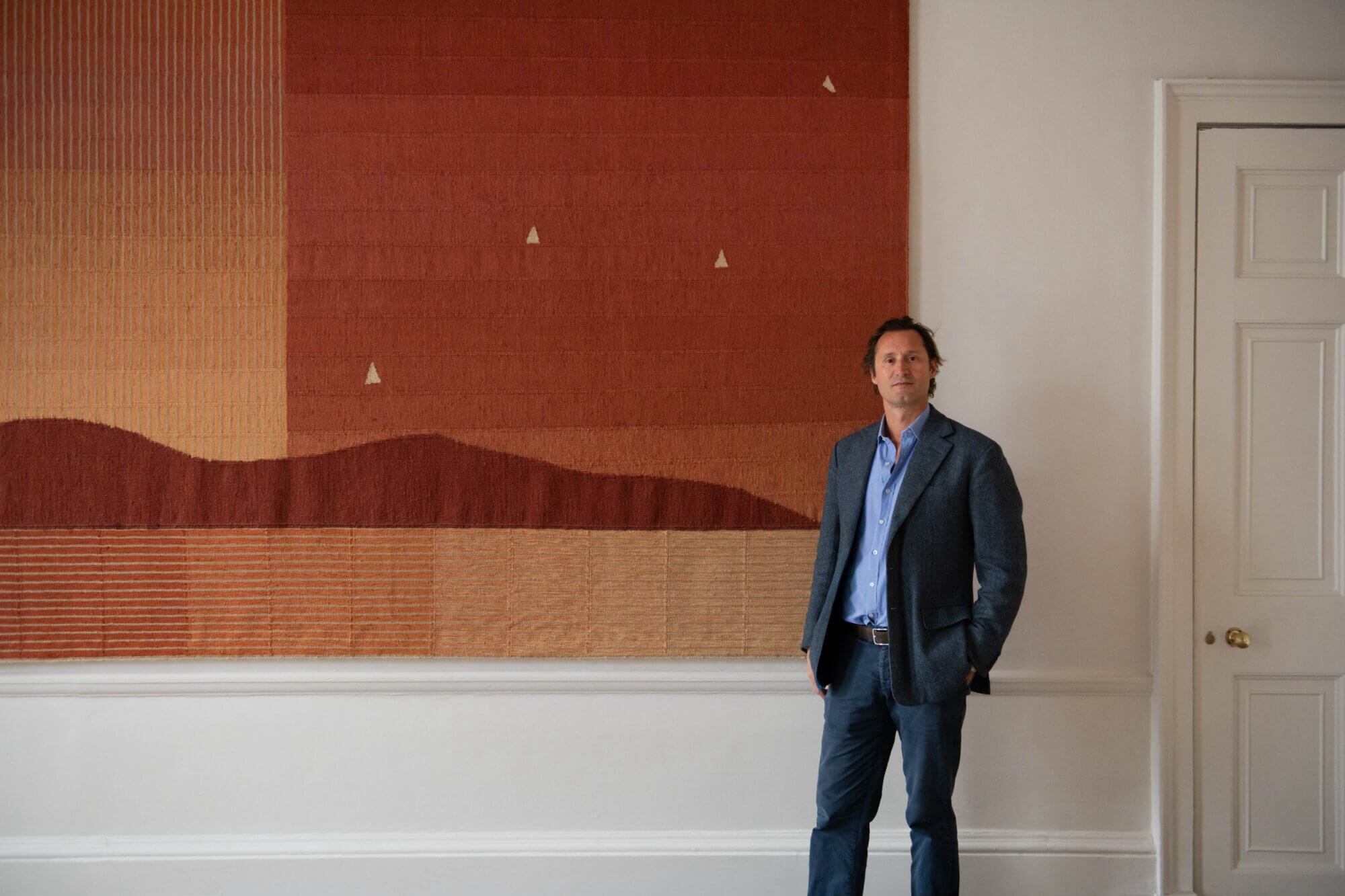
Tristan Hoare (b. 1977) studied History of Art at the University of Edinburgh before beginning his career at Christie’s auction house, working across both Paris and London. Following a period engaged in art advisory and curatorial practice, he established his first gallery at Litchfield Studios in Notting Hill, which operated from 2009 to 2014.
In 2016, Hoare inaugurated a new gallery space in Fitzroy Square, housed within a Grade I listed Georgian townhouse designed by Robert Adam.
Tristan Hoare has built a solid reputation for engaging exhibitions, a strong stable of artists and dynamic collaborations with curators and collectors. The gallery holds an average of 5 exhibitions a year.
Above Courtesy of the artist
Above Courtesy of the artist
Above Courtesy of the artist
Above Courtesy of the artist
Above Courtesy of the artist
Above Courtesy of the artist
Above Courtesy of the artist
Above Courtesy of the artist
Above Courtesy of the artist
Above Courtesy of the artist