Interview Zineb Sedira Is Letting Cinema Speak
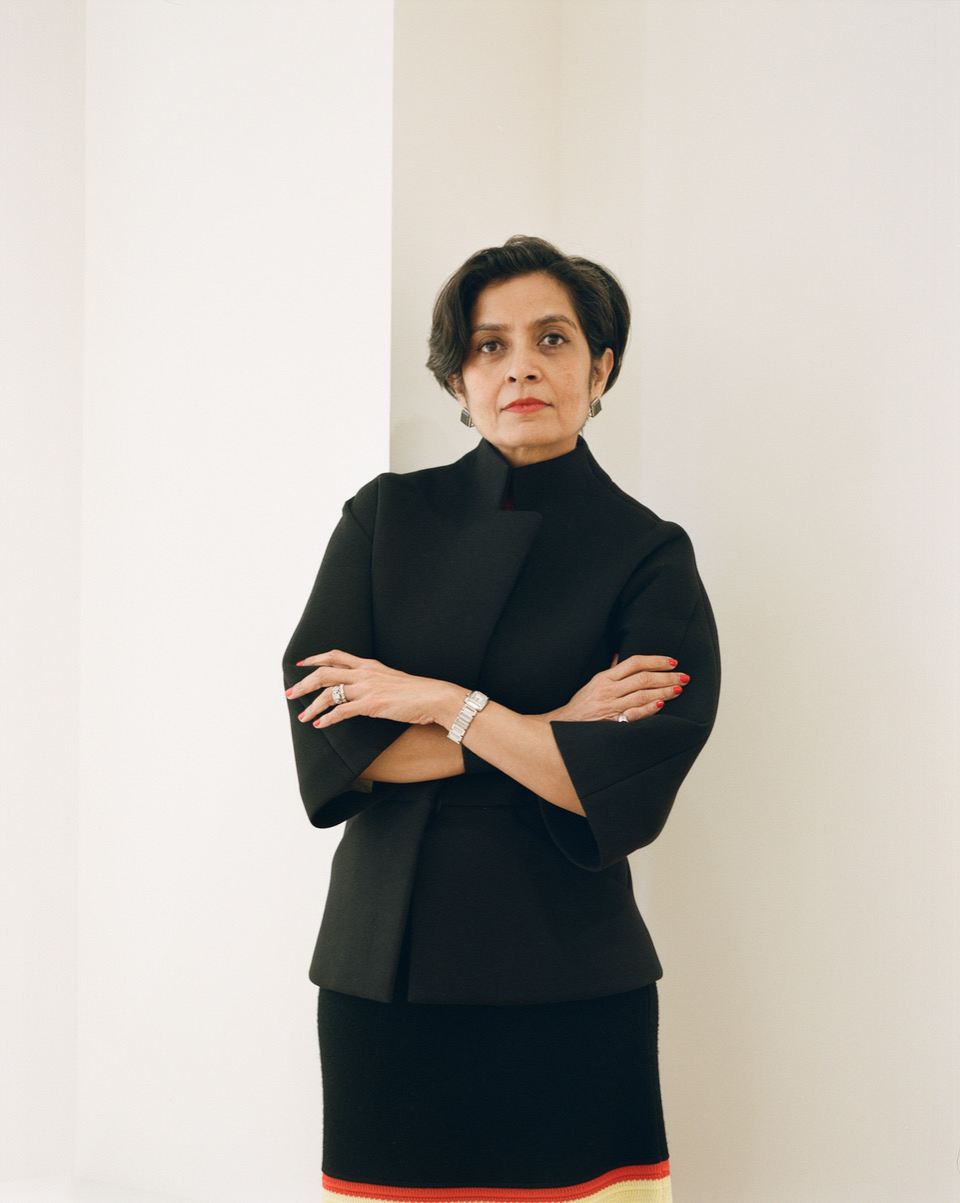
Sedira often starts with a question, a story, a historical subject, or an encounter, allowing each project to find its own form. In recent years, cinema has become central to her practice. Her acclaimed installation Dreams Have No Titles, first presented at the Venice Biennale, brought these interests into focus through an exploration of postcolonial cinema.
Sedira’s latest project is her 2026 Tate Britain Commission, When Words Fall Silent, Cinema Speaks…. Installed in the Duveen Galleries, the work continues her research into Pan-African cinema through the legacy of the Cinémathèque Algérienne. Transforming Tate Britain’s neo-classical central galleries into a cinematic landscape, the installation reflects the revolutionary spirit of African filmmaking in the decades after Algerian independence in 1962, when Algiers emerged as a hub for activist filmmakers and radical thinkers from across Asia, Africa, South and Central America.
Blending reconstructed film sets, archival references and personal testimonies, Sedira explores how cinema can act as a site of solidarity and resistance. The Wick caught up with Sedira to discuss her artistic process and why Agnès Varda remains her ultimate Monday Muse.
THE WICK: What does a typical Monday look like for you?
Zineb Sedira: There are no two Mondays that are exactly the same. I do whatever is needed on the day, whether that involves dealing with administrative matters, responding to professional emails, attending meetings, or visiting art galleries and museums. Being an artist, I enjoy the variety and just adapt to the priorities of the week.
TW: Your Tate Britain Commission will be unveiled this May and marks your largest commission in the UK to date. What does it mean to be taking on a project of that scale at this moment in your career?
ZS: It is an important project, especially following the creation of my large-scale installation Dreams Have No Titles, presented at the Venice Biennale. Through that work, I began exploring the history and legacy of postcolonial cinema, and the commission for Tate Britain has given me the opportunity to further develop and deepen that research. Taking on a project of this scale at this point in my career is both a privilege and an exciting challenge, particularly as it extends the dialogue with an UK audience.
TW: You’ve described the commission as feeling both “monumental and intimate”. What did you mean by that?
ZS:
It is monumental because the installation created is in an exceptionally large exhibition space, the biggest I have had to fill with work. The scale of the commission pushed me to work in a more ambitious way than ever before.
Yet, at the same time, it is intimate because it includes elements of my own experience as an artist filmmaker and a cinephile, looking at Pan-African cinema through the prism of the Cinémathèque Algérienne. So including autobiographical elements in the work creates a mise en abyme, where the piece reflects on its own subject and process.
TW: The Duveen Galleries carry such architectural grandeur and institutional weight. How have you approached entering into dialogue with a space charged with so much history and prestige?
ZS:
I approached the Duveen Galleries as a space that carries complex historical and political associations connected to broader histories of empire, colonialism, slavery, and the economic systems that emerged from them.
As my work has long engaged with anti-imperialist and postcolonial questions, I felt that the proposed work was a natural fit. It offered an opportunity to create a dialogue between the work and the histories that continue to resonate within the space.
Of course Tate Britain is a prestigious museum, and am happy the galleries in which my work is presented are free to the public. This would allow for a broad audience, and help bring greater attention to the histories of African cinema.