Monday Muse


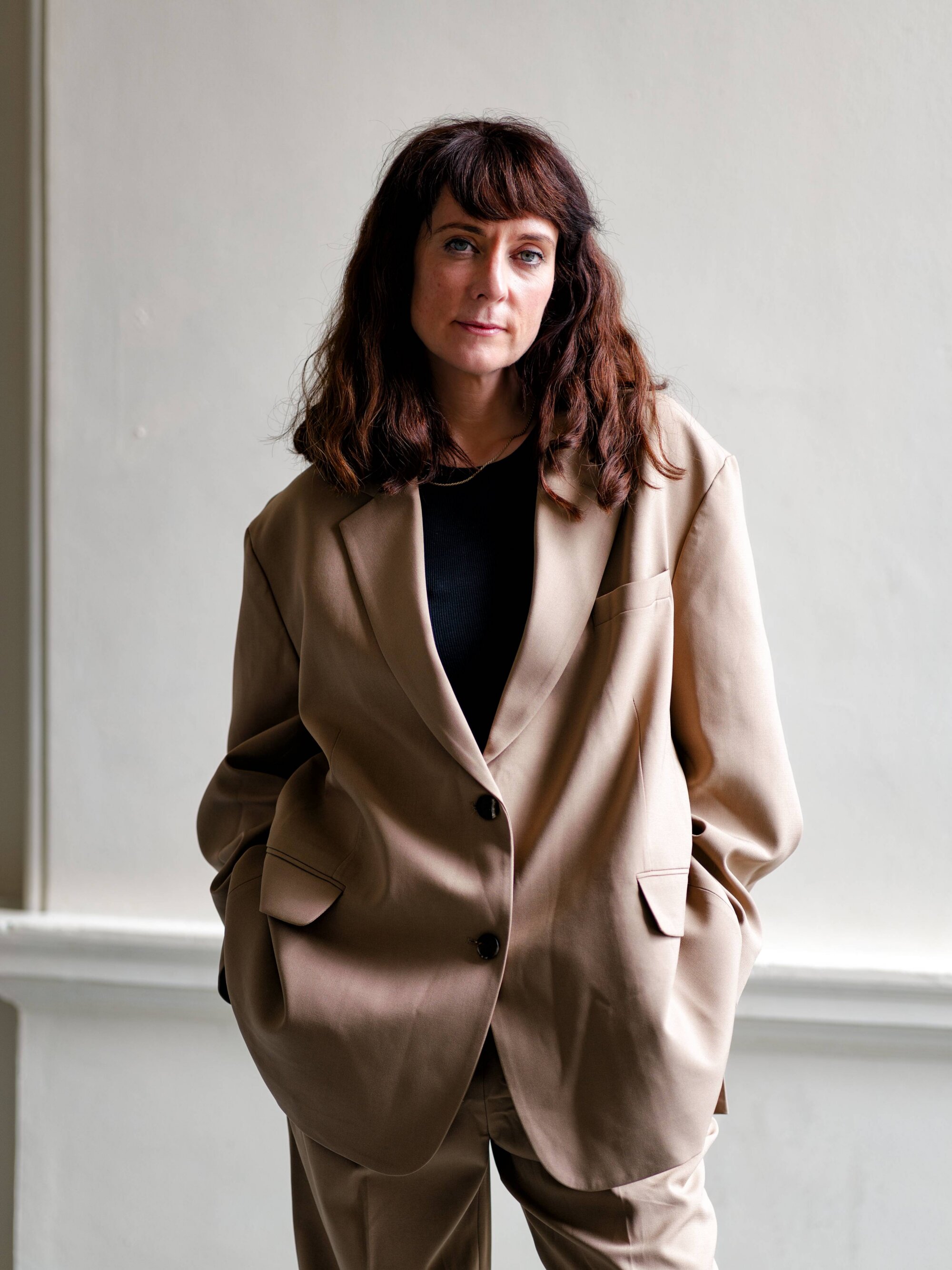
THE WICK: What does a typical Monday look like for you?
Marie McPartlin: It usually starts by unpicking myself from a tangle of my kids’ limbs if they’ve crept into the bed in the night, then coffee, then a long bus across London to get a bit of boxing in before the office. I’m an early starter and a bus evangelist; slower journeys give me a bit of thinking or reading time before the social side of the day kicks in. The team and I usually catch up on what we’ve been engaging with over the weekend – art, music, memes, TV – it all informs our work. A typical Monday might include discussing ideas with artists and tending to whatever projects we have on the horizon. It would need to be essential for me to be out on a Monday night. My partner’s an excellent cook and it’s a chance for us to catch up and plan the week ahead.
TW: The tenth anniversary programme takes inspiration from 9 Evenings: Theatre and Engineering, the landmark 1966 collaboration between artists and engineers in New York. Why was that particular moment the right one to revisit sixty years later?
MM:
What interests me about 9 Evenings is what it was doing as a generative, if imperfect, experiment; it gave artists the expertise and support to take a genuine leap into the unknown and risk something in front of a live audience. That moment had a long tail, creatively speaking; the collaboration with engineers became E.A.T., which is perhaps better known.
In 1966, this experimentation happened amid real optimism that technology would drive progress. Today the mood is more ambivalent, there’s excitement alongside fear about what’s being built and by whom. Many artists are also engineers; anyone can broadcast from their phone, social media is its own form of performance. The conditions for risk feel scarcer now than they did sixty years ago; there’s an element of looking back to look forward, of asking not just what it means to perform with technology today, but what it means to be experimental or avant-garde under late-stage capitalism.
TW: This October, 3 Evenings will bring artists together for a series of experiments in performance and technology. How do you envisage artists should be working with technology or AI at this time?
MM:
There’s no should when it comes to this question, really; I see my role as creating the conditions for artists to work with what’s available on their own terms, thinking with technology, not just using it. In a moment of acceleration, artists can slow things down and ask what worlds these technologies are building, and who gets to take part. Many work inside these systems, not downstream of their finished products.
At 3 Evenings, pianist Precious Renee Tucker is using computational technology to bring real space weather data into her improvised performances, having always had an interest in astrophysics. With dmstfctn’s work, AI is the protagonist: a rapper weaving their material through audience interaction. You could interpret all three nights as a decentralised and pluralistic take on how artists are working with these technologies now, and a hint at how they might in the future.
TW: You have shaped and led Somerset House Studios since 2015. Why is Somerset House Studios so vital in the London landscape?
MM:
London is brilliant at showing art and less so at supporting the conditions artists need to make it. Affordable studios have dwindled, there’s been a steep decline in DIY spaces and clubs since the pandemic, which are important spaces for the development of the city’s creative ecology.
The Studios emulates some of that ecology and supports artists to keep experimenting at all stages of their careers. We’ve always prioritised practices that are least able to explain themselves in market terms, the ones which are often under-supported by institutional spaces. We have around 75 artists in residence at any one time and we support them each for up to ten years. That kind of duration is rare anywhere; it’s a sizeable chunk of an artist’s career. It’s investing in artists and the art-making of the future, treating it holistically as essential to us being able to live well as a society. That feels vital to me.
TW: Somerset House Studios celebrates its tenth birthday this October, having supported more than 200 artists over the past decade. Looking back, what has been its greatest achievement?
MM: Community is the primary reason artists give, year on year, as the main benefit of being part of the Studios. It’s an overused word, but I think it’s incredibly hard for an institution to create that and it be meaningful. It means a lot to know it’s something many artists feel held by, and it’s a credit to the incredible Studios team who believe in and are super committed to the work that we do.
TW: Your own career has spanned music, literature, performance, visual art and technology. What first drew you to wanting to support artists directly?
MM: It was a happy accident, really. I started in the music industry, which I expected to be a dream job, but got bored quickly and ended up putting on my own nights and events. At that scale, you’re always working with artists directly. I’m most interested in the idea first and foremost, rather than the constraints of how an idea might be expressed. I like popular culture and unpopular culture, the highbrow and the low. I think that’s true for most of the artists I work with. So it made sense to me not to align myself too much with any one art form, which meant working independently for most of my career so as to not funnel myself towards a specialism. My role at the Studios is a dream in that regard; I have a lot of creative freedom and if an artist can imagine it, we can try and find a way to make it happen.
TW: You have commissioned and developed work with artists including Tai Shani, Sophia Al-Maria, Lydia Ourahmane, Sidsel Meineche Hansen and Sin Wai Kin. Which project remains most memorable to you?
MM: Such a hard question, it’s like being asked to choose between my kids! Commissioning Tai Shani’s The Spell or The Dream felt like an important moment not just because Tai’s a brilliant artist and a dream to work with, but because her concept – which included a 24/7 radio station – created a platform for lots of other artists, thinkers and academics to come together around a theme in a multifaceted way. Brian Eno, the Palestinian Sound Archive, Yanis Varoufakis, Cécile B. Evans, Tanya Tagaq, K Allado-McDowell, adrienne maree brown – just a few of the amazing contributors to that project. Similar to 3 Evenings, it was an interdisciplinary experiment that proved really generative in seeding new ideas and conversations, and tuning in last summer felt like you were part of something collective and hopeful in a time of great division. It’s still broadcasting, actually, as the work is currently showing at Jupiter Artland in Scotland and will open in Finland next summer. Dreamradio.net.
TW: Which artist or creative thinker is currently on your radar?
MM: I think Zein Majali is a real one to watch. She’s a former engineer and data analyst-turned-artist whose work explores cultural acceleration and internet culture through video, sound and AI. She developed a performance work with us a few years ago called INTIHAK انتهاك (VIOLATION), which was a real standout for me in the last few years, and she is developing a new piece for 3 Evenings along with another artist I love, Nina Davies, called flowstate2brostate, which I expect will be a lot of fun; it may involve hoverboards. In terms of thinkers, Gary Zhexi Zhang is kind of peerless in his writing about technical histories and conceptual systems, from finance to insurance to AI. He’s written an essay as part of our forthcoming – and first-ever – publication, Somerset House Studios: A Reader, which comes out on October 16.
TW: What’s your favourite Culturally Curious spot in London to visit on your time off?
MM: Cafe OTO in Dalston is still my staple, when I can get there. It always feels like a homecoming to see shows there because it has a real community around it, which can be hard to find in London. It’s a space that’s remained true to its mission to support boundary-pushing music and performance, so it attracts those of us interested in cutting-edge, experimental and outernational music and sound. I also love what Harlesden High Street do; they have an original and refreshing take on what a contemporary gallery should be, and who it should be for.
TW: If you could get locked in Somerset House with any artist, who would it be?
MM: I’m semi-locked in with many of them daily, so I’m going to say Ayoung Kim, who I’m working with at the moment but is based in Seoul. Since we began speaking, it feels like she’s become the most in-demand artist on the planet. I’m a real fangirl, but I don’t get the pleasure of the more casual interactions I get with the artists who are based here, as it’s all online. If locked in, we could perhaps play some video games or something, eat some snacks.
TW: Who is your ultimate Monday Muse and why?
MM: The late musician and producer SOPHIE. We were lucky enough to host a rare conversation with SOPHIE back in 2019 about her influences; I think you can still find a recording of it online somewhere. SOPHIE herself was a massive influence on many artists and musicians; she collaborated widely and was a producer on lots of other people’s music. She made one perfect album, Oil of Every Pearl’s Un-Insides, before she passed aged 34. SOPHIE was a singular talent with a very distinctive sound which bridged the avant-garde and mainstream in a way I find very inspiring, and I know many artists and musicians feel the same.