Our top picks of exhibitions together with cultural spaces and places, both online and in the real world.


All, Art, Auctions, Exhibitions, Travel & Hospitality, Initiatives

Viewing Konrad Mägi

The exhibition devoted to Konrad Mägi at the Dulwich Picture Gallery positions a marginalised Baltic modernism within a broader European narrative. Bringing together over sixty works, many previously unexhibited outside Estonia, the show foregrounds Mägi’s restless negotiation between international avant-garde languages and a distinctly local sensibility.

Mägi’s practice emerges here as a complex synthesis rather than a derivative modernism. While the exhibition acknowledges his engagement with Neo-Impressionism, Expressionism, and even Cubism, it emphasises his radical chromatic autonomy. His Norwegian landscapes, for instance, translate observed nature into pulsating fields of colour that verge on abstraction, suggesting an affinity with the spiritualised landscape traditions of Northern Europe while resisting their more symbolic fixity.

The curatorial structure, moving from early travels to the Baltic island paintings and late Estonian scenes, frames Mägi’s oeuvre as a continual process of stylistic reinvention. Particularly striking are the Saaremaa works, in which botanical specificity dissolves into rhythmic pattern, anticipating later modernist concerns with surface and facture. His portraits, long overshadowed, reveal an equally experimental engagement with psychological interiority, articulated through dissonant colour and compressed spatial fields. Installed within the neoclassical architecture of Dulwich, itself historically associated with canonical Western painting, the exhibition stages a productive tension between centre and periphery. This isn’t only the introduction of a revolutionary figure to a British audience, but a re-evaluation of modernism and our commonly held notion of it.

Viewing Phoebe Boswell: we move through scales of blue

The 2026 commission for Art on the Underground sees Phoebe Boswell create a major new public artwork that transforms everyday travel spaces into sites of reflection and memory. Known for her multimedia practice exploring migration, identity, and belonging, Boswell brings a deeply personal and political perspective to Bethnal Green and Notting Hill Gate stations.

The work centres on Black swimming communities in London, developed through a public call-out and collaboration with participants whose lives are shaped by diasporic histories. Through layered photographic assemblages, Boswell foregrounds water as both a literal and symbolic space – one tied to healing, trauma, and collective memory. The project connects these themes to the hidden geographies beneath London; the Underground itself runs alongside buried rivers, and Boswell uses this idea to evoke submerged histories of migration and movement. Her imagery imagines these waterways as channels of resistance and connection, linking past and present journeys. By placing images of Black bodies in motion within the Underground – a space often associated with speed and anonymity – she invites commuters to pause and consider unseen narratives.

This commission reflects the broader aims of Art on the Underground, which since 2000 has brought contemporary art into public transit, engaging millions of passengers with site-specific works that question space, place, and representation.

Share story
Further Information

Viewing Cecily Brown: Picture Making

At Serpentine Galleries, Cecily Brown returns like a storm rolling back over familiar ground – only this time, it’s lush, leafy, and just a little bit feral. Picture Making feels less like a retrospective and more like getting lost in a painting that refuses to sit still.

Brown’s canvases don’t behave. They flicker between bodies and bushes, lovers and landscapes, as if Abstract Expressionism had a flirtation with an English garden and never quite recovered. You think you see a couple tangled in the grass – blink – and it’s all petals and paint again. It’s deliciously disorienting. Made in response to Kensington Gardens, these works hum with memory and mischief. There are echoes of childhood storybooks, yes—but the kind where something slightly uncanny lurks behind the trees. Brown leans into that tension: beauty on the brink of excess, romance tipping into something wilder, more unruly.

The paint smears, streaks and pools – giving the sense Brown is at times chasing the image as much as creating it, letting figures dissolve just as they begin to declare themselves. It’s painting as pursuit, as play, as glorious near-chaos. There’s also something quietly triumphant about this show – a homecoming, after decades in New York, that feels both personal and painterly. Brown turns the classical English landscape into a site of sensual, slippery possibility.
READ MORE
The Wick Culture - Yeonjoon Yoon, Gavin Poole, Conrad Shawcross, Tristram Hunt at UMBILICAL

Happenings Conrad Shawcross: UMBILICAL at Here East

Happenings
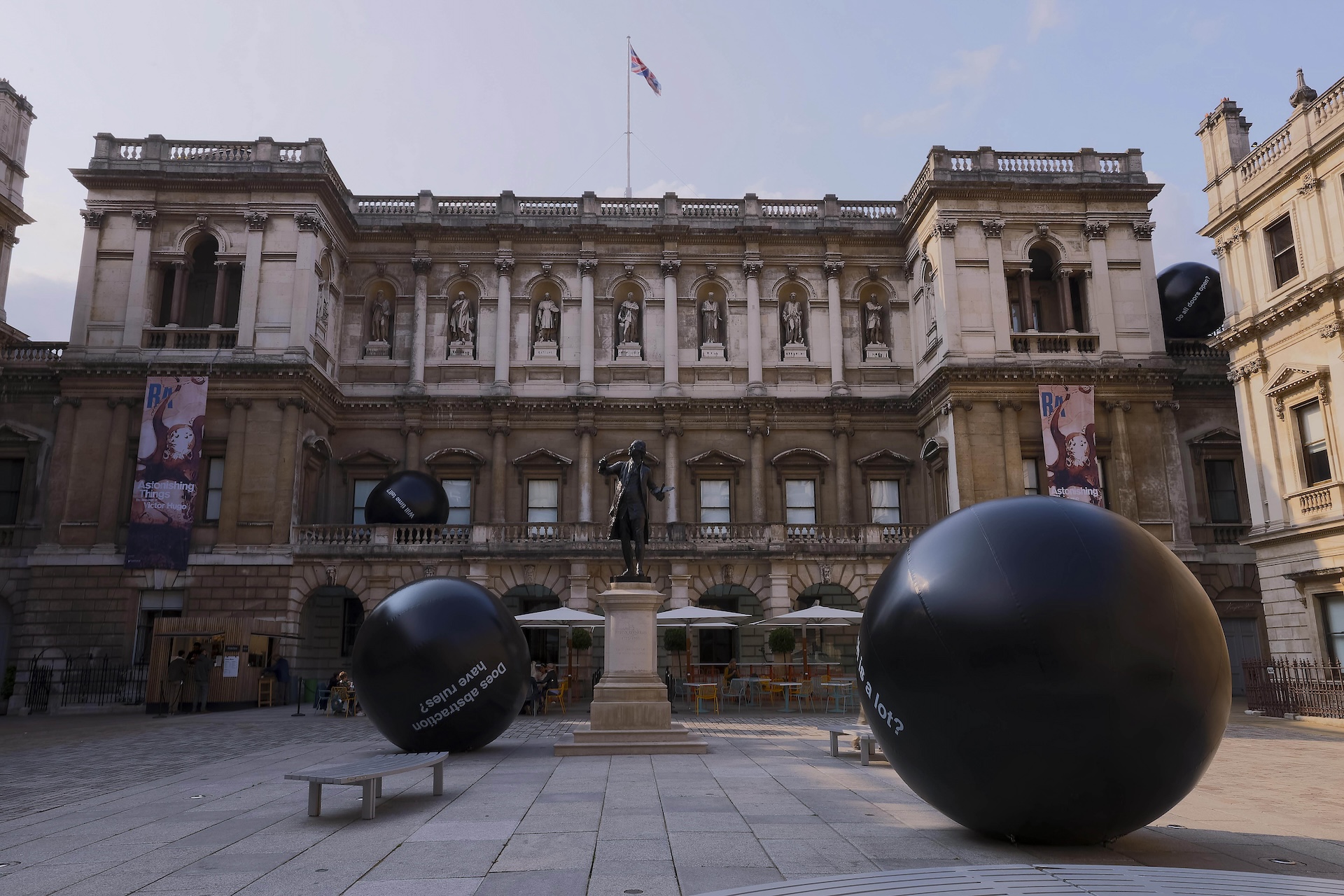
The Wick Culture - Gallery view of the 2025 Summer Exhibition
Photo: © David Parry/ Royal Academy of Arts

Happenings RA Summer Party

Happenings
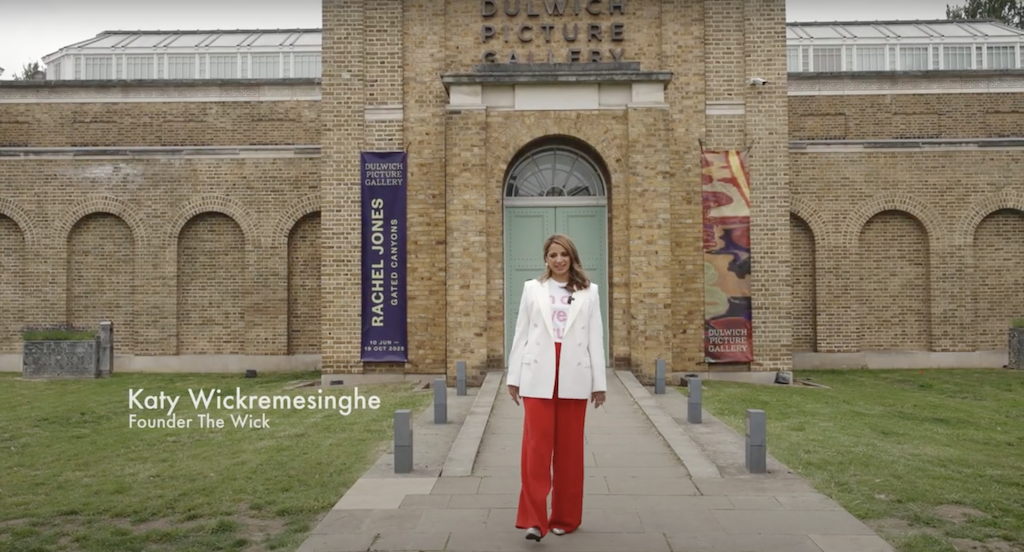
The Wick Culture - Katy Wickremesinghe at Dulwich Picture Gallery

Happenings Rachel Jones at Dulwich Picture Gallery

Happenings
The Wick Culture - Katy Wickremesinghe at Dulwich Picture Gallery

Happenings Rachel Jones at Dulwich Picture Gallery

Happenings
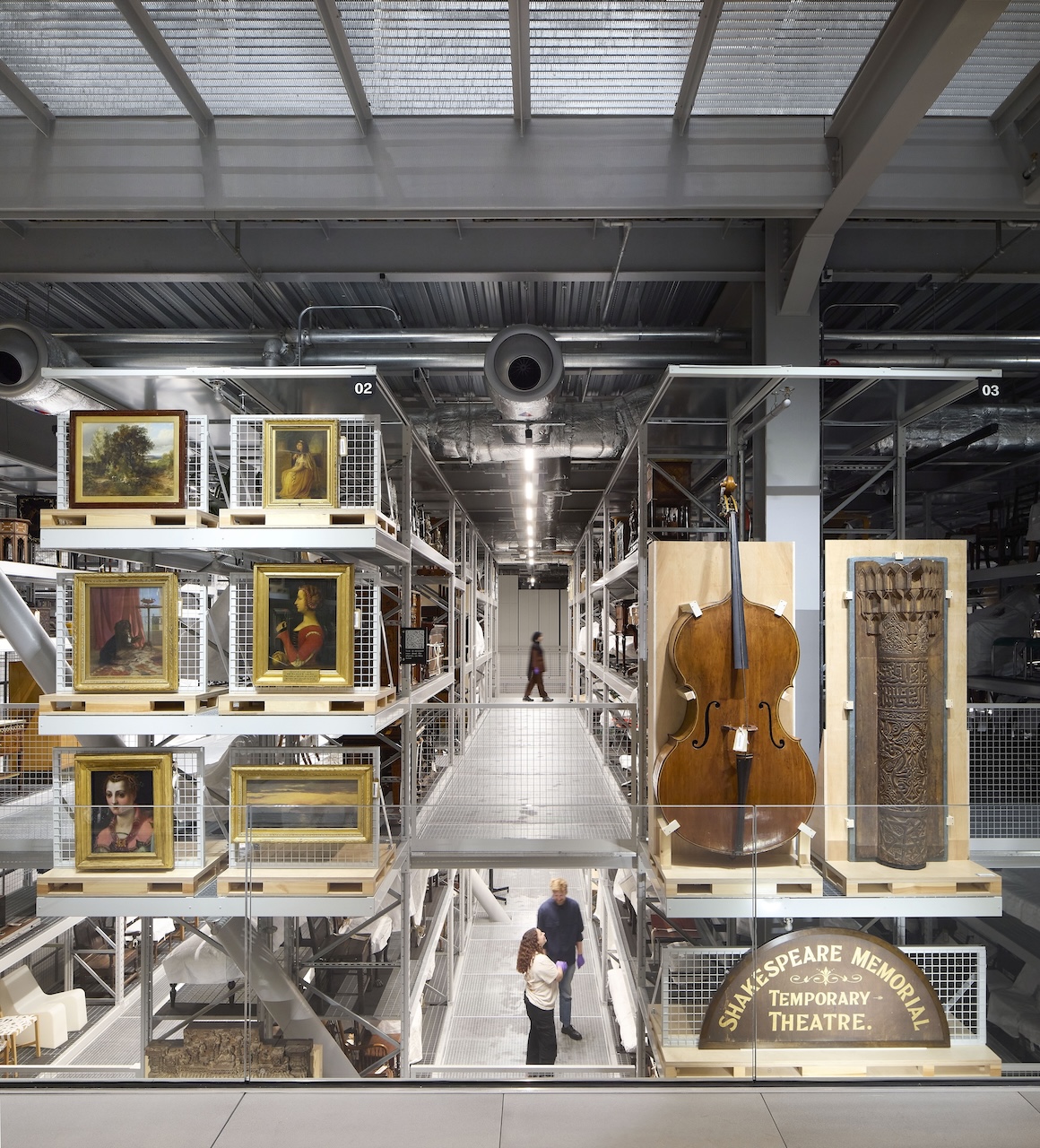
The Wick Culture - The Weston Collections Hall at V&A East
Storehouse, including over 100 mini
curated displays ‘hacked’ into the ends
and sides of the storage racking. Image by Hufton + Crow for V&A

Happenings V&A East Storehouse

Happenings
The Wick Culture - Shezad Dawood

Happenings Chain of Hope at Saatchi Gallery

Happenings